 Debby Wijaya
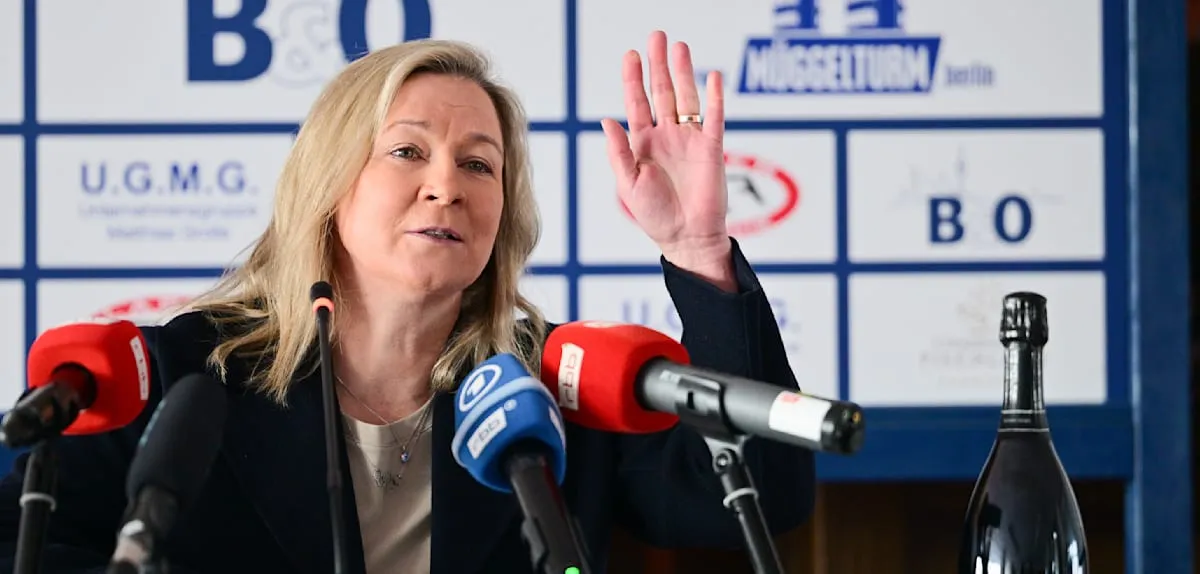
BERLIN — The Deutsche Eisschnelllauf- und Shorttrack-Gemeinschaft (DESG) has surprisingly appointed speed skating legend Claudia Pechstein as national coach, a decision that immediately sparked various speculations amidst months of internal conflict plaguing the federation. Pechstein's appointment, announced in mid-2026, is expected to ease tensions between athletes and management, while also bringing a fresh perspective for much-needed structural reforms in German speed skating.
Discontent and disputes have been central to DESG's operations in recent months. Athletes have voiced serious accusations against the federation's leadership, demanding transparency and fundamental changes. Key issues revolve around financial management, stagnant training programs, and insufficient support for young athlete development.
Demands for structural reform have become a strong impetus, pushing DESG to overhaul a system deemed outdated and not adaptable to global competition challenges. Special working groups were formed, but progress has been slow, adding to the frustration within the speed skating community.
Pechstein, an icon in the speed skating world with numerous Olympic and world championship accolades, is known for her strong character and extensive experience. Her long career as an athlete provides deep insight into the needs and aspirations of skaters. Her appointment is expected to bridge the communication gap that has long existed.
DESG's move to appoint Pechstein is seen as a strategic effort to restore public and internal trust. An internal federation source, who wished to remain anonymous, stated, “This decision is not just about finding a coach, but about finding a figure capable of uniting disparate elements and bringing a new vision.” Pechstein is considered to possess the capability and moral authority for this challenging task.
However, Pechstein's path will not be easy. She faces a dual challenge: restoring the German speed skating team's international performance and simultaneously reforming the federation's chaotic internal structure. High expectations are now placed on her shoulders, especially with major European and world competitions approaching in the coming years.
Some athletes welcomed the appointment with cautious optimism. “This is a positive step. We hope Pechstein can understand our perspective as athletes and bring the real changes we long for,” said a senior athlete who wished to remain anonymous. However, others are still awaiting concrete proof of the federation's commitment.
The phenomenon of internal conflict in sports federations is not new in Germany. Previously, the German swimming federation also faced similar challenges, although athletes like Florian Wellbrock managed to overcome the trauma of the Paris 2024 Olympics to aim for European gold in 2026. This demonstrates that with the right leadership, the potential of German athletes can shine again, as noted in the report on Wellbrock's Paris 2024 comeback.
Pechstein's appointment could set an important precedent for other sports federations in Germany potentially facing similar turmoil. It shows that legendary figures in sports can play a crucial role not only as inspiration but also as agents of structural change.
The world's attention is now on Pechstein and DESG. Pechstein's success in steering the team and resolving conflicts will determine the future direction of German speed skating. Is this the beginning of an era of resurgence or merely a brief lull before the next storm? Time will tell.
Sports fans in Germany hope this bold decision brings stability and brilliant achievements, restoring the glory of German speed skating that had somewhat faded.