 Angela Stefani
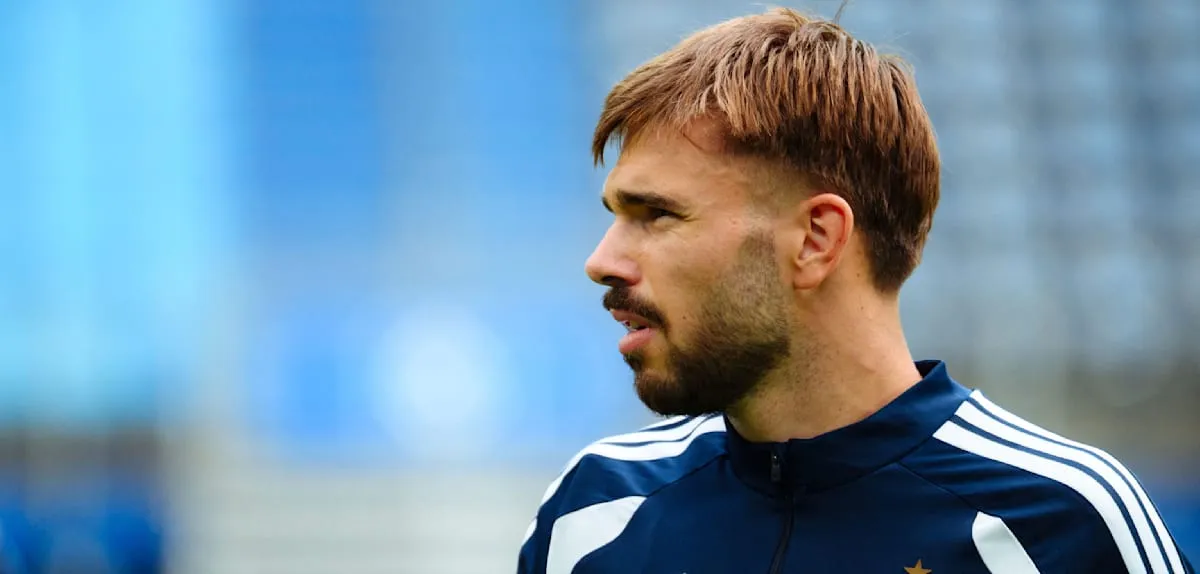
HAMBURG – After four years banished from the pitch due to a doping sanction, Hamburger SV (HSV) stalwart defender, Mario Vuskovic, has officially returned to play. Vuskovic's comeback occurred in a crucial test match against Hajduk Split, marking the beginning of an experiment that will test whether the Croatian player can regain the Bundesliga performance level he once displayed. This moment is not merely the return of a player, but also a symbol of an athlete's struggle against stigma and the physical demands following a lengthy suspension.
Vuskovic's doping case emerged in 2022 when he tested positive for erythropoietin (EPO), a performance-enhancing substance. The decision rocked German football and led to the player being banned from all professional competitions. During that dark period, Vuskovic's career was forcibly halted, causing him to miss intense competitions that demand high levels of physical and mental consistency.
The test match against Hajduk Split, Vuskovic's former club, became the first stage for the defender to re-test his abilities. Although only a friendly match, Vuskovic's presence on the field attracted widespread attention, both from HSV supporters and football observers curious about his physical condition after a long absence. The big question that arises is how quickly he can regain the touch, speed, and endurance that are essential at the highest level.
For HSV, the decision to welcome Vuskovic back is a bold move. The club, nicknamed Die Rothosen, faces the challenge of reintegrating a player who was once a defensive pillar, while also managing divided public expectations. There is moral support, but also doubts regarding the long-term impact of the doping scandal on the club's reputation.
Vuskovic's rehabilitation process is not just about regaining physical fitness, but also about rebuilding the self-confidence and mental toughness required to compete. Four years without a competitive match atmosphere undoubtedly leaves a significant gap in an athlete's development. Time and continuous support are needed for him to perform at his best again.
German football observers highlight the complexity of this situation. Former players and coaches state that reaching Bundesliga standards again after a four-year hiatus is a Herculean task. The pace of the game, the intensity of duels, and the mental pressure in every league match demand thorough preparation and quick adaptation. This situation makes tactical revolution or full support from the coach crucial.
Vuskovic's case also reopens discussions about the handling of doping cases in professional sports. The German Football Association (DFB) and the National Anti-Doping Agency (NADA) continue to tighten oversight, but incidents like this show that the challenge of maintaining sports integrity remains immense.
Vuskovic's future journey will be an interesting case study for the sports world. Will he become a successful example of resurgence after a downfall, or will adaptation difficulties prove that a four-year suspension is too great an obstacle to overcome? Only time will tell.
Vuskovic himself has not provided extensive public comment on his return. However, his body language on the test pitch shows strong determination to prove himself. He has a second chance, a privilege not always afforded to every athlete involved in similar scandals.
Editorial Insight:
Mario Vuskovic's return to the field is more than just ordinary sports news. It is a complex story of redemption, physical-mental challenges, and strategic club decisions. Hamburg SV is taking a significant risk by offering a second chance. If Vuskovic manages to reach his peak performance again, it will be a powerful inspirational narrative. However, if he struggles to adapt, it will serve as a reminder of the long-term impact of doping violations and how difficult the path back to the elite is after a fall. The football public will closely observe this development as a barometer of the effectiveness of athlete rehabilitation programs and anti-doping policies in the future.