 Demian Sahputra
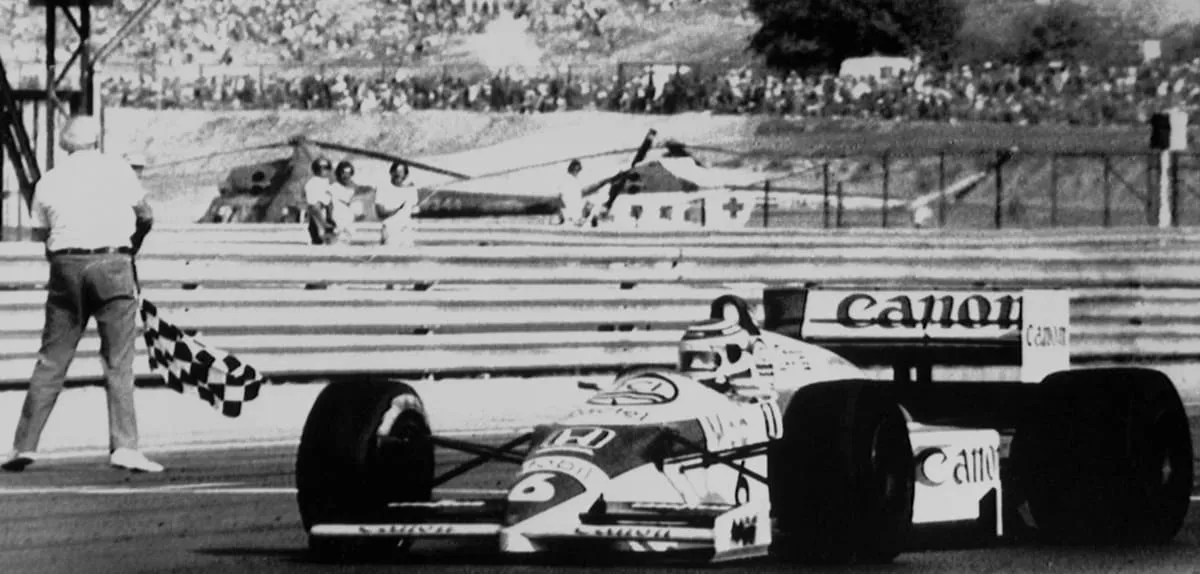
BUDAPEST — Four decades ago, the world witnessed a monumental diplomatic and sporting breakthrough when Formula 1 (F1) for the first time held a Grand Prix behind the Iron Curtain. Hungary, a nation then an integral part of the Eastern Bloc, was chosen to host the world's most prestigious racing event, marking a new chapter in global sports history and international relations in 1986.
This event was not merely an ordinary automotive race. It was a tangible manifestation of the ambitious vision of Bernie Ecclestone, the legendary F1 promoter. Amidst the geopolitical tensions of the Cold War, which divided West and East, Ecclestone saw an untapped market potential and an opportunity to bring his beloved sport across rigid ideological boundaries.
His efforts to penetrate the Eastern Bloc market actually began with an approach to Moscow, the capital of the Soviet Union. However, the idea was hampered by complex bureaucracy and a city atmosphere that Ecclestone described as "too gray" and lacking enthusiasm for the luxury and glamour of F1. Yugoslavia, which was relatively more open, was also an option, but ultimately did not meet the necessary criteria.
The turning point came when attention shifted to Hungary. There, a key figure emerged: the head of an agricultural cooperative who possessed sharp business acumen and a deep understanding of the economic potential that could be generated from an F1 Grand Prix. This individual became the main bridge between the capitalist world of motor racing and Hungary's socialist system.
Negotiations were intense and full of challenges. The Hungarian government, which was then still under Soviet influence, had to be convinced that an event as grand as F1 could bring significant benefits, both economically and in terms of international image. The project to build a new circuit, Hungaroring, outside Budapest, became proof of the great commitment from both sides.
The construction of Hungaroring proceeded at an extraordinary pace. The 4.014-kilometer circuit was completed in just eight months, an amazing logistical feat considering the political and infrastructural conditions of that era. The circuit was designed to create challenging races with unique technical characteristics, quickly making it one of the iconic tracks on the F1 calendar.
The enthusiasm of the Hungarian public and other Eastern Bloc countries for this event was truly extraordinary. Thousands of fans from various regions flocked to witness firsthand a spectacle they had previously only dreamed of. The Hungarian Grand Prix became a symbol of openness and hope in an era full of restrictions.
The economic impact of this event cannot be overstated. The arrival of F1 brought foreign investment, boosted the tourism sector, and created jobs. More than that, it provided international legitimacy for Hungary, demonstrating its ability to host global-scale events and further integrate culturally and economically with the Western world.
The inaugural Hungarian Grand Prix on August 10, 1986, was a resounding success. The winner of that historic race was Nelson Piquet from the Williams-Honda team, solidifying his name as part of this important narrative. This success not only confirmed Hungary's position on the F1 map but also paved the way for the sport's further expansion into non-traditional markets.
This event in Hungary forty years ago serves as a valuable lesson on how sports can transcend political and ideological boundaries. It demonstrates the power of vision, strategic negotiation, and the importance of political will to achieve ambitious goals. As of 2026, the Hungarian Grand Prix remains one of the most anticipated races on the F1 calendar, an enduring legacy of courage and innovation.
The presence of F1 in Hungary also indirectly contributed to a change in global perception of the Eastern Bloc. It showcased that behind the Iron Curtain, there was a vibrant society, capable infrastructure, and great economic potential, which ultimately accelerated the process of openness and transition in the region.
Journalists and political analysts at the time praised Ecclestone's move as a 'bold step' that dared to challenge the status quo. Financial success and positive publicity proved that the gamble paid off, setting new standards for the global expansion of professional sports.
Thus, the story of the 1986 Hungarian Grand Prix is not just about car racing. It is a narrative about how entrepreneurial spirit and cultural diplomacy can pave the way for change, even in the most frozen eras of modern history. An achievement worth remembering and analyzing in the broader context of sports globalization.