 Robert Andrison
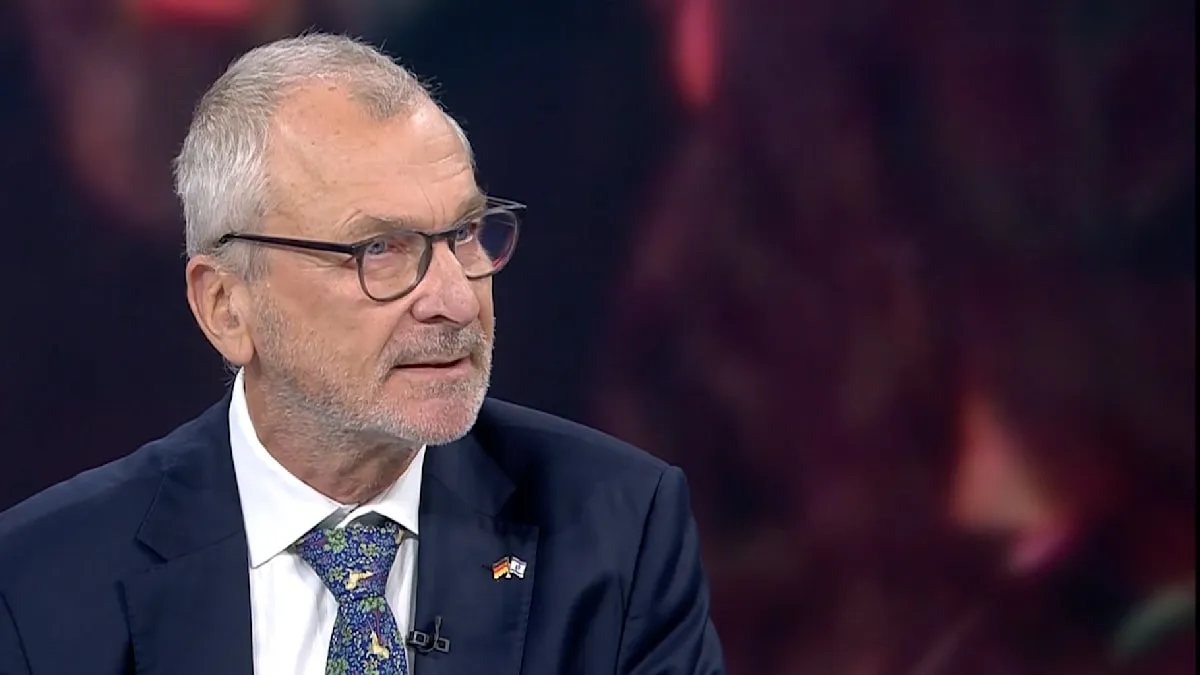
BERLIN – Deep concerns are gripping the Jewish community in Germany's capital, Berlin, following the recently announced local election results. Volker Beck, President of the German-Israeli Society, unequivocally stated that many members of the community are now living in serious fear. He even implied that the rhetoric emerging post-election bears striking resemblance to the communication patterns of the far-right party, Alternative for Germany (AfD).
Beck conveyed his concerns based on numerous WhatsApp messages and personal conversations he has received since the Berlin election results were released. This data, he believes, reflects a palpable anxiety permeating among the city's Jewish residents, a situation he deems warrants serious attention from all segments of society.
I know that many Jewish women and men in this city are genuinely afraid, Beck stated, underscoring the urgency of the situation. His statement is not merely an alarm, but a reflection of the psychological burden placed on an important community in the heart of Europe.
Beck's statement also highlighted the use of certain phrases in the current political discourse that he likened to typical AfD rhetoric. He criticized the developing narrative, calling it too similar to strategies that can be interpreted as 'slips of the tongue' or 'accidental errors' yet laden with political meaning, often associated with the AfD to test the boundaries of public discourse.
The implications of this rhetorical similarity are significant, given Germany's sensitive history and its commitment to tolerance and minority protection. The increasing influence of parties like the AfD in the German political arena, as seen in election results in Mecklenburg-Vorpommern, frequently triggers similar concerns in various regions.
The Berlin election results, which prompted Beck's comments, have created an increasingly divisive political environment. The uncertainty and polarization that emerge can exacerbate feelings of vulnerability among minority groups, particularly Jews, who historically have experienced a dark past on German soil.
These fears are not limited to the Jewish community. Various other minority groups often become targets when populist and nationalistic rhetoric gains strength. This indicates a need for strict oversight of how political discourse is delivered and its impact on social cohesion.
In this context, the role of institutions such as the German-Israeli Society becomes crucial in voicing the rights and security of the Jewish community. They act as a bridge for dialogue and an overseer against any potential threats that could damage the multicultural fabric of Germany.
The Berlin city government and political leaders are urged to proactively address these concerns, not just through statements, but also through tangible actions that strengthen protection for all citizens. The political and social stability of a major city like Berlin depends on its ability to maintain harmony and inclusivity.
This situation in the German capital also reflects broader challenges across Europe, where anti-immigrant sentiment and extreme nationalism are re-emerging. The response to these threats will determine the future direction of democracy and human rights on the continent.
Editorial Insight: Volker Beck's statement underscores a concerning phenomenon where potentially divisive political rhetoric is increasingly normalized. The fear experienced by Berlin's Jewish community is not merely an emotional reaction, but a rational response to political signals that threaten inclusivity. This situation demands critical awareness from the entire political spectrum to avoid succumbing to the temptation of populism that erodes the foundations of democratic and multicultural societies. The credibility of Germany's democratic institutions will be tested in protecting minorities amid political turmoil.