 Chandra Wijayanto
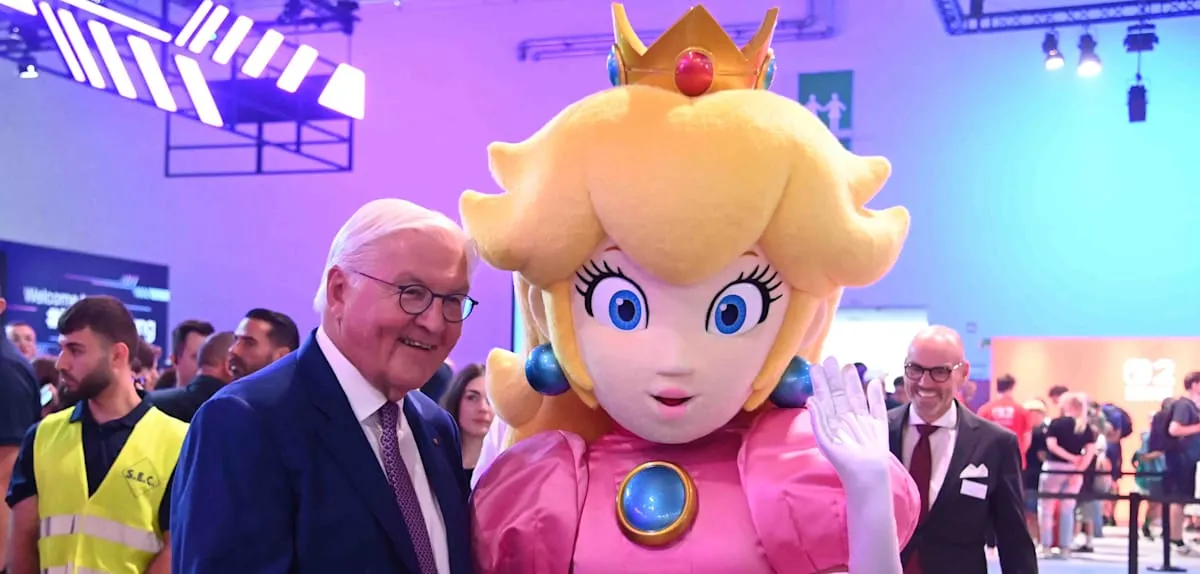
COLOGNE – Gamescom, the world's largest video game festival, has reaffirmed its rejection of the Alternative for Germany (AfD) party's presence at this year's event in Cologne. This decision coincides with German President Frank-Walter Steinmeier's emphasis on the relevance of the video game industry for the future of democracy, alongside his call for strict regulations against anti-democratic content in the digital realm.
The rejection of the AfD by Gamescom organizers underscores an increasingly firm political stance from the entertainment industry. The head of the German games industry association explicitly stated that the AfD could not be a partner for the event. This aligns with Gamescom's main theme this year, which focuses on the e-sport market's contribution to strengthening democratic values.
President Steinmeier, in his crucial speech, highlighted the significant potential of video games and digital platforms as arenas to fortify democracy. He stressed the need for clearer rules to combat the spread of anti-democratic content in the digital world. This statement reflects widespread concerns in Germany and Europe regarding misinformation and extremism flourishing in the digital sphere.
Gamescom's decision and the head of state's statement are inseparable from Germany's intensifying internal political dynamics. The AfD party, with its populist and nationalist rhetoric, frequently becomes the subject of fierce debate about the limits of free expression and the protection of democracy. This tension is evident from various past events, such as analyses related to the CDU's political wall crumbling in Saxony-Anhalt and Merz's assertion of the ideological chasm between the CDU and AfD.
The gaming industry, now recognized as a global cultural and economic powerhouse, is increasingly aware of its social responsibility. Through the Gamescom platform, they strive to create an inclusive space that supports constructive dialogue and rejects ideologies deemed contrary to democratic principles and diversity.
This phenomenon also reflects a larger trend where international events are beginning to take clear stances on social and political issues. This is not merely about entertainment; it is also about shaping public narratives and asserting the values they uphold.
President Steinmeier's message also serves as a strong signal to game developers and tech giants to play an active role. He implicitly challenges them to innovate not only in graphics or gameplay but also in building mechanisms that can counter destructive narratives and promote healthy digital literacy.
The German government itself has repeatedly stated its commitment to combating hate speech and extremist content, especially after the proliferation of violence fueled by polarization on social media. This move by Gamescom can be seen as a manifestation of a general consensus among German institutions and industries to protect the foundations of democracy.
Moving forward, attention will be on the implementation of these clearer rules. Whether they take the form of government regulations, industry initiatives, or a combination of both, what is clear is that the digital world can no longer be a gray area without accountability. The debate on balancing freedom of expression and the protection of democracy will continue.
With millions of visitors from around the world, Gamescom is more than just a trade fair; it is a massive cultural forum. The decision to explicitly reject a political party and link video games with democracy marks a significant evolution in the festival's role.
Editorial Insight: Gamescom's stance against the AfD, supported by President Steinmeier's remarks, indicates that the tech and entertainment sectors find it increasingly difficult to remain neutral amid political turmoil. This highlights digital platforms' responsibility in shaping public discourse and the potential of video games as a tool for civic education. The main challenge lies in balancing platform freedom with the need to counter extremism without excessive censorship.