 Gabriella
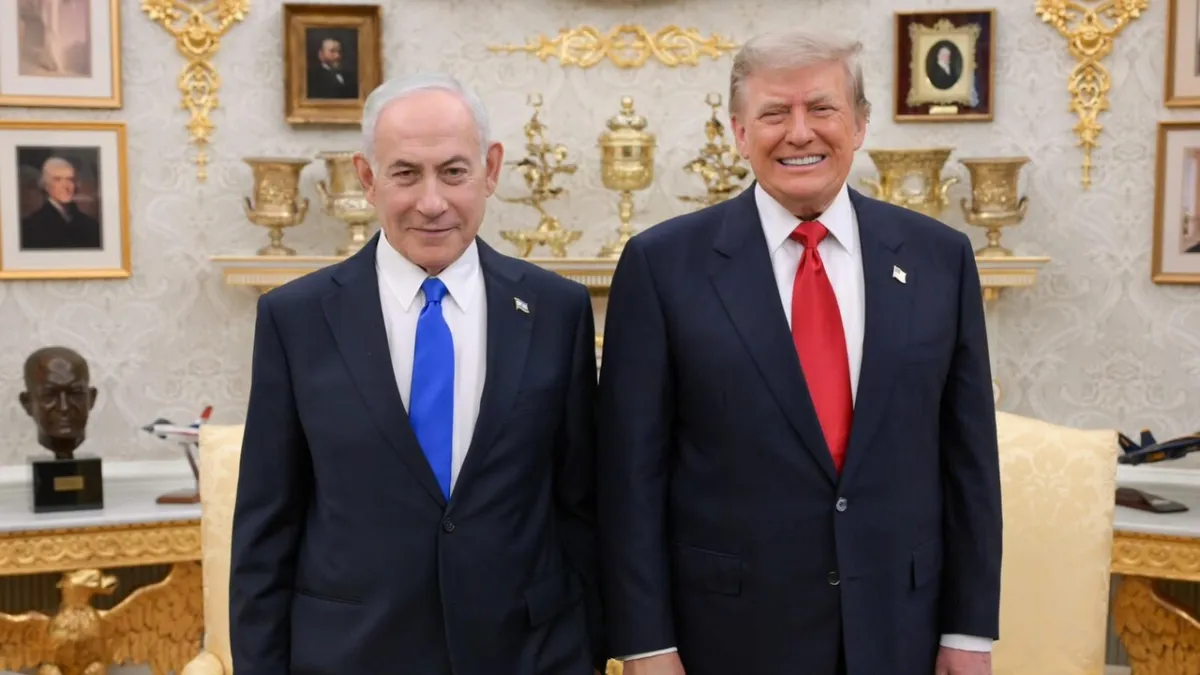
TEL AVIV – Israeli Prime Minister Benjamin Netanyahu has unequivocally rejected a peace proposal put forth by the United States regarding the future of the Gaza Strip. He emphasized that Israel would not withdraw the Israel Defense Forces (IDF) from the territory without the complete disarmament of Hamas. This rejection casts a shadow over ongoing diplomatic efforts, reaffirming Netanyahu’s controversial stance against the formation of a Palestinian state.
Netanyahu’s stringent statement, delivered recently, underscores his uncompromising position in the protracted regional conflict. For Netanyahu, Israel’s security remains an absolute priority, and Hamas’s disarmament serves as a fundamental prerequisite before any discussions on troop withdrawal can proceed.
Furthermore, the Israeli leader also declared, "Finché sarò primo ministro, non ci sarà alcuno Stato palestinese." (As long as I am Prime Minister, there will be no Palestinian State). This declaration not only challenges the US initiative but also runs counter to a broader international consensus regarding a two-state solution as a path to lasting peace.
The United States plan reportedly encompasses a comprehensive framework for post-conflict Gaza, including aspects of security, reconstruction, and governance. However, specific details regarding IDF withdrawal and the role of Palestinian authorities remain crucial points of contention. Netanyahu’s rejection significantly complicates Washington’s efforts to mediate a conflict resolution.
Responding to Netanyahu’s stance, the Hamas group, through its spokesperson, urged the United States to increase pressure on Israel. They called upon Washington to compel Israel to accept the proposed plan for Gaza, indicating that without international pressure, negotiation progress would remain stalled.
This is not the first time Netanyahu has openly opposed the concept of a Palestinian state. Throughout his political career, he has frequently expressed explicit doubts or rejections of full Palestinian sovereignty, citing profound security concerns for Israel. This persistent deadlock has been a major impediment to all previous peace efforts.
Netanyahu’s position is likely to deepen regional tensions and influence the geopolitical stability of the Middle East. Regional leaders and international organizations continue to monitor these dynamics, concerned that the absence of a credible political solution will trigger further conflict escalation.
The international community, including the United Nations, has repeatedly called for an end to violence and the resumption of constructive dialogue towards a two-state solution. Netanyahu’s outright rejection of one of the main pillars of the US peace plan places Israel in an increasingly isolated diplomatic position.
With Netanyahu’s assertiveness, the future of peace negotiations becomes even more uncertain. The primary challenge now lies in how the United States will respond to this rejection, whether by intensifying its own pressure or seeking other alternatives to break the potentially prolonged stalemate.
Editorial Insight: Prime Minister Benjamin Netanyahu’s rigid stance on the US plan and his rejection of Palestinian statehood reflect a strong domestic political strategy, yet it carries high risks on the global stage. This decision will likely complicate Israel's relations with its closest ally, the United States, and further widen the chasm with the international community, which largely supports a two-state solution. While Israel’s security is indeed crucial, diplomatic isolation could backfire in the long term. Without internal and external political consensus, the path to stability in Gaza will remain arduous, and the potential for prolonged conflict will continue to loom over the region.