 Debby Wijaya
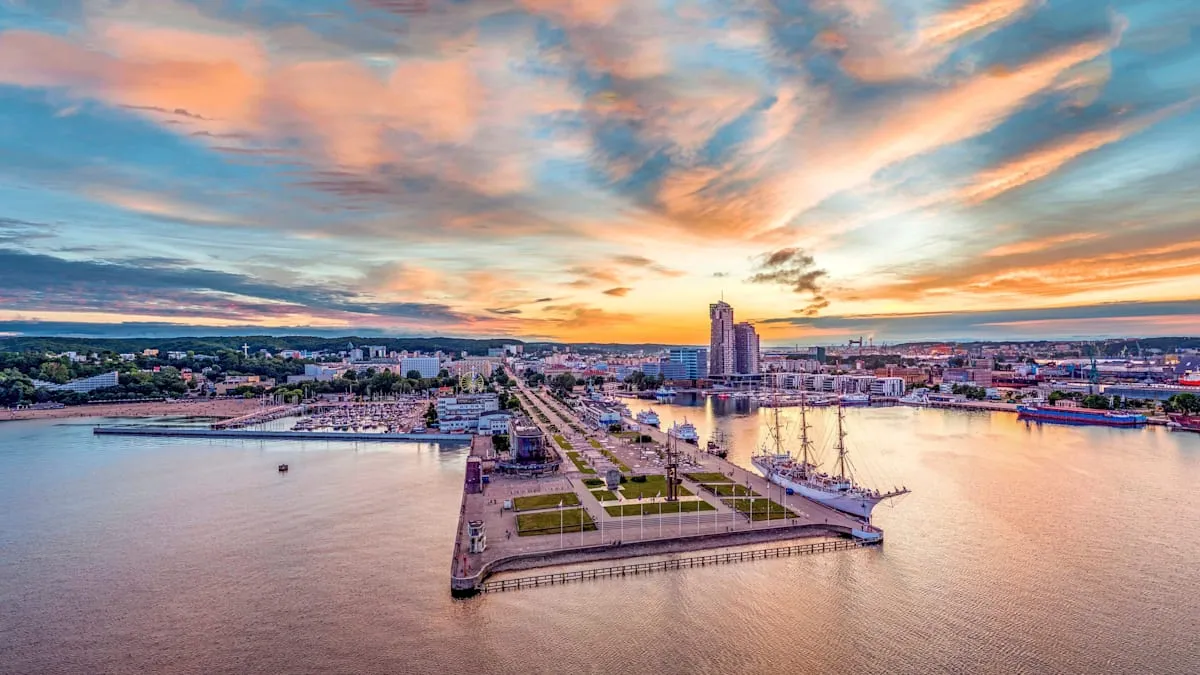
GDINGEN — The modernist city center of Gdingen, Poland, was officially designated a UNESCO World Heritage Site at the end of July 2026. This prestigious recognition marks the culmination of an extraordinary transformation from a small fishing village into a magnificent modern port city, renowned for its iconic Bauhaus architecture. The UNESCO committee's decision underscores the outstanding universal value of Gdingen's urban design and cultural heritage for humanity.
Gdingen's journey towards cosmopolitan status began after World War I, when newly independent Poland required access to the Baltic Sea. In 1926, Gdingen officially received city rights, triggering rapid and ambitious development. Within a short period, the city emerged as a symbol of Polish progress and modernity.
Known as Poland's "white city," Gdingen became a living laboratory for modernist and Bauhaus-style architecture. The integrated urban plan and precisely designed buildings reflected the optimism of the interwar era, emphasizing function, minimalist aesthetics, and the use of modern materials. Residential blocks, office buildings, port facilities, and public infrastructure were all constructed adhering to this philosophy.
UNESCO Director-General, Audrey Azoulay, stated in her remarks, "Gdingen is tangible proof of how a city can be born from vision and courage, creating a legacy that endures beyond its time. Its modernist design is not merely buildings, but a manifestation of the zeitgeist that shaped a nation's identity." This statement was delivered during the inauguration ceremony at UNESCO Headquarters, Paris, broadcast globally.
Prior to its transformation, Gdingen was merely a simple fishing village. Its strategic location in the Bay of Gdansk made it an ideal candidate for developing a new port. The Polish government at the time viewed Gdingen as key to the nation's economy and defense, a vital gateway to international trade independent of Danzig (now Gdansk).
The construction of this new city was an ambitious national project. Thousands of workers and engineers were mobilized to build infrastructure from scratch, including docks, warehouses, railway stations, and roads. The entire city planning was coordinated by leading architects and urbanists who adopted the principles of European modernism.
Buildings such as the Gdingen City Hall, the National Bank of Poland complex, and apartment buildings along Świętojańska Street exemplify modernist architectural masterpieces. Clean lines, pristine white facades, ribbon windows, and circular balconies create a unique and harmonious visual identity, now a major attraction for architecture enthusiasts worldwide.
The World Heritage Site designation is expected to bring significant impact on tourism and the local economy. City officials project an increase in tourist visits, investments in the cultural sector, and heightened global awareness of Gdingen's history and architectural innovation.
Gdingen Mayor, Wojciech Szczurek, expressed his pride. "This is a historic moment for Gdingen and all of Poland. This recognition is not just about buildings, but about the fighting spirit and vision of our city's founders. We are committed to preserving this valuable heritage for future generations," he said in a press conference held after the announcement.
Gdingen's modernist heritage now stands alongside other historical sites, enriching the UNESCO World Heritage list with a narrative of visionary 20th-century urban planning. The city offers important lessons on humanity's ability to build civilization from imagination and necessity.
The Polish government, through the Ministry of Culture and National Heritage, has also allocated special funds for the maintenance and promotion of this site. Active educational and conservation programs will be implemented to preserve the architectural integrity and historical value of Gdingen as the "pearl of Baltic modernism."
This designation also affirms Poland's position on the global cultural map, showcasing its architectural richness beyond its traditional sites. Gdingen now serves as a beacon for other cities with modernist heritage, offering inspiration for preservation and revitalization.