 Dodi Irawan
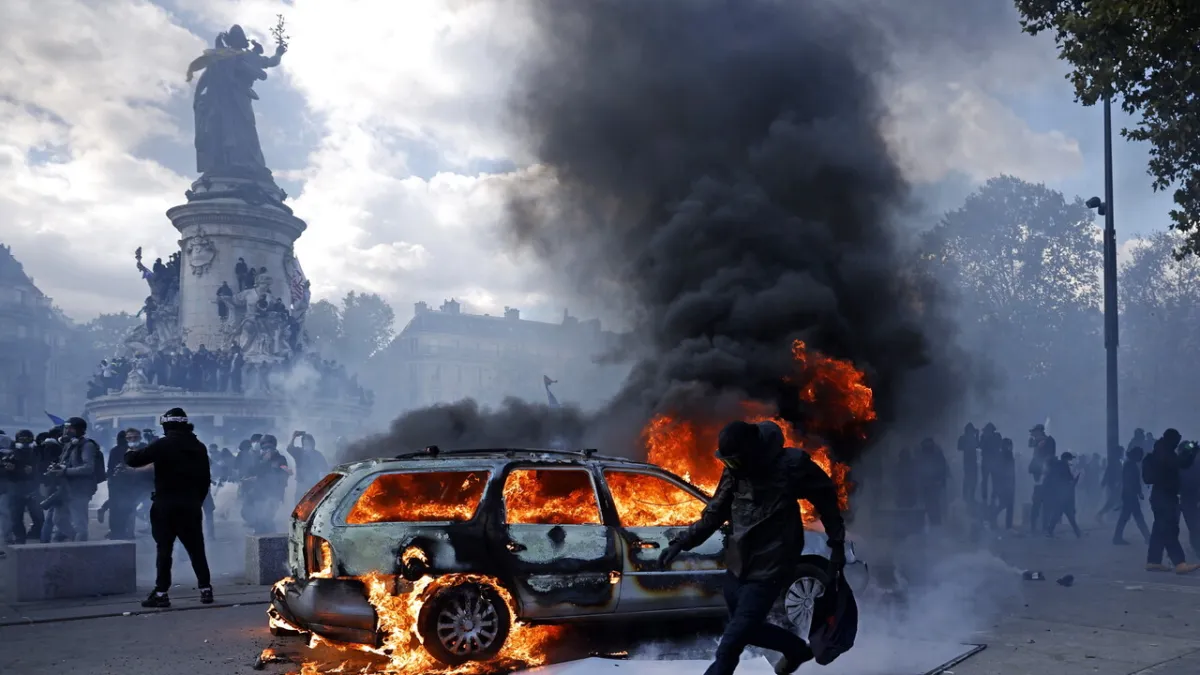
PARIS – French President Emmanuel Macron in 2026 tightened policies regarding the right to demonstrate, particularly in the capital, following a series of often turbulent protests. This policy effectively restricts the movement of the Yellow Vest (Gilet Jaunes) group in Paris, only allowing them to act if they join official trade union processions. This repressive step also includes a total ban on demonstrations in two other major cities, Lyon and Marseille.
This government decision comes after several incidents of violence and vandalism that occurred during previous demonstrations, causing significant damage to public facilities and private property. Authorities argue that the restrictions are necessary to maintain public order and ensure citizen safety.
The Yellow Vest movement, which emerged in 2018 in response to fuel tax increases and dissatisfaction with Macron's economic policies, has repeatedly shown its resistance. These new restrictions could trigger a larger wave of protests, given their strong fighting spirit and insistence on freedom of expression.
Jean-Luc Fournier, a spokesperson for the Yellow Vest coordinating group, stated, 'This is a direct attack on democracy and the fundamental right of French citizens to voice their aspirations. We will not remain silent watching our public space being silenced.' This statement indicates that the group is ready to challenge government policy.
Meanwhile, major trade unions in France have shown mixed responses. Some unions consider this a reasonable step to prevent the escalation of violence, provided the right to demonstrate remains guaranteed through union mechanisms. However, some unions also criticize this policy as it is seen as curbing freedom of association itself.
Local governments in Lyon and Marseille, which now enforce a total ban on demonstrations, face sharp criticism from human rights activists and civil society organizations. They are concerned that such bans will set a bad precedent for the future of civil liberties in France.
The political climate in France is heating up ahead of the Rassemblement National (RN) party congress to be held in Orleans. This tension reflects a deep polarization in French society, with issues of immigration, economy, and individual freedoms becoming central points of contention.
In recent months, French security forces have increased their alert level. The deployment of additional personnel and the use of advanced surveillance technology are part of the government's strategy to anticipate potential unrest. The ongoing tensions indicate that France is still grappling with the challenge of balancing order and freedom.
This policy also reopens a long-standing debate about the state's role in regulating public spaces and the expression of discontent. French history is filled with struggles for civil rights, and Macron's decision this time will mark a new chapter in that narrative.
Editorial Insight: The Macron government's demonstration restrictions in 2026 are a bold, high-risk move. While aiming to maintain order, this policy has the potential to provoke a more intense backlash from groups who feel their rights are curtailed, such as the Yellow Vests. This tension is not only a test for France's domestic stability but also a warning signal for other European countries about the challenges in balancing national security with freedom of expression amidst deepening political polarization.