 Debby Wijaya
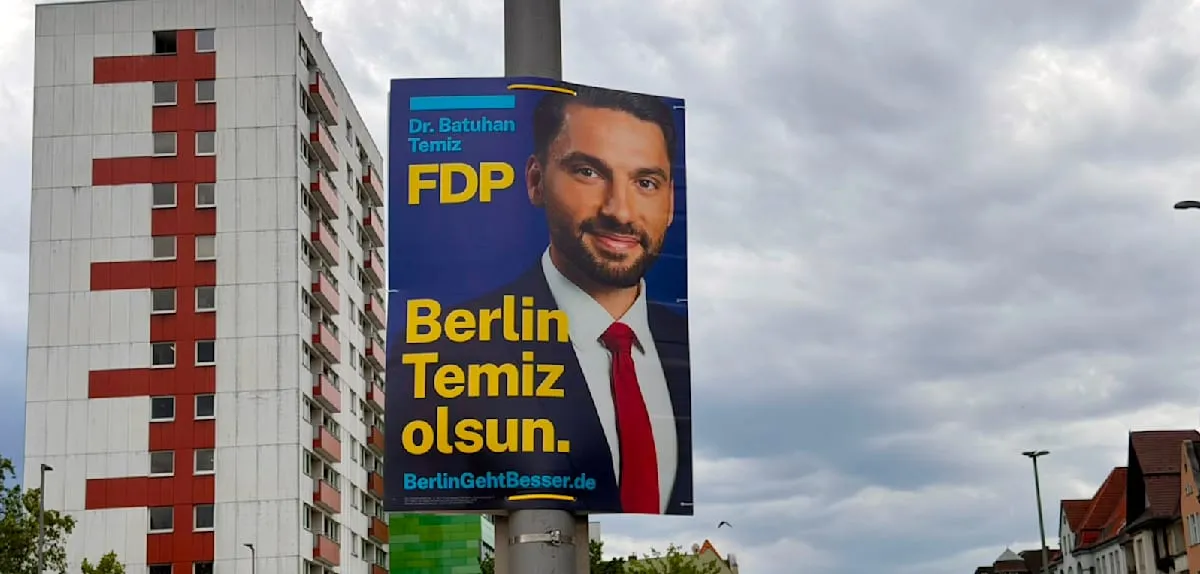
BERLIN – Batuhan Temiz, a candidate from Germany's Free Democratic Party (FDP) and an officer in the Bundeswehr (German Armed Forces), ignited fierce controversy in Berlin in early 2026 after unveiling a Turkish-language election poster. This unusual move immediately drew accusations of Islamization and subversion from various quarters, forcing a renewed spotlight on issues of integration and national identity at the heart of German politics.
The billboard, featuring Temiz's face with slogans in Turkish, was displayed in several Berlin districts heavily populated by the Turkish diaspora. Instead of garnering sympathy, the poster provoked strong reactions, particularly from conservative circles and some media outlets.
Critics argue that the use of a foreign language in election campaigns in Germany is a form of identity politics that has the potential to be divisive. They fear that such practices could deepen segregation, rather than promote the full integration of citizens of immigrant descent into German society.
A source within the FDP, who wished to remain anonymous, stated that Temiz's decision was a strategy to reach an often-overlooked segment of voters. This is a democratic effort to communicate directly with German citizens who are also native Turkish speakers, ensuring their voices are represented, the source said.
However, this narrative failed to alleviate tensions. Some political observers note that Temiz's action, as a military officer who should symbolize national unity, sent an ambiguous message. Furthermore, his background as a Bundeswehr member added a layer of complexity to the debate.
The history of Turkish immigration to Germany after the war created a large community that is now an integral part of the social and economic landscape. However, issues of integration, discrimination, and dual identity often become sensitive topics in German public discourse. Temiz's campaign has reopened these old wounds.
Political figures from other parties, including the CDU and AfD, voiced concerns. A CDU spokesperson in Berlin stated, Integration means all citizens speak the same language in the public sphere. Posters like this are counterproductive to our collective efforts to build cohesion.
On the other hand, community activists and some academics defended Temiz's move. They argue that multilingual campaigns reflect the modern demographic reality in major cities like Berlin. Ignoring the mother tongue of some citizens means neglecting their right to fully participate in the political process.
This incident also sparked an internal debate within the FDP. As a party advocating liberal values and individual freedom, the FDP is faced with a dilemma between supporting its candidate's freedom of expression and maintaining an image of national unity amidst rising anti-immigrant sentiment in Europe.
Batuhan Temiz's case highlights a larger challenge in identity politics within multicultural nations. How can political parties reach all constituents without provoking polarization or being accused of subversion against core state values? This question still hangs in the Berlin political air. For citizens of Berlin, this development adds complexity to the city's social dynamics, which also faces various challenges, including a surge in crime in certain areas, such as reports of illegal shootings that previously garnered attention.
Editorial Insight: The Batuhan Temiz case extends far beyond a mere campaign poster. It is a reflection of Germany's perpetual struggle with multicultural identity and the boundaries of integration. Temiz's courage in using a Turkish-language poster indirectly forces a critical reflection on the definition of German-ness in the 21st century. The public and political reactions indicate that while Germany has been home to millions of immigrants for decades, the narrative of unity and diversity remains a highly contentious area, requiring deeper dialogue not only at the political but also the social level.