 Chandra Wijayanto
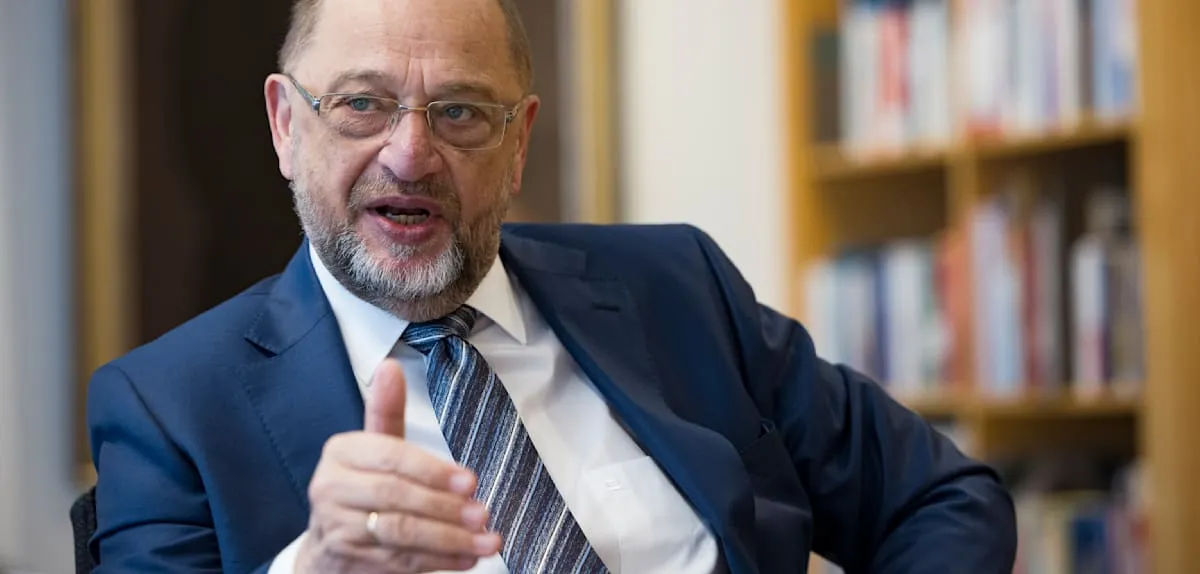
BERLIN – Former German Chancellor candidate from the Social Democratic Party (SPD), Martin Schulz, recently emphatically defended the concept of the Brandmauer or firewall separating democratic parties from the Alternative for Germany (AfD). He stated that negotiating with the AfD is impossible, while simultaneously launching sharp criticism at his own party, the SPD, for what he called a lack of courage to define its political identity amid the turbulent political landscape of 2026.
The debate over the Brandmauer has resurfaced with the increasing popularity of the AfD, a far-right party that frequently sparks controversy. Schulz emphasized that the fundamental principles of German democracy, enshrined in its constitution, do not allow for compromise with groups that fundamentally oppose these values. For him, the Brandmauer is not merely a political strategy, but a constitutional question underlining a commitment to the democratic order.
Schulz's criticism was not solely directed at the AfD, but also at his own party's internal workings. He accused the SPD of experiencing an acute identity crisis, wavering between the desire to be a centrist party attracting a broad spectrum of voters, or adopting a position as a more ideological and daring radical left party. This lack of clarity, according to Schulz, weakens the SPD and makes it difficult to respond to challenges from extremist parties.
This situation reflects the dilemma faced by many traditional parties across Europe. They struggle to maintain relevance and electoral appeal while confronting the rise of populist and anti-establishment movements. In Germany, the SPD, as one of the oldest and most influential parties, is now facing a severe test to redefine its role.
It is impossible to negotiate with a party like the AfD, which openly challenges the foundations of our democracy, Schulz stated. This statement reiterates his firm stance against a party often accused of xenophobic and anti-immigrant sentiments. He warned that any form of legitimization or normalization of the AfD would jeopardize the integrity of the German political system.
Furthermore, Schulz highlighted the need for political courage from the SPD. The party must dare to decide who they are and what they stand for, he added. He argued that an unwillingness to take a firm stand would only create space for extremist narratives to flourish and exacerbate polarization within society.
This discourse emerges as Germany prepares for a series of important regional and national elections. The SPD's performance in recent years shows a worrying trend, with its support base continuously eroding. Schulz's message can be interpreted as a call for deep introspection and internal reform.
The Brandmauer concept itself has been a heated topic for years in German politics, especially since the AfD began its ascent in popularity. It is an effort to prevent mainstream parties from collaborating or forming coalitions with the AfD, to preserve liberal democratic values. However, in some regions, this effort has begun to waver, causing concern among senior politicians like Schulz.
The internal upheaval within the SPD, as described by Schulz, not only impacts the party itself but also the overall political stability of Germany. As a key member of the current governing coalition, the SPD's position is crucial in maintaining the country's balance and policy direction.
Schulz's quotes and criticism demonstrate that challenges to democracy do not only come from external forces but also from within the structures of traditional parties. He calls for a collective reflection on the ideological courage and moral integrity required to effectively confront the threat of political extremism.
Editorial Insight: Martin Schulz's statement, from a veteran German politician, underscores a fundamental crisis pervading the country's political landscape. His sharp rebuke of the SPD and defense of the Brandmauer are not merely personal rhetoric, but an alarm for all democratic parties to reaffirm their principles and identity in the face of a rising wave of far-right populism. The SPD's failure to determine its direction could accelerate the erosion of public trust and create space for the AfD to further solidify its position, potentially altering Germany's political architecture permanently.