 Edward DP Situmorang
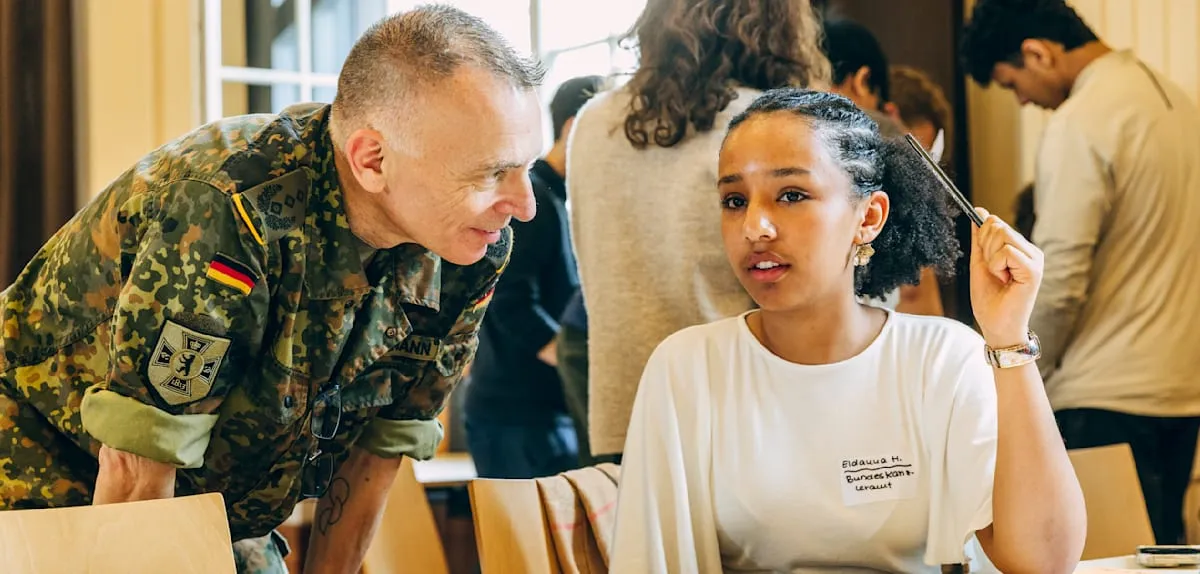
Berlin — The threat of armed conflict is no longer an abstract issue for Germany's youth. The specter of potential war has now permeated classrooms, compelling high school students in the capital to seriously consider the grim scenarios looming over the Federal Republic of Germany. Discussions in various gymnasiums across Berlin extend beyond mere conscription or the role of the Bundeswehr, delving into far more complex moral and logistical dilemmas.
A crucial debate emerges: which should be the state's paramount priority if military confrontation on Europe's eastern border further deteriorates? Should the government prioritize the supply of basic necessities for the civilian population amidst chaos, or focus on deploying vital troops and military logistics to the eastern flank to bolster defense?
Global geopolitical tensions, particularly following escalation in Eastern Europe, have triggered deep concerns among the German populace. Various reports, such as the 2026 war escalation involving Ukraine and Russia, demonstrate the dynamic nature of regional security.
In history and political science classes, students analyze various aspects of potential conflict. They are encouraged to consider the social, economic, and ethical implications of difficult decisions that state leaders would have to make in a crisis. How would the distribution of food, energy, and healthcare services be affected? Who would be responsible for protecting civilians amid massive military movements?
A history teacher at one Berlin gymnasium stated that such discussions are crucial for fostering mature political awareness in students. "We do not want to scare them, but to prepare them to understand the complex realities Germany might face. It is no longer a question of possibility, but how we will respond," the teacher said.
The German government, through the Ministry of Defense, has increased its budget and accelerated the modernization of the Bundeswehr. However, national defense readiness encompasses more than just military strength. Civilian logistics, emergency management, and coordination among various state agencies are crucial elements that must also be accounted for.
The issue of providing basic needs for the population, such as food and clean water, is now a topic raised in crisis simulations. The concept of civil resilience, which had been overlooked since the Cold War, is once again a focus. This includes planning for distribution, early warning systems, and mass evacuation training.
Conversely, demands to strengthen NATO's eastern flank amid unstable regional dynamics continue to grow. Germany, as a pivotal European power, plays a central role in contributing troops and equipment. The deployment of combat units to the Baltic states or Poland demands massive logistical support, potentially absorbing significant resources. Events like the wave of Russian missiles striking Ukraine serve as a reminder of defense urgency.
This dilemma highlights the complexity of national decision-making. There is no single easy answer, but rather a delicate balance between civilian protection and collective defense obligations. Students learn that national security is an interconnected ecosystem where every decision carries broad consequences.
These discussions also touch upon Germany's historical aspects, which bear bitter experiences with major conflicts. Lessons from the past shape a unique perspective in understanding the importance of peace, but also the reality of threats that must be faced with thorough preparation.
The heightened awareness of this threat at the basic education level indicates that Germany is actively confronting an uncertain future. This is a proactive step to prepare its citizens, especially the younger generation, for challenges that could fundamentally alter Europe's security and social landscape.