 Dodi Irawan
ACCRA – Amidst the rich cultural landscape of West Africa, Ghana maintains a captivating and deeply meaningful funeral tradition: artistic coffins or fantasy coffins. This practice is not merely a way to bury the deceased; it is a profound tribute that immortalizes an individual's passions, professions, or life aspirations through intricate and colorful sculptural works. Each coffin becomes the final visual narrative telling the story of who the deceased was during their lifetime.
This unique tradition is primarily centered among the Ga ethnic group, especially in the coastal regions of Accra, and has become an internationally renowned cultural icon of Ghana. Local artisans carve coffins in various unconventional shapes, reflecting the identity of the deceased individual. For instance, a fisherman might be buried in a coffin shaped like a large fish, while a beverage entrepreneur might rest in a replica of their product bottle.
The philosophy behind these fantastic coffins is rooted in the belief that death is not an end but a transition to the spirit world. Therefore, one must depart in a style that reflects their status, achievements, or dreams. These coffins are believed to help guide the deceased's spirit into the afterlife, while also serving as a symbol of social status for the bereaved family.
The creation process for these coffins demands high skill and meticulous attention. Artisans, whose artistic legacy is often passed down through generations, utilize lightweight woods such as wawa or obeche. They spend weeks, even months, transforming raw timber blocks into precise, aesthetically pleasing hollow masterpieces.
Some examples of coffins that have recently captured public attention include:
- A coffin shaped like a famous soft drink bottle, representing the deceased's affection for the product or perhaps their profession as a beverage vendor.
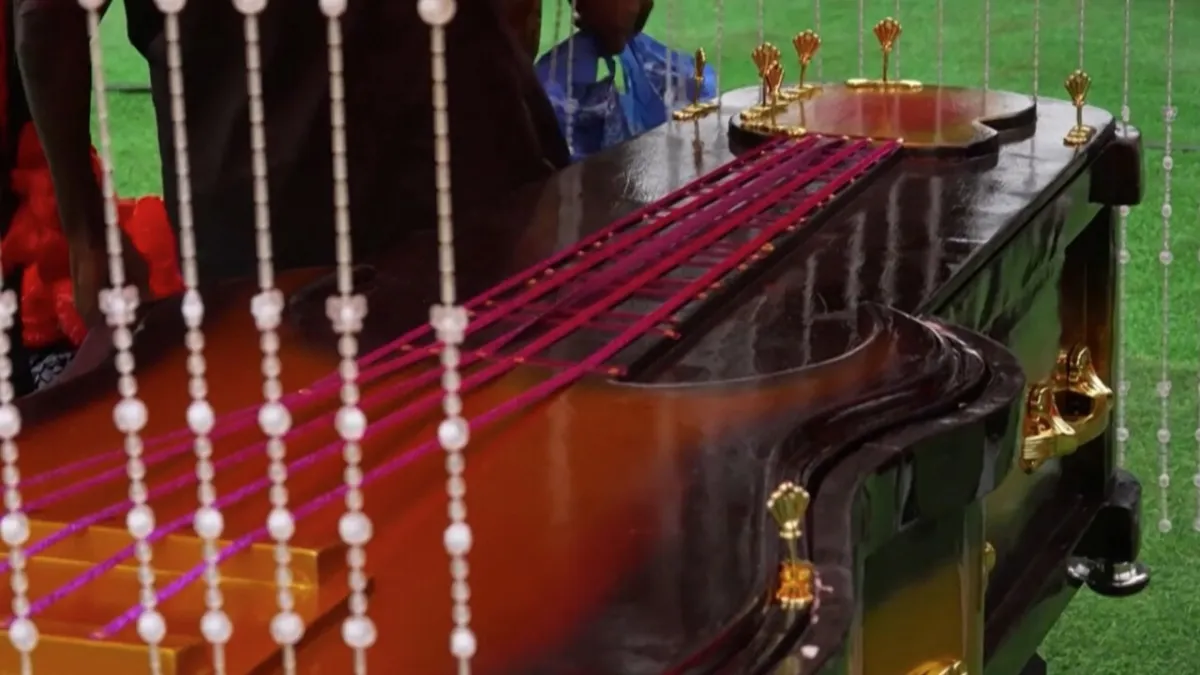
- A detailed replica of an acoustic guitar, honoring a musician or music enthusiast.
- A model airplane, symbolizing a vast journey through life, dreams of travel, or an aviation-related profession.
These works are often custom-ordered, long before a person passes away, indicating careful planning and a deep appreciation for this art form.
The artistic coffin industry not only keeps the tradition alive but also provides a significant livelihood for many families in Ghana. These artists have developed a global reputation, attracting the attention of art collectors, anthropologists, and tourists from all over the world who wish to witness or even commission these unique creations themselves.
While appearing eccentric to Western cultures, for the Ga people of Ghana, these coffins are an expression of love, respect, and a celebration of life. They are a way to ensure that the memory of a loved one lives on, not only in hearts but also in a striking and character-filled physical form.
This tradition also faces challenges from modernization and globalization. However, artisans and families strive to preserve the uniqueness of this funerary art. They believe that Ghana's cultural identity, particularly in how it approaches death, is something worth safeguarding and passing on to future generations.
The artistic coffin art from Ghana reaffirms that art has a universal function to help humans process life experiences, even the most personal and profound ones like loss. It is a form of applied art that merges spirituality, identity, and artistic expression.
The popularity of these coffins has even reached international art galleries and museums, introducing Ghana's rich culture to wider audiences. This demonstrates that what began as a local tradition has now become a global phenomenon recognized for its creativity and philosophical depth.
Editorial Insight: The practice of artistic coffins in Ghana is more than just a custom; it is a reflection of a unique philosophy of life and death, highlighting how art can be a powerful medium to celebrate the individual. This tradition challenges conventional views on funerals while stimulating the local economy through the artisans' expertise. Amidst global cultural homogenization, the preservation of such traditions is crucial for maintaining the diversity of human identity. Its potential as a cultural tourism attraction and an object of anthropological study will continue to grow, strengthening Ghana's position on the global cultural map.