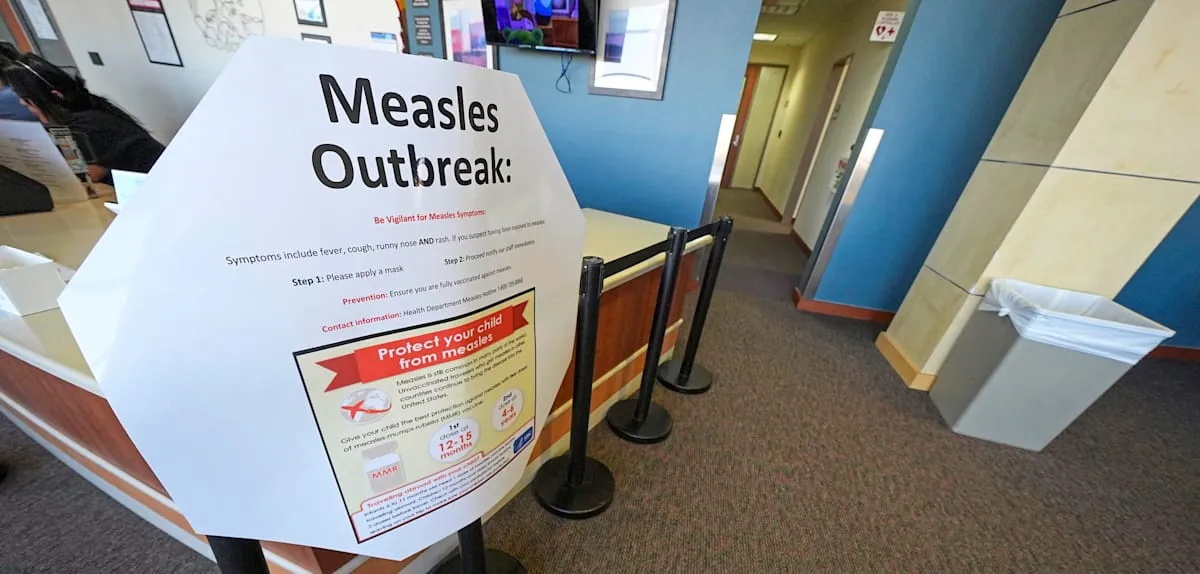
WASHINGTON – The United States has surprisingly lost its measles-free status after 26 years, triggering serious concerns among global public health authorities. A drastic decline in immunization rates, especially among preschool-aged children, is the primary cause behind the resurgence of this highly contagious disease, with over 5,412 cases recorded throughout 2026.
This declaration of losing measles-free status comes as a significant blow to the US public health program, which has long been a global benchmark. The World Health Organization (WHO) announced that the measles elimination benchmark, which requires no endemic transmission for at least 12 months, is no longer met in the United States.
Recent data indicates that the measles, mumps, and rubella (MMR) vaccination rate among kindergarten-aged children now stands at 92 percent. This figure is significantly below the necessary herd immunity threshold of 95 percent required to effectively prevent the spread of the virus within communities.
This decline in immunization coverage creates broad gaps in vulnerability, allowing the measles virus to easily find new hosts. Epidemiologists have warned of the dangers of growing anti-vaccine trends in some regions, which directly contribute to the return of diseases that should have been eliminated.
The United States was first declared measles-free in 2000, a monumental achievement resulting from comprehensive and sustained mass immunization programs over several decades. This success served as clear proof of the power of vaccines in protecting public health from infectious disease threats.
However, that optimism is now fading. Throughout 2026, measles cases have been reported extensively across various states, straining healthcare system capacity and imposing additional burdens on medical facilities. The majority of cases occurred in individuals who were unvaccinated or had incomplete vaccination histories.
President Donald Trump's administration, through the Centers for Disease Control and Prevention (CDC), has called for increased vigilance and urged parents to promptly ensure their children's immunization status. We cannot allow this preventable disease to once again threaten our younger generation, a CDC spokesperson stated during a virtual press conference.
Professor Eleanor Vance, a public health expert from Johns Hopkins University, highlighted the long-term implications of this situation. Losing measles elimination status is not just a statistic; it is a reflection of a collective failure to maintain trust in science and public health. It opens the door for other infectious disease outbreaks in the future, she said.
The impact of the measles outbreak is not limited to health aspects. Costs arising from case management, contact tracing, and emergency immunization campaigns burden national and local budgets. Furthermore, potential disruptions to school activities and economic activities are also serious concerns.
To restore its measles-free status, the United States requires massive collective efforts. These include more aggressive education campaigns on the benefits of vaccines, stricter enforcement of immunization policies, and strengthening epidemiological surveillance systems for early detection and rapid response.
This health emergency echoes previous articles, such as US Measles Outbreak Explodes: Elimination Status Seriously Threatened! which have raised similar issues in the past, indicating that this threat is not new but has now reached its peak. US Measles Outbreak Explodes: Elimination Status Seriously Threatened!.
Editorial Insight: The United States losing its measles-free status serves as a stark warning to the entire world. This event underscores the fragility of public health achievements amidst misinformation and vaccine hesitancy. The biggest challenge now is how to rebuild public trust and reaffirm the importance of immunization as a fundamental pillar of global health, while also ensuring that the surge in measles cases does not lead to outbreaks of other successfully managed diseases.