 Dorry Archiles
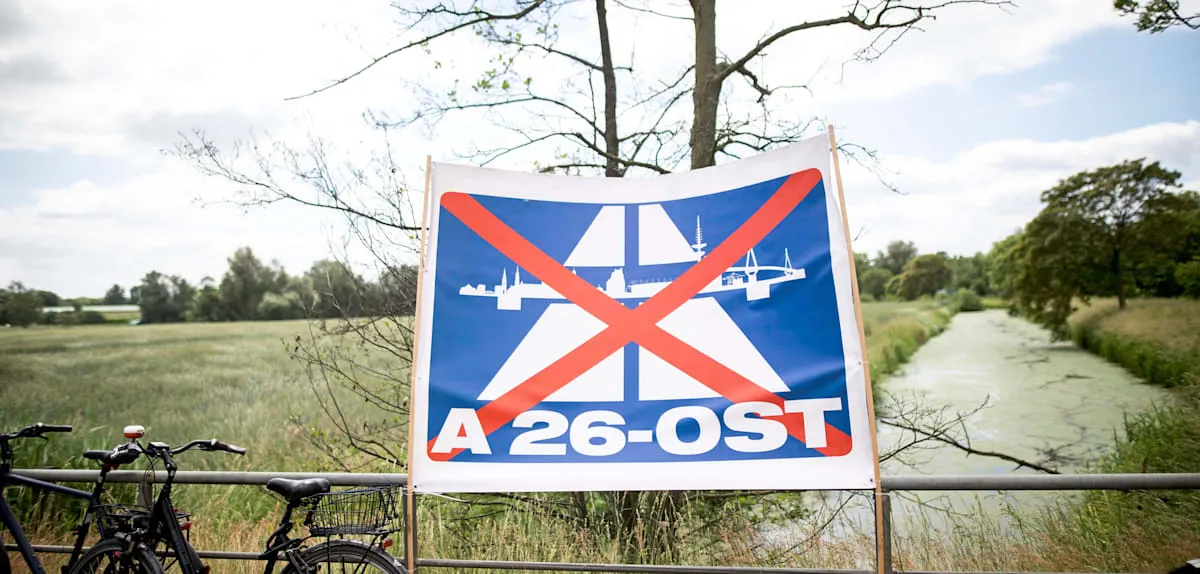
HAMBURG – The construction of a 9.7-kilometer section of the A26 Ost motorway in Hamburg, Germany, has sparked serious controversy after two prominent environmental organizations, Nabu and BUND, openly declared their opposition. This infrastructure project, which entails an astonishing cost of approximately 2.6 billion Euros, is deemed irresponsible, not only due to its inflated budget but also its potential for irreversible ecological impact. This rejection arises amid public concerns regarding the efficiency of state expenditure and commitment to environmental sustainability.
The figure of 2.6 billion Euros for a relatively short motorway stretch, merely 9.7 kilometers, has raised significant questions among observers and the public. Calculated per kilometer, the cost amounts to over 268 million Euros, making it one of the most expensive highway projects in Europe. This figure far exceeds the standards for similar infrastructure developments in other regions, leading to speculation about planning efficiency and transparency in fund management.
The German Nature Conservation Federation (Nabu) and the German Alliance for Environment and Nature Conservation (BUND) emphasize that their objections are not solely financial. This is not just about money being squandered, stated a Nabu representative, preferring anonymity in internal discussions. More importantly, this construction will damage vital ecosystems and worsen air quality in the urban area of Hamburg.
Environmental activists highlight serious threats to natural habitats along the project corridor. Deforestation, wetland reclamation, and increased noise and air pollution are unavoidable consequences that will be faced. They argue that the city and state governments have failed to present more environmentally friendly alternatives or at least adequate mitigation measures for the impacts.
Although proponents of the project claim the A26 Ost motorway is crucial for alleviating traffic congestion and enhancing connectivity for Hamburg's port, one of Europe's economic gateways, opponents insist that such a solution is short-sighted and creates new problems. The fundamental question posed is whether the short-term economic benefits justify the potentially permanent ecological losses.
Nabu and BUND urge the government to conduct a comprehensive re-evaluation of this project, including revisiting feasibility studies and environmental impact assessments. They call for full transparency regarding budget allocation and the decision-making process behind this ambitious project. The public has the right to know how their tax money is being used and what its impact will be on the future, said a BUND activist.
The debate over ballooning infrastructure costs is not new in Germany. Major projects often face similar criticisms. This is particularly relevant given the challenges the German government faces in managing the national budget across various sectors. This issue is reminiscent of the difficulties in realizing budget savings, as seen in the Buergergeld reform some time ago.
Both environmental organizations plan to intensify their opposition campaigns, including public mobilization and legal action if necessary. They hope to compel authorities to reconsider the design or even cancel parts of the construction plan for better environmental protection and public finance management.
Activists stress the importance of investing in sustainable public transport and more efficient infrastructure, rather than simply increasing the number of motorways that potentially harm the environment. They hope the A26 Ost case can become a momentum for Germany to review its infrastructure development priorities in the coming years.
Editorial Insight: The A26 Ost motorway controversy in Hamburg reflects a classic dilemma between economic development needs and environmental preservation. With large-scale infrastructure projects continually facing budgetary challenges and ecological criticism, governments need to find a better balance. Transparency and public participation are essential to ensure that development decisions are not only financially sustainable but also responsible towards future generations. This case has the potential to become an important benchmark for similar infrastructure projects across Europe, highlighting increasing demands for accountability and environmental awareness from the public.