 Angela Stefani
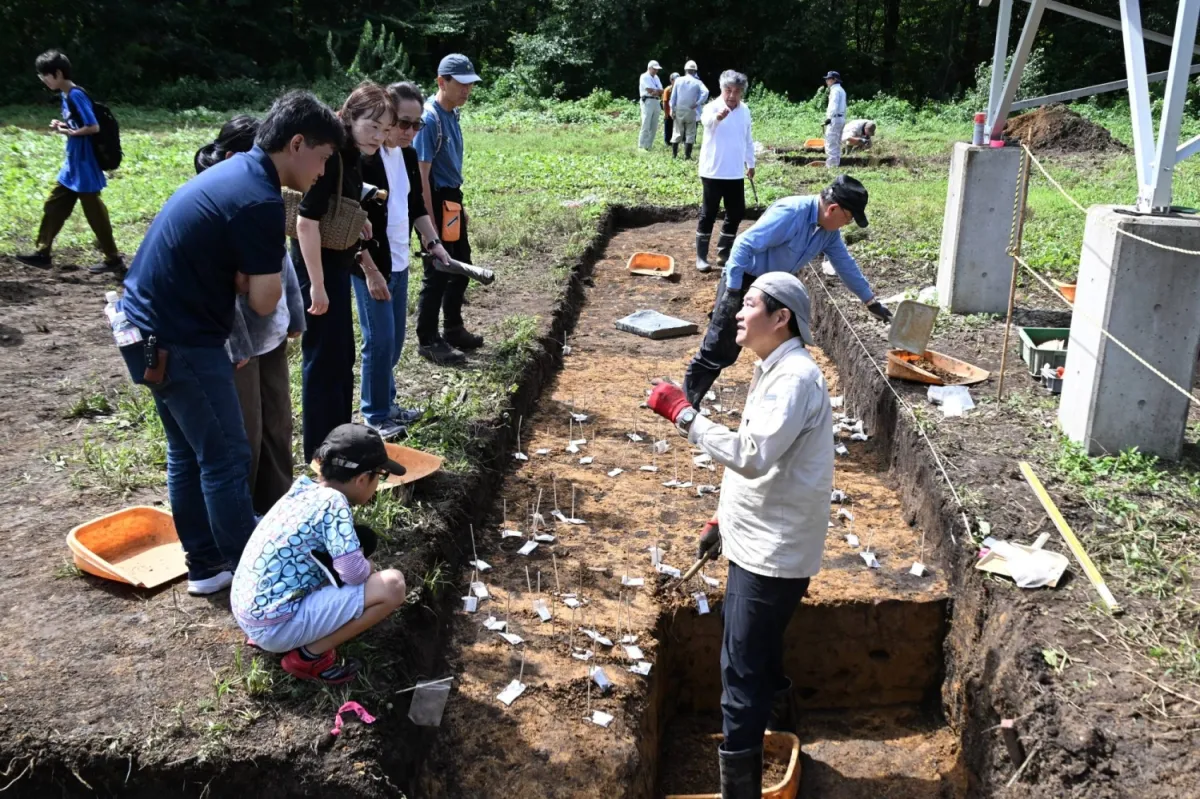
HIROSHIMA – A monumental archaeological discovery at the Kanmuri ruins in Hiroshima Prefecture, Japan, has recently sent ripples through the scientific world. Researchers uncovered an ancient stone tool believed to be the oldest artifact in the Japanese archipelago, sparking immense excitement and potentially rewriting the narrative of the first human arrival in the region.
The prehistoric artifact, estimated to be tens of thousands of years old, was found in relatively good condition, providing concrete evidence of early hominin activity much earlier than previously thought. Intensive excavations at the Kanmuri site have drawn significant attention from global historians and anthropologists.
This discovery significantly challenges established theories about the chronology of human migration into Japan. Historically, scientific consensus tended to place the initial waves of arrival in a more recent period. The stone tool found in Hiroshima suggests the presence of a much older inhabitant.
Local authorities and the Hiroshima University archaeological team have yet to release full details regarding the exact age of the artifact. However, initial analyses and the stratigraphic context of the site indicate that the tool could be far older than previous findings recorded in Japanese archaeology.
Speculation is rife among academics that the stone tool might date back to the Lower or Middle Paleolithic period. This would imply that humans may have reached Japan during an era when much of the landmass was still connected or separated by now-submerged land bridges.
The lead researcher for the excavation project, Professor Kenji Tanaka from Hiroshima University, expressed his enthusiasm. This is an extraordinary find that could fundamentally change our understanding of Japan's prehistory, he stated. Every mark on this tool carries a long, untold story.
The stone tool, though simple in design, demonstrates the adaptability and intelligence of early humans who occupied this region. Its form suggests basic uses such as cutting or scraping, essential for survival in ancient environments.
The implications of this discovery are not limited to Japan's history but also contribute to a global understanding of early human migration patterns in East Asia. Japan, an archipelago for thousands of years, serves as a natural laboratory for studying human adaptation to geographical isolation.
The National Museum of Japan in Tokyo has reportedly expressed keen interest in displaying this artifact once conservation and in-depth analysis are complete. The hope is that the public can witness this new evidence of human presence in Japan from a much earlier period.
Excavations at the Kanmuri ruins are expected to continue for several more years, with the hope of uncovering further evidence to support this new hypothesis. Government support and international research institutions are crucial for the continuity of this vital project.
Editorial Insight: The discovery of this stone tool in Hiroshima is not merely an addition to an artifact collection but a paradigmatic leap in Japanese prehistory. If further age validation confirms initial estimates, theories of early land or sea migrations to Japan will gain strong momentum. It also opens up broader multidisciplinary research opportunities, involving genetics, geology, and oceanography, to reconstruct the ancient demographic map of the Asia-Pacific. Moving forward, this find has the potential to attract specialized interest tourists and international researchers to Hiroshima.