 Gabriella
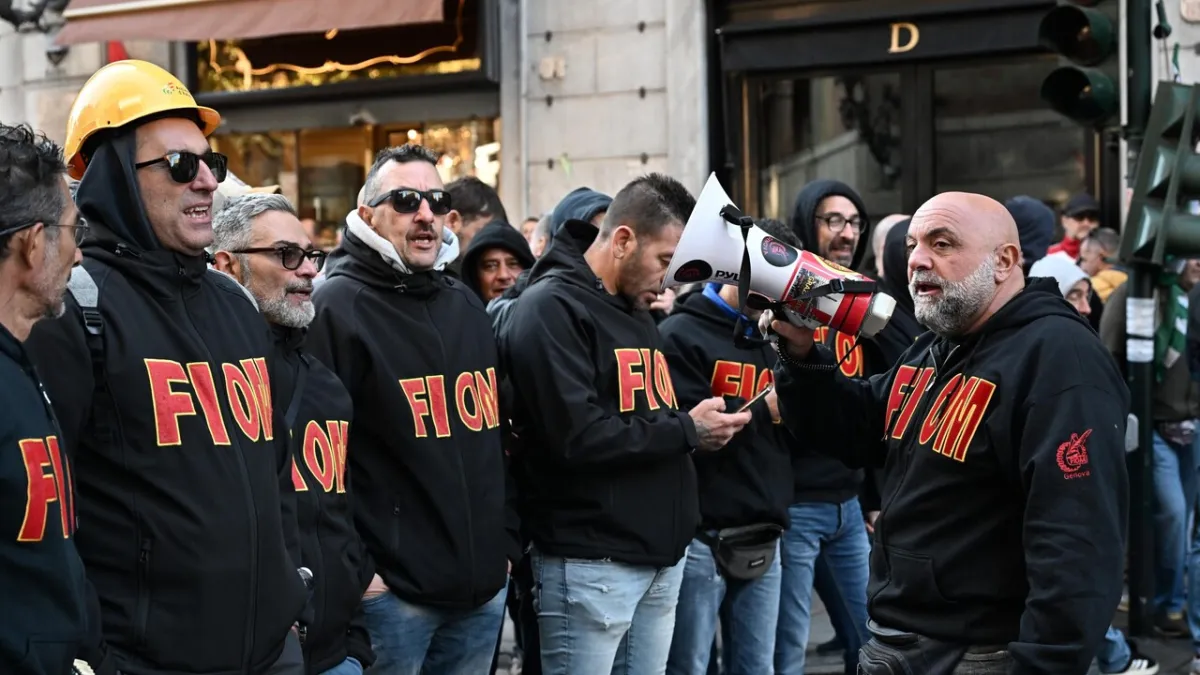
ROME – Thousands of workers across all former Ilva production facilities, Italy's industrial steel giant, have once again launched a 48-hour strike starting today, following a firm call from various labor unions. This decision was made as a protest against the Italian government's lack of concrete response regarding the future of this vital industrial complex, as well as the unfulfilled promise of an audience at the Prime Minister's Office, Chigi.
The strike, scheduled to last for two full days, is expected to paralyze most operations at the steel plants formerly known as Ilva, including its main production hub in Taranto. Labor unions emphasize that this action is an manifestation of deep disappointment over the uncertain fate of thousands of employees and the continuity of a strategic industry amidst the global economic turmoil of 2026.
'This is a response to the 'mancate risposte del governo' (lack of government responses) and while awaiting the 'convocazione a Chigi' (call for an audience at Chigi),' stated the collective unions leading the action, highlighting the months-long dialogue deadlock.
The problems at Ilva, now largely under special administration or ArcelorMittal ownership, have been a national focus for years. Environmental issues, corporate restructuring, and job security guarantees continue to loom, creating a climate of unsettling uncertainty.
This uncertainty is compounded by macroeconomic conditions. Recent data in 2026 indicates a significant increase in inflation across various sectors, creating additional financial pressure on Italian citizens. While not directly triggering the strike, this inflation adds urgency to the workers' demands for economic stability and job security. (Also read: Crushing Inflation: Prices Up 60%, Property Soars 100% in Two Decades).
Workers demand that the government immediately adopt clear and definitive policies. They seek a transparent roadmap concerning investment plans, environmental protection, and most importantly, job preservation. Without government intervention, the future of one of Italy's heavy industry pillars hangs in the balance.
Various labor unions, including FIM-CISL, FIOM-CGIL, and UILM-UIL, have repeatedly conveyed their concerns to the Ministry of Economic Development and the Prime Minister's Office. However, meetings expected to yield concrete solutions often conclude without significant agreements.
The impact of this strike is not only felt internally within the company but also has the potential to disrupt the supply chains of related industries, both nationally and across Europe. Italy, as one of the leading steel producers in the European Union, will face serious challenges if production at Ilva is halted for an extended period.
The Italian government, under its current Prime Minister, is having its commitment to handling industrial crises tested. Public pressure and demands from labor unions call for a swift and effective response to prevent the escalation of a broader conflict.
The Ilva crisis reflects a larger dilemma between economic needs and environmental sustainability. Factory modernization efforts are often hampered by high costs and strict environmental regulations, creating ongoing tension.
Editorial Insight:
This 48-hour strike is not merely an isolated incident but an indicator of a deep crisis of trust among workers, management, and the government. The government's reluctance or inability to provide certainty highlights structural challenges in balancing economic, social, and environmental interests within a vital industrial sector. Failure to achieve a quick resolution could trigger a larger wave of protests and worsen Italy's investment climate, especially amid the global economic uncertainty of 2026.