 Robert Andrison
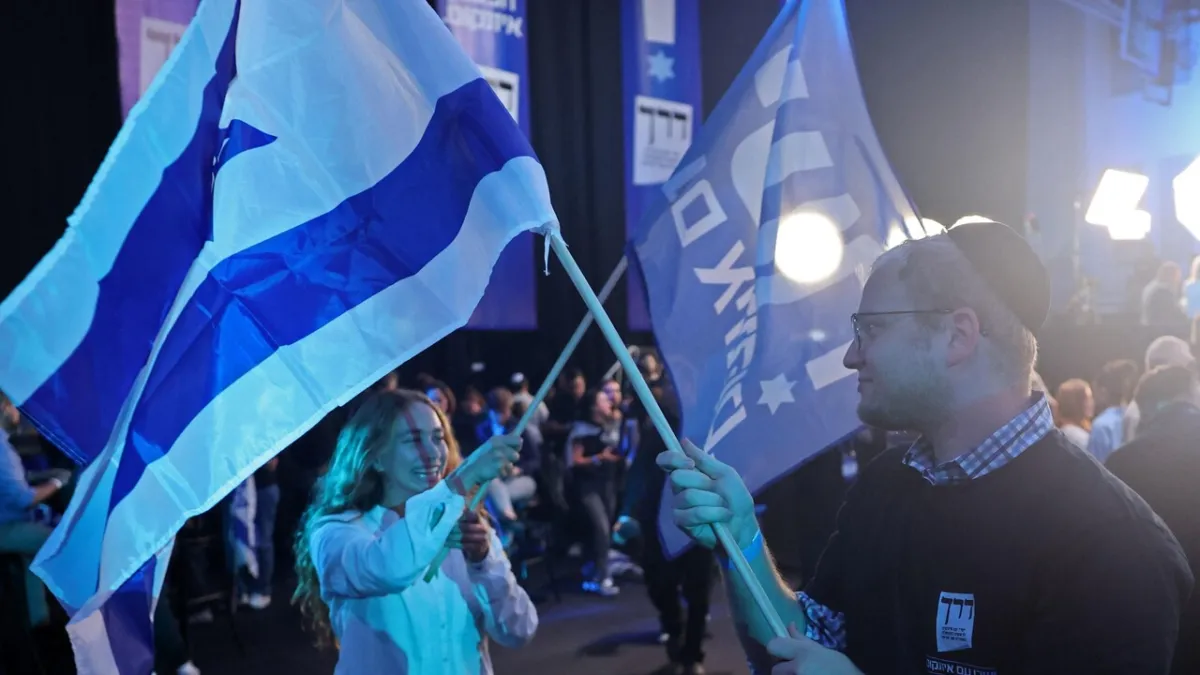
JERUSALEM – The preliminary results of Israel's 2026 general election once again paint a fragmented political landscape, leaving Prime Minister Benjamin Netanyahu and his Likud party in a narrow lead but without a clear parliamentary majority. This situation is compounded by significant gains made by the bloc led by Gideon Saar and Benny Gantz, known as the Eisenkot bloc, as well as a surge in voter turnout, including substantial support for Arab parties.
Israel's democracy is once again tested amidst a record voter turnout, reaching its highest level in a decade. Although Likud successfully secured the top position, the number of seats obtained is insufficient to form a coalition government without arduous, potentially deadlocked, negotiations with other political factions.
This condition creates a difficult scenario for Netanyahu, who is striving to retain power. Without a direct majority, the prospect of forming a stable government remains vague, signaling protracted negotiations or even the possibility of future re-elections. The Eisenkot-led bloc, rallying opposition forces, showed surprising electoral gains, positioning them as serious contenders in the parliamentary race.
Political analysts highlight that the sharp increase in voter participation, particularly from the Arab-Israeli sector, was a crucial factor in the dynamics of these election results. Voters appeared eager to express their aspirations amidst deepening political polarization. This record turnout in the 2026 Israeli elections demonstrates citizens' commitment to the democratic process, despite various internal challenges.
Arab parties, often a balancing force in Israeli politics, now hold a stronger bargaining position. With significant increases in their votes, they could potentially become kingmakers in coalition formation, although alliances with right-wing Zionist parties are still considered a major challenge.
This division of votes reflects deep-seated anxieties within Israeli society regarding the country's future direction. Debates on security, economic issues, and social relations have fueled divisions that political leaders find difficult to bridge.
Based on initial data released, some key points from the election results are:
- Likud Party: Leads with the highest number of seats, but far from the majority threshold (61 seats).
- Eisenkot Bloc: Shows significant growth in votes, threatening the traditional dominance of right-wing parties.
- Arab Parties: Recorded higher than expected vote tallies, asserting their role as a political force that cannot be ignored.
- Voter Turnout: Reached a record high, indicating a high level of political awareness among citizens.
Tension had been palpable since the campaign period, with Netanyahu alleging fraud and some politicians being attacked, illustrating the heated political climate leading up to election day. These fragmented results confirm that divisions within Israeli society remain very real, and the process towards forming a stable government will be highly complex.
Debates on cabinet formation are expected to take a long time, involving a series of meetings and bargaining between parties. Each faction will strive to maximize their position to meet the demands of their constituents, making compromise a very arduous task.
Editorial Insight: The 2026 Israeli election results confirm that the country's political landscape is increasingly fragmented, challenging leadership's capacity to bridge differences. Netanyahu's partial victory without an absolute majority not only hinders the formation of a stable government but also risks deepening polarization. The growing strength of the Eisenkot bloc and Arab parties indicates a shift in voter preferences, forcing all parties to re-evaluate their political strategies to achieve consensus in a divided society. This is a real test for the maturity of Israeli democracy in 2026.