 Gabriella
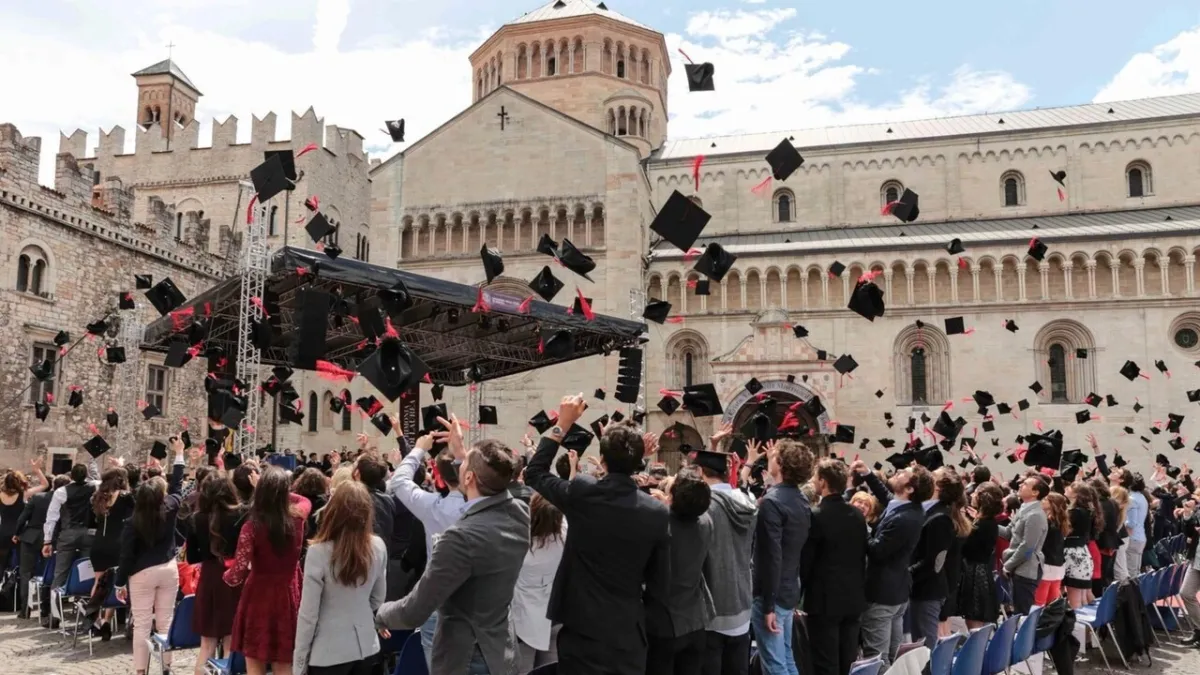
ROME – The Italian National Institute of Statistics (Istat) recently unveiled alarming data indicating a massive exodus of young graduates from Italy's southern regions, known as Mezzogiorno. Over the past six years, spanning from 2020 to 2026, the area has lost at least 150,000 university graduates who opted to seek better opportunities elsewhere. This "brain drain" phenomenon raises serious concerns about Mezzogiorno's economic and social future, even as Italy nationally records a positive graduate migration balance thanks to the influx of foreign talent.
The Istat report, published in early 2026, highlights widening regional disparities across the Italian peninsula. While northern and central Italy tend to attract educated professionals, the southern regions are experiencing an erosion of qualified human resources.
The figure of 150,000 graduates leaving Mezzogiorno is more than just a statistic; it represents a loss of vital innovation potential, leadership, and productivity crucial for regional development. These graduates, after completing higher education, are often faced with a difficult choice between remaining in their homeland with limited prospects or migrating for a more promising career.
Ironically, at the national level, Italy actually recorded a positive graduate migration balance of approximately 10,000 people. This increase is largely driven by the arrival of graduates from other countries who choose Italy as a destination for study or work. However, this phenomenon fails to mend the gaping wound in Mezzogiorno.
Professor Aldo Rossi, a demographic economist from Sapienza University of Rome, stated, "We are observing two distinct realities within one country. The North attracts, the South repels. This is a structural indicator that requires comprehensive policy intervention. The arrival of foreign graduates indeed helps cover the aggregate deficit, but it does not resolve the problem of regional inequality."
The primary causes of graduate migration from Mezzogiorno can be traced to a scarcity of quality job opportunities, lower wages compared to northern regions, and a lack of investment in research and development sectors. Many graduates feel compelled to leave home to find employment commensurate with their qualifications.
The long-term impact of this "brain drain" is highly significant. Mezzogiorno risks accelerated population aging, a decline in economic competitiveness, and the erosion of innovation. Regions already struggling with high unemployment rates and inadequate infrastructure now face the challenge of losing their best talent.
The Italian government, under the leadership of Prime Minister Giorgia Meloni, has repeatedly expressed its commitment to revitalizing Mezzogiorno. However, Istat data suggests that these efforts have not been able to effectively stem the tide of graduate migration. A more aggressive and targeted strategy is needed.
This situation also reflects broader challenges in Europe, where several member states also face issues of population movement and skill distribution. For instance, discussions about the European migrant crisis are often juxtaposed with how labor mobility, including graduates, shapes the continent's demographic dynamics. Issues such as those highlighted in the debate "Madrid Gempur Roma: Europe's Migrant Crisis Prompts Urgent Call for Unity" illustrate the complexity of human movement within the European Union.
Analysts suggest that the government needs to invest more in creating innovation ecosystems in Mezzogiorno, provide tax incentives for companies investing there, and improve the quality of higher education to be more relevant to global labor market needs.
Without concrete and immediate steps, the gap between northern and southern Italy is feared to widen further. Mezzogiorno, with its rich culture and potential, deserves a brighter future for its young graduates.
The future of Italy as a whole depends on the country's ability to embrace all its regions, ensuring that every citizen, regardless of geographic location, has equal opportunities to contribute and thrive.