 Angela Stefani
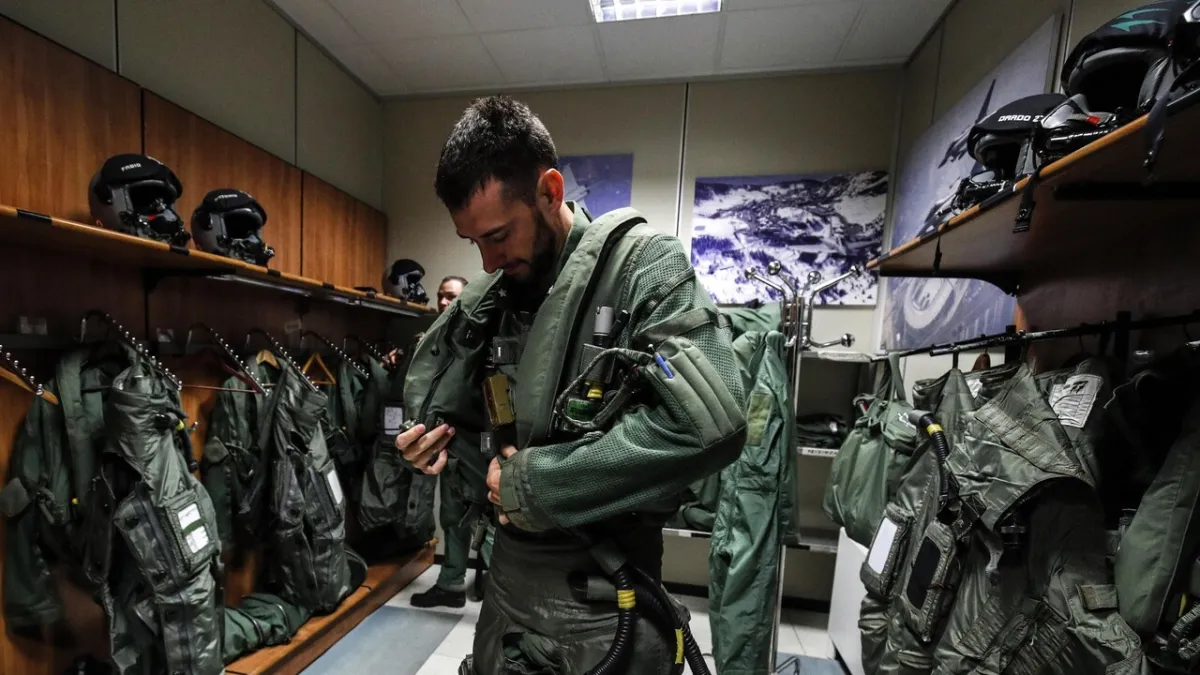
Rome — Since March 2026, Italy has officially deployed a military task force comprising 400 personnel to the strategic Middle East region, encompassing Saudi Arabia, Kuwait, and Bahrain. The primary objective of this troop deployment is to strengthen air space surveillance and defense, while simultaneously safeguarding Italy's national interests and assets in this vital area.
The decision to send this military contingent reflects Italy's commitment to maintaining regional stability amidst ongoing geopolitical dynamics. With rising tensions and potential threats, the presence of these forces is essential for bolstering maritime security and crucial international trade routes.
This task force has a specific mandate. They are actively involved in air surveillance operations to detect potential intrusions or suspicious activities. Furthermore, they are responsible for advanced air defense systems to protect vital assets and Italian military personnel operating in the region.
The deployment of personnel to Saudi Arabia, Kuwait, and Bahrain is not without reason. These three nations are crucial pillars in the Gulf's regional security architecture, and strategic partners for many Western countries. Italy's presence there underscores the importance of multinational collaboration in addressing common challenges.
This mission is not Italy's first contribution to Middle East stability. Several previous multinational operations have also involved active participation from the Italian military, demonstrating the consistency of the country's foreign policy in projecting strength and influence on the global stage.
The deployed forces are equipped with cutting-edge technology for surveillance and defense. They are expected to integrate with local and regional air defense systems, creating effective synergy in confronting a diverse spectrum of threats, ranging from ballistic missiles to unmanned aerial vehicle attacks.
From a geopolitical perspective, this Italian move sends a strong signal to the international community regarding its seriousness in maintaining the balance of power in the region. It is also part of the collective efforts of allied nations to prevent conflict escalation and preserve freedom of navigation in vital shipping lanes.
Prior to deployment, all task force personnel underwent intensive training, ensuring their readiness to handle various complex operational scenarios. Combat readiness and adaptability are top priorities to guarantee mission effectiveness in a challenging environment.
Close cooperation with the armed forces of Saudi Arabia, Kuwait, and Bahrain is key to the success of this mission. Intelligence sharing, joint exercises, and operational coordination are integral elements of the strategy to achieve common goals in maintaining air space security.
This mission, which commenced in March 2026, is viewed as Italy's long-term investment in regional and global security. It also affirms Italy's role as an active player on the international stage, not only in Europe but also in regions with broad strategic interests.
Air space security is a crucial issue in the modern era, as reflected by incidents of air space violations by missiles in various parts of the world, underscoring the urgency of solid defense systems. A crucial incident highlighting this occurred when Russian missiles violated Polish airspace, also leading to tragedy in Ukraine, underscoring the fragility of air space security without adequate defense.
The Gulf region is the heart of global energy supply. Therefore, maintaining stability and security in this area indirectly ensures the smooth flow of energy supply chains, which are vital for the world economy, including Italy and the European Union.
Beyond the military aspect, the presence of troops can also be interpreted as support for broader efforts to maintain peace and stability, which in turn protects Italian citizens and their economic and diplomatic interests in the Middle East.
While this mission is vital, challenges undoubtedly exist. The complexity of local politics, asymmetric threats from non-state actors, and the need for adaptation to local climate and culture demand a high degree of professionalism and caution from the deployed forces.
Regular evaluations of mission effectiveness will continue. Flexibility in strategy adaptation is also part of the planning, ensuring that the task force can respond to changing situations quickly and appropriately.
Thus, the deployment of 400 Italian soldiers to the Middle East since March 2026 represents a proactive and strategic step, demonstrating Italy's strong commitment to security and stability in one of the world's most important geopolitical axes.