 Angela Stefani
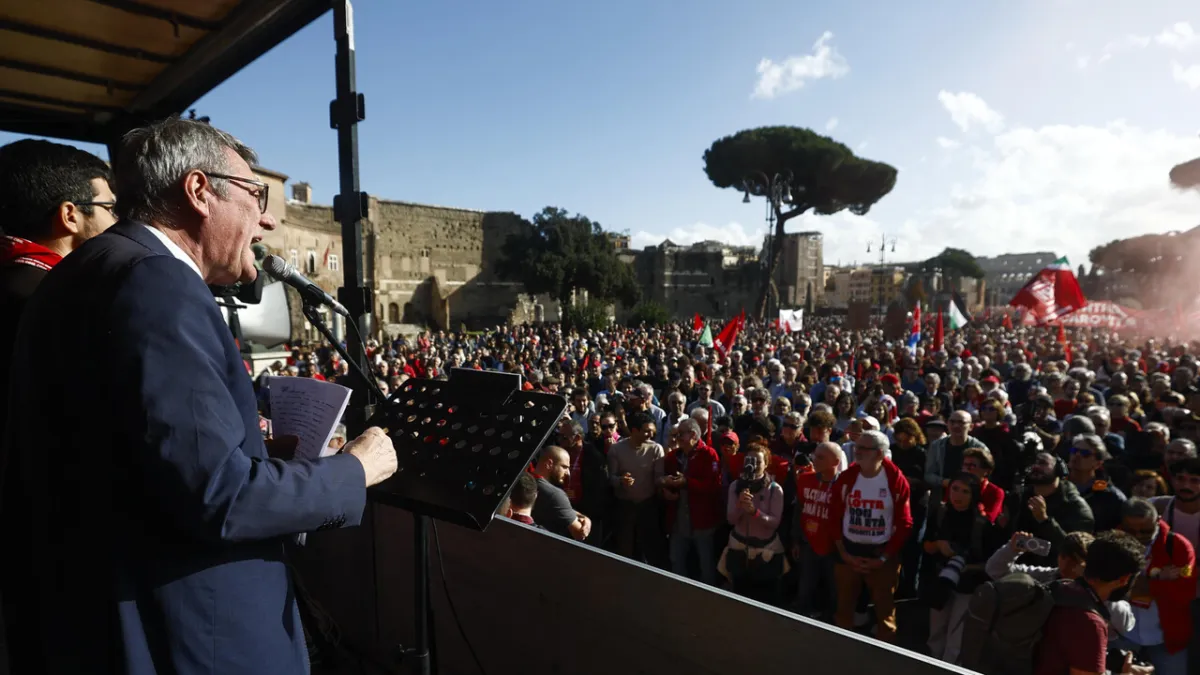
ROME – The Italian General Confederation of Labor (Cgil) led a massive wave of protests in over 100 large and small cities across Italy in 2026, mobilizing an estimated one and a half million workers to voice their dissatisfaction with the government's budget policies. This national action marks an escalation of tensions between Italy's largest trade union and the cabinet, which is accused of formulating unclear and confusing financial maneuvers.
Cgil Secretary General, Maurizio Landini, affirmed that the union would stage a sit-in at parliament if the current budget draft does not undergo significant changes. 'We witnessed millions of Italians, workers, retirees, and young people take to the streets demanding clarity and justice,' Landini declared in an impassioned speech at one of the demonstration centers. 'The government must listen to our voices, instead of creating policies that muddy the national economic situation.'
These large-scale demonstrations, spread from Milan to Palermo, serve as a strong response to the 2026 budget proposal, which is deemed non-progressive and potentially burdensome for the general public. Issues such as pension reforms, minimum wage, and the public sector are the main focal points of the demonstrators' demands.
Nevertheless, participation in the strike action within the public administration (PA) sector was recorded at under 12 percent, indicating a disparity in support among various worker sectors. This figure raises questions about the solidity of general strike support among civil servants, even though street demonstrations remained massive.
The cost of living crisis that continues to loom over Europe in 2026, coupled with volatile inflation, further exacerbates Italian public concerns about economic stability. The government's policies, perceived as unresponsive to these challenges, are the primary trigger for the increasingly widespread protest movement.
Cgil leaders emphasize that their actions are not merely political protests but a reflection of the real needs of millions of Italian families. 'This is not about ideology. This is about empty dinner tables, about an uncertain future for our children,' said a union representative in Florence.
The Italian government, through its spokesperson, acknowledged the challenges in drafting a budget that can satisfy all parties. However, they insist that the top priority is to maintain fiscal stability and long-term economic growth. 'We are open to dialogue, but budget constraints are a reality we must face together,' the spokesperson explained.
The political situation in Italy is indeed known for its dynamism, with coalition governments often facing pressure from various fronts, including trade unions. Cgil's history records many important interventions in the formation of the country's economic and social policies.
Cgil's main demands include:
- Revision of budget allocations for wage and salary increases.
- Review of pension reforms deemed detrimental to workers.
- Greater investment in the public sector, including health and education.
- Fairer and more progressive fiscal policies.
The threat to hold a sit-in in front of parliament is not merely a bluff. This is an old tactic frequently used by Italian trade unions to pressure parliament into reconsidering crucial draft laws.
Political experts in Rome observe that the scale of these protests could exert significant pressure on the government to compromise. 'Although the public administration strike rate is relatively low, the sheer number of people in the streets sends a clear message,' said Professor Elena Rossi, a political analyst from Sapienza University. 'The government will find it difficult to ignore the voices of one and a half million citizens.'
Amidst this turmoil, global financial markets are also closely monitoring Italy's economic and political developments. Stability in one of the European Union's largest economies is crucial for the balance of the continent's markets.
Cgil also calls for unity among all trade unions to confront what they call the government's 'confusing policies.' The hope is that this collective pressure can compel the government to sit down and formulate more inclusive solutions.
Editorial Insight: The unrest triggered by Cgil highlights Italy's political fragility in addressing economic challenges in 2026. While the government asserts stability as a priority, the massive wave of protests indicates a communication and trust gap between the cabinet and its people. The government's ability to respond to these demands without sacrificing fiscal discipline will be a crucial test of their legitimacy, with potential implications for regional economic stability and investor sentiment.