 Angel Doris
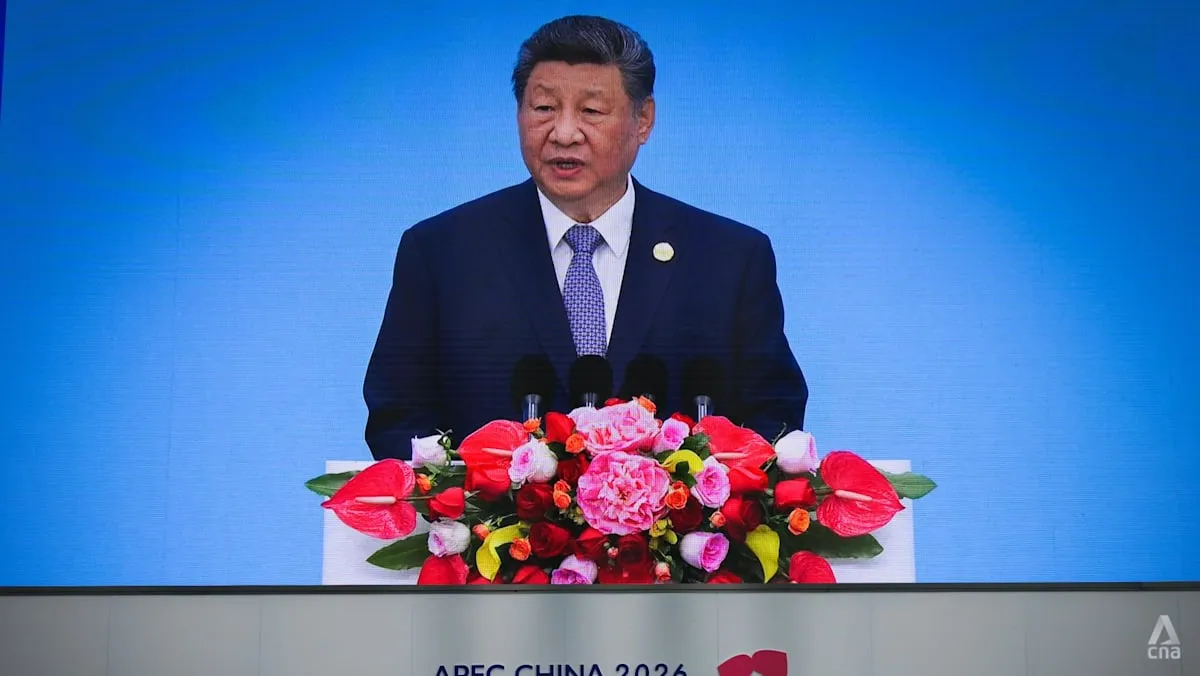
SHENZHEN – Chinese President Xi Jinping called upon Asia-Pacific economies to prioritize stability and eliminate all forms of trade barriers. This firm statement was delivered by Xi during the Asia-Pacific Economic Cooperation (APEC) CEO Summit held in Shenzhen in 2026, reiterating China's commitment to further open its vast consumer market to drive regional economic growth.
In his keynote address, President Xi underscored that openness brings progress, a philosophy that underpins his country's foreign and economic policies. He emphasized the importance of deeper collaboration and economic integration as key to overcoming global challenges and mitigating the risks of economic fragmentation.
Xi also pledged broader access to China's massive market, a strategic move expected to provide a significant boost to the economies of APEC member nations. This initiative is seen as China's effort to position itself as the engine of economic growth across the region, while simultaneously strengthening global supply chains.
The APEC CEO Summit 2026 brought together leading business figures from various sectors across 21 member economies. The meeting served as a vital forum for discussing the future of trade, investment, and innovation amidst a dynamic geopolitical landscape.
These developments unfold amid rising global trade tensions and recession fears in several major economies. Xi's call for the removal of trade barriers and the assertion of stability comes as a response to protectionist trends threatening post-pandemic economic recovery and disrupting the cross-border flow of goods and services.
As the world's second-largest economy, China's role in advancing the agenda of economic openness is crucial. Chinese investments in various Asia-Pacific countries, the Belt and Road Initiative (BRI) infrastructure projects, and its substantial trade volume all demonstrate its dominance in the regional economic architecture.
Since joining APEC, China has consistently advocated for the importance of multilateralism and cooperation. President Xi's speech reasserted China's vision for building a shared future community through interconnected and mutually beneficial economies.
The issue of trade barriers and regional stability is increasingly relevant given current geopolitical dynamics. Recently, trade tensions between global powers have also escalated, as discussed in the related article Trump Shakes China: Rare Earth Cold War Heats Up Ahead of Shenzhen Visit. This highlights the complexity of realizing China's vision of openness.
Nevertheless, the implementation of the openness agenda is not without challenges. Some APEC member countries have expressed concerns about fair trade practices, intellectual property protection, and reciprocal market access. Discussions regarding labor and environmental standards also form an integral part of the broader trade dialogue.
China's decision to further open its domestic market is expected to alleviate some of these concerns and build trust among its trading partners. This step is not merely rhetorical but a concrete commitment to be followed by investment facilitation policies and tariff reductions.
President Xi's commitment articulated in Shenzhen reaffirms China's position as a key driver of inclusive globalization, challenging narratives of isolated economic blocs. The world awaits the tangible implementation of these promises to observe their concrete impact on stability and growth in the Asia-Pacific.
Editorial Insight:
President Xi Jinping's remarks at the 2026 APEC Summit reflect the urgency for Asia-Pacific economies to unite against global fragmentation. His call for openness and the removal of trade barriers is not just rhetoric but a pragmatic strategy to maintain growth momentum amid economic uncertainties. The response from APEC member states to China's offer of market liberalization will be a significant indicator of how effectively this vision can be realized in the coming years. China's move can also be seen as an effort to rebalance the global trade narrative, especially amidst protectionist policies adopted by some other major economic powers.