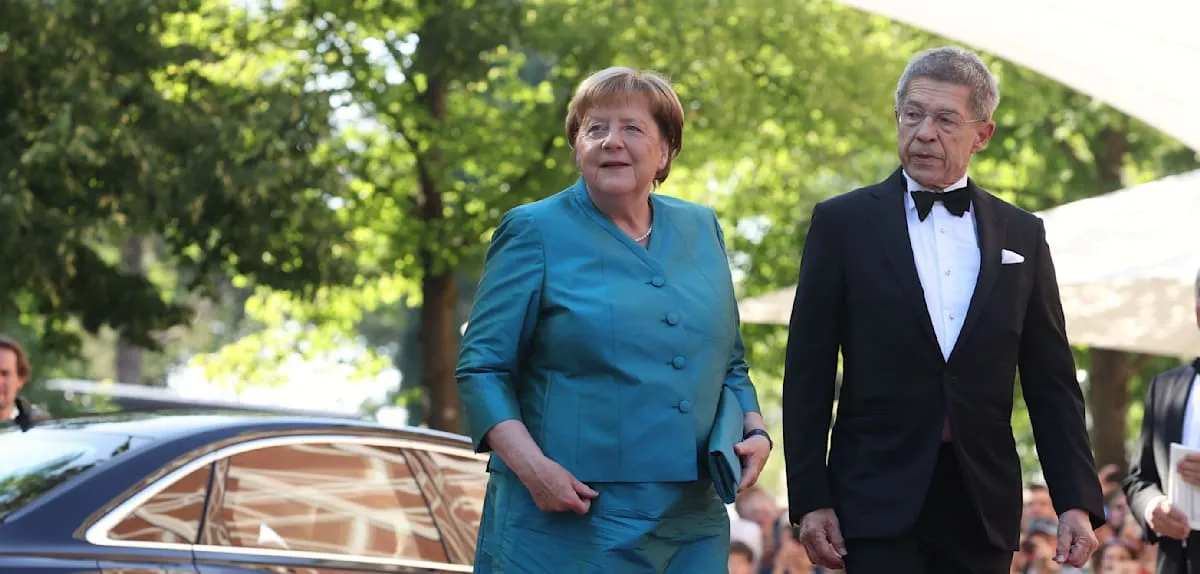
BERLIN – Prominent scientist Joachim Sauer, husband of former German Chancellor Angela Merkel, recently offered a rare glimpse into his personal life through his autobiography. In his work, he reveals profound reflections on his and Merkel's efforts to achieve equality within their marriage, a journey that began approximately two decades ago, and which significantly helped pave the way for women to maintain their independence alongside politicians.
Sauer's acknowledgment refers to the period around 2006, when Angela Merkel began to solidify her position as Germany's first female Chancellor. During that time, the dynamics between a woman's political career at the pinnacle of power and her spouse's role often drew scrutiny, presenting unique challenges related to social expectations and traditional gender roles.
He explicitly writes that the consequences of actions they took 20 years ago created a more conducive environment for women. These actions aimed to make it easier for women to fight for their autonomy, even while accompanying influential political figures. This revelation offers a new perspective on the personal struggles behind the public image of Germany's most powerful couple.
It is important to understand that two decades ago, the issue of gender equality, though already a significant agenda, still faced various structural and cultural obstacles in Germany, as well as on the global political stage. The predominantly male political environment often placed women in positions requiring extra effort to prove their capabilities and autonomy.
The concept of independence 'alongside politicians' articulated by Sauer underscores the dual challenges faced by many spouses of prominent female public figures. They often had to balance personal ambitions with the demands of supporting their partner, while avoiding the potential political shadow that could obscure their professional identity. Sauer himself, a quantum chemistry professor, was known for maintaining a distance from his wife's political spotlight.
The openness of a figure like Joachim Sauer carries particular weight. As a public figure who consistently avoided publicity, his confession in the autobiography signifies the importance of the message he wishes to convey. This not only adds a human dimension to German political history but also provides moral support for the broader struggle for equality.
This revelation also highlights a shift in perspective regarding the role of spouses of heads of state. While previously the wives or husbands of leaders were often expected to occupy a more passive, supportive role, Sauer's reflection indicates an evolution of these expectations, towards recognition of individual independence and personal contribution.
Although further details on the autobiography's contents are still awaited by the public, this statement indicates that the book will offer not just a formal biographical record, but also honest personal insights into the struggles and life principles held steadfast by him and Angela Merkel. This serves as a valuable gift for those interested in German politics and social history.
In this year 2026, issues of gender equality and women's empowerment remain global priorities. The experiences shared by Sauer, though rooted two decades ago, remain relevant as a reminder of the importance of personal and collective commitment in creating a more just and inclusive society, where every individual, regardless of gender, has equal opportunities.
Joachim Sauer's testimony extends beyond a personal story. It becomes a narrative about how consistent efforts to build equality in the domestic sphere can resonate further, positively impacting women's capacity to work and engage in politics without losing their identity or independence.
Editorial Insight: Joachim Sauer's revelation is not merely a personal anecdote, but a crucial validation of the challenges women face in achieving equality, especially in political environments. His reflections on efforts initiated 20 years ago demonstrate that cultural shifts and social norms require time and commitment from all parties. The perspective of a political figure's spouse, who chose not to take a central role, lends authentic weight to the narrative of women's empowerment and affirms that true equality begins at home and in personal interactions. It also serves as a reminder that behind the grand political stage, there are human struggles that are no less important.