 Dodi Irawan
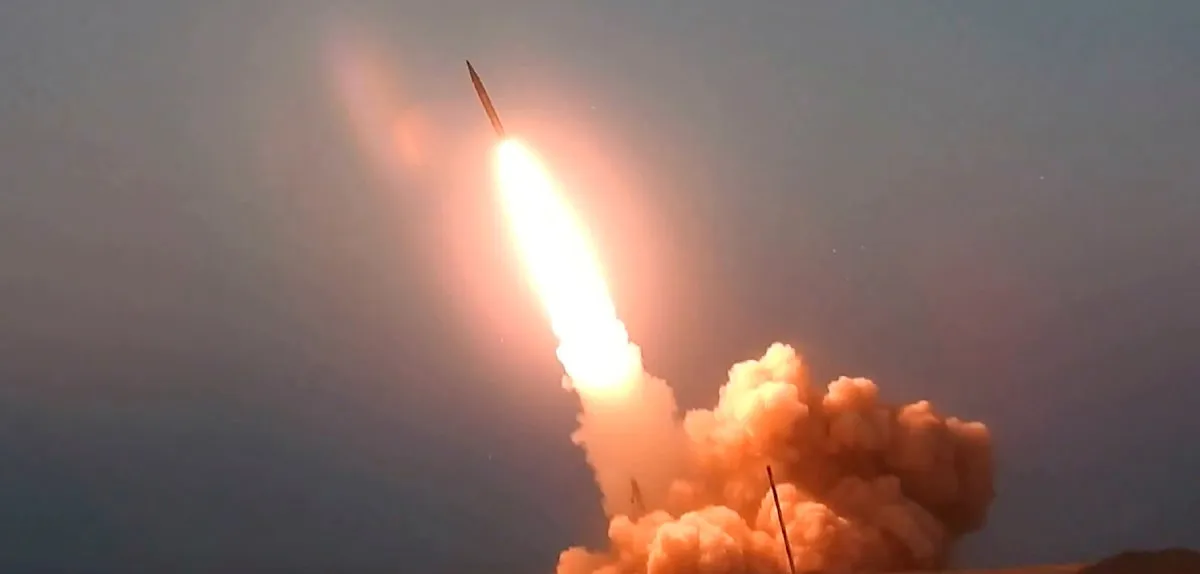
AMMAN — Jordan now finds itself at the forefront of Middle Eastern geopolitical tensions, following a series of incidents indicating the nation has become a primary target for Iranian retaliatory strikes. This situation sparks deep concerns regarding regional stability and the role of the United States in protecting its ally.
This escalation occurs after Iran repeatedly stated its intention to launch retaliatory actions against parties perceived as supporting anti-Iranian operations, particularly those involving the presence of US military forces in the region. Jordan, with its strategic position and strong alliance with Washington, is inevitably caught in the vortex of an increasingly volatile conflict.
Officially, Jordanian authorities affirm that only full support from the United States can guarantee their nation's security and sovereignty against external threats. This statement reflects Amman's reliance on Washington as a power balancer amidst the complex regional dynamics.
However, a visit to Azraq, a city of crucial military significance in Jordan, reveals different perspectives among some observers and local residents. While the government emphasizes US protection, there are voices identifying deeper underlying issues or alternative approaches to confront the threat.
Some analysts argue that the government's sole reliance on US support might overlook internal and external complexities contributing to the tension. They highlight the necessity for a more comprehensive strategy, including active regional diplomacy and strengthening independent defense capabilities.
Tensions between Iran and US allies in the Middle East are not a new phenomenon. However, making Jordan a direct target marks a new, more serious chapter in the years-long proxy conflict. This also has the potential to trigger broader instability across the region.
Several intelligence reports indicate that Iran's intended retaliatory strikes could take the form of cyberattacks, drone launches, or even direct assaults on military installations. This threat demands high readiness from the Jordanian Armed Forces and close coordination with international partners.
Regional security expert, Dr. Hamid Reza, commented, "Jordan is paying the price for its strategic position and the presence of US military. This is not just a threat, but part of Iran's geopolitical calculus to send a strong message to Washington and its allies." This statement confirms that Jordan has become an arena for superpower interests.
Meanwhile, the economic impact of escalating tensions is also a serious concern. Foreign investment could be hampered, and the vital tourism sector for Jordan could suffer a heavy blow if security perceptions decline. Previous conflicts in the Middle East have triggered global energy crises and threats of inflation, demonstrating the widespread impact of any escalation.
The Jordanian government continues to call for de-escalation and dialogue. Jordanian Foreign Minister, Ayman Safadi, in a press statement in Amman, stressed the importance of maintaining regional stability and avoiding provocations that could worsen the situation. "We are committed to protecting our citizens and will take all necessary measures," Safadi stated.
Nevertheless, the official narrative centered on US protection faces resistance in some circles. Some argue that the presence of US military forces actually makes Jordan a more attractive target for Iran, rather than a pure deterrent. Internal discussions regarding the balance between strategic alliances and national vulnerability are increasingly emerging.
The situation in Azraq, which hosts a major Jordanian airbase and US military facilities, serves as a primary barometer. Local residents sense increased tension, despite government efforts to reassure the public. Daily life in the city continues, but is overshadowed by uncertainty.
A local resident in Azraq, Ahmad Al-Khalidi, stated, "We do not want to be a battlefield. We just want to live in peace. Protection is important, but not at the cost of our own security." This sentiment reflects the concerns of many citizens on the front lines of a potential conflict.
Amidst this critical situation, the international community closely monitors every development. The UN Security Council calls on all parties to exercise restraint and resolve differences through diplomatic channels. Jordan's stability is considered vital to prevent the broader spread of conflict in the region.
With Iran continuing to demonstrate a firm stance and Jordan holding fast to its vital alliance with the US, the path to de-escalation appears challenging. The future of stability in Jordan, and its repercussions for the Middle East, is now a major focus globally. Iran's expanding influence and its threats against the US military are key determinants in the evolving dynamic.