 Demian Sahputra
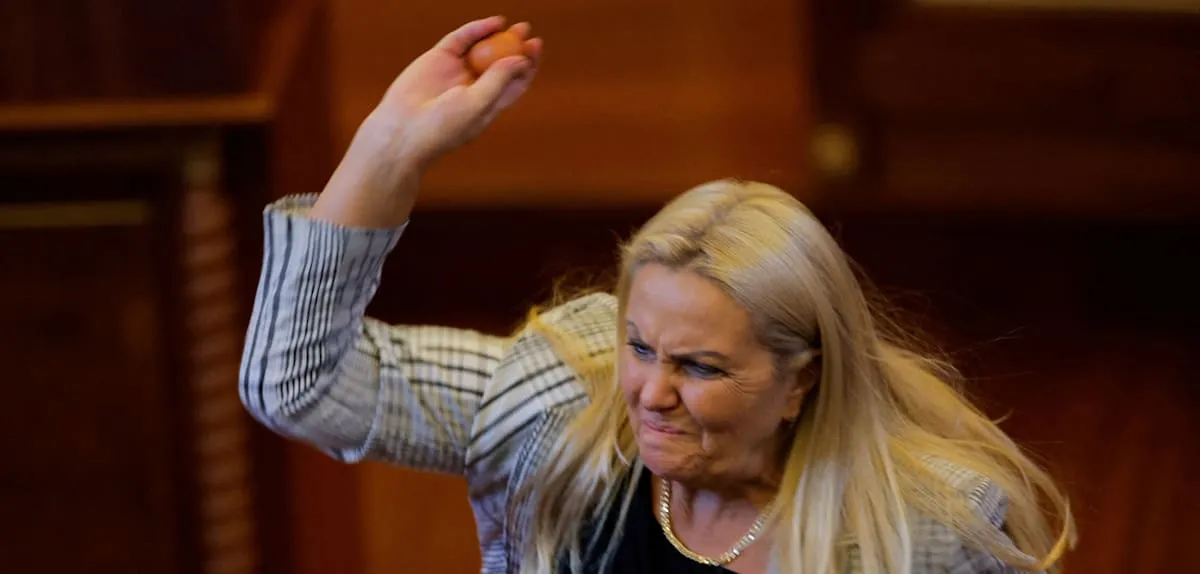
PRISTINA – A heated atmosphere engulfed a crucial debate session in the Kosovo Parliament as Prime Minister Albin Kurti became the target of an egg-throwing incident by an opposition lawmaker, Time Kadrijaj. This shocking event occurred amidst a fierce debate concerning the formation of a new government in 2026, sparking chaos and deepening the political crisis that has gripped the nation.
Political tensions peaked when Kadrijaj, from one of the opposition parties, rose from her seat and hurled several eggs towards the podium where PM Kurti was speaking. Widely circulated video footage shows the eggs hitting the prime minister, creating a chaotic scene in the parliamentary chamber. This act was immediately met with shouts of protest and interruptions from various factions.
Immediately following the incident, several other parliament members rushed to protect Prime Minister Kurti, while security officers attempted to restore order. The session, which was originally discussing policy directions and cabinet composition for 2026, was abruptly halted, replaced by verbal altercations among members that further exacerbated the tension.
Kosovo has indeed been mired in significant political turbulence. The formation of a stable government has always been a challenge, and the current debate reflects a power struggle between parties. This crisis is not merely about cabinet positions but also about the country's future direction amidst various domestic and international pressures.
Time Kadrijaj is known as a vocal figure from the opposition bloc. This egg-throwing act is interpreted as an extreme expression of frustration with PM Kurti's policies and leadership style, as well as the perceived deadlock in political dialogue felt by the opposition. They claim the government has failed to respond effectively to the aspirations of the people.
Despite an understanding of political frustration, many parties called for all political actors to respect democratic processes and parliamentary mechanisms. Symbolic acts of violence, such as egg throwing, while not direct physical violence, are considered damaging to the dignity of the legislative institution and hinder the search for constructive solutions.
Such incidents are not unprecedented on the global political stage, nor even in the Balkan region. Years ago, parliaments in neighboring countries also witnessed similar protests, reflecting widespread political discontent that is sometimes expressed in dramatic ways within the halls of power.
Following the incident, parliamentary security is reviewing its security procedures and access protocols within the building. Questions have arisen regarding how objects with the potential to be projectiles could enter the session area, which should ideally be free from such threats.
This incident has the potential to deepen the chasm between the government and the opposition, complicating reconciliation efforts crucial for Kosovo's stability. Public trust in democratic institutions could also erode if constructive dialogue is not promptly restored.
A spokesperson from the Prime Minister's office issued a strong condemnation of the incident, labeling it an "inappropriate act that damages the image of Kosovo's democracy." They emphasized that differences in opinion must be channeled through constitutional means and civilized debate.
Several diplomatic missions and international organizations operating in Kosovo have released statements calling for calm and dialogue. They underscored the importance of maintaining a conducive atmosphere for political processes and ensuring respect for state institutions.
Editorial Insight: The egg-throwing incident targeting Prime Minister Albin Kurti in the Kosovo Parliament is an extreme manifestation of deep-seated political frustration. While expressive demonstrations are often part of political dynamics, such actions can erode the foundations of democratic institutions and divert focus from the substance of debate. This highlights an urgent need for more effective and inclusive dialogue mechanisms to de-escalate tensions and seek consensus for Kosovo's future. Without constructive solutions, such polarization will only become more entrenched, hindering the nation's overall progress.