 Stefani Rindus
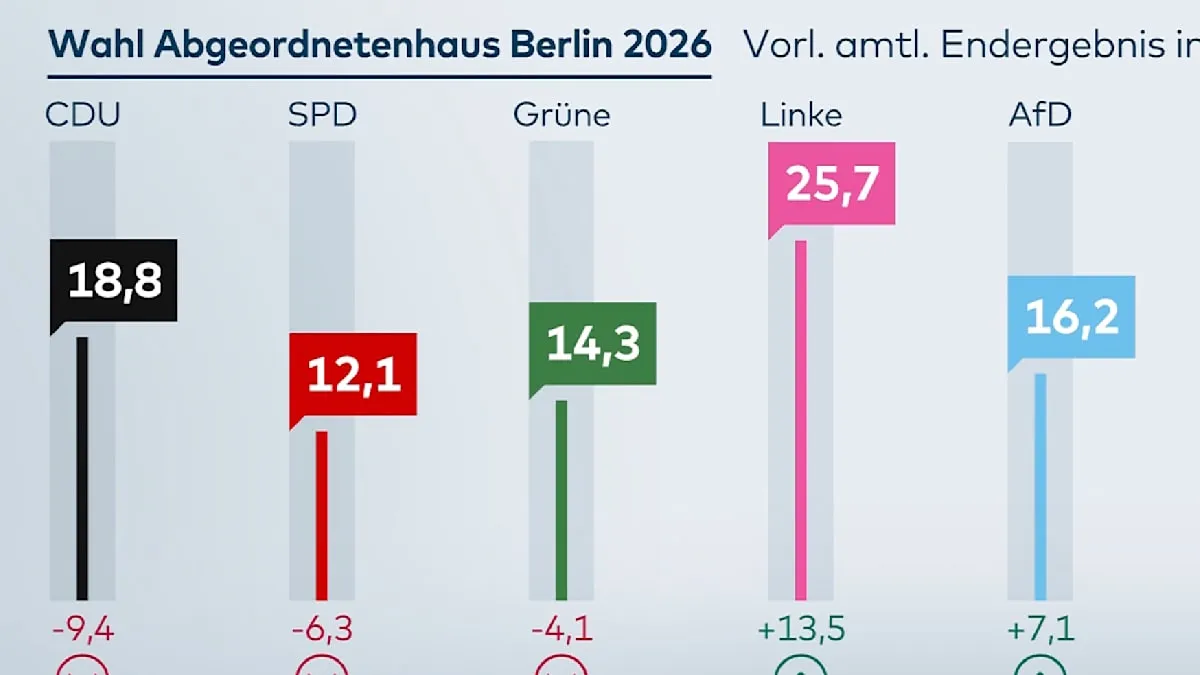
BERLIN – The Left Party, with Elif Eralp as its lead candidate, has made new history in the German capital. According to official reports from the State Election Office, after all votes were counted, the Left Party led the election for the Berlin House of Representatives with a significant vote share, reaching approximately 25.7 percent. This victory places them in the forefront with a clear lead over their rivals.
These election results are a strong indicator of shifting political preferences in Berlin, marking a new era of left-leaning leadership. Political observers highlight this achievement as a reflection of public unrest regarding socio-economic issues that have long been the focus of the Left Party's campaign.
Elif Eralp, now a figure in the public eye, has successfully garnered widespread support thanks to her vision for a more affordable and inclusive Berlin. Campaign promises regarding decent housing, improved public services, and social protection seem to have resonated strongly with voters.
This victory is more than just a number; it is a reflection of the turbulent political dynamics in Germany. A previous article, Left Party Shakes Berlin, Ruling Coalition Loses Majority, had indicated this potential major change. Now, that prediction has proven true, shaking up the traditional political power map.
With 25.7 percent of the vote, the Left Party demonstrates a solid grassroots strength and an ability to attract voters beyond its traditional segments. This lead gives Elif Eralp strong bargaining power in negotiations to form the city government coalition.
Analysts suggest that this high vote acquisition was also influenced by disappointment with established parties. Issues of inflation, cost of living, and the energy crisis were key triggers for many Berlin residents to seek more radical yet perceived as effective political alternatives.
A spokesperson for the Left Party stated, This is a victory for the people of Berlin, a clear mandate for change. We will work hard to fulfill our promises, starting with ensuring every citizen has access to decent housing. This statement reaffirms their commitment to the social agenda.
Forming the next coalition will be a significant challenge. Although the Left Party is in the lead, they will need support from other parties to achieve a parliamentary majority. Negotiations are expected to be tough, considering the ideological differences and interests among the parties.
In a national context, this result in Berlin also has broad implications. The Left Party's victory could signal to other parties to evaluate their strategies and platforms, especially leading up to forthcoming federal elections.
Editorial Insight: Elif Eralp and the Left Party's victory in Berlin is more than just a local election result. It is a profound reflection of the changing political landscape in Europe, where issues of social and economic justice are becoming key determinants. The real challenge for Elif Eralp and the Left Party will be how to translate this mandate into concrete policies that can meet citizens' expectations, while navigating the complexities of coalition-building and pressure from various interests. This will be a true test for left-wing leadership in the heart of Germany.