 Stefani Rindus
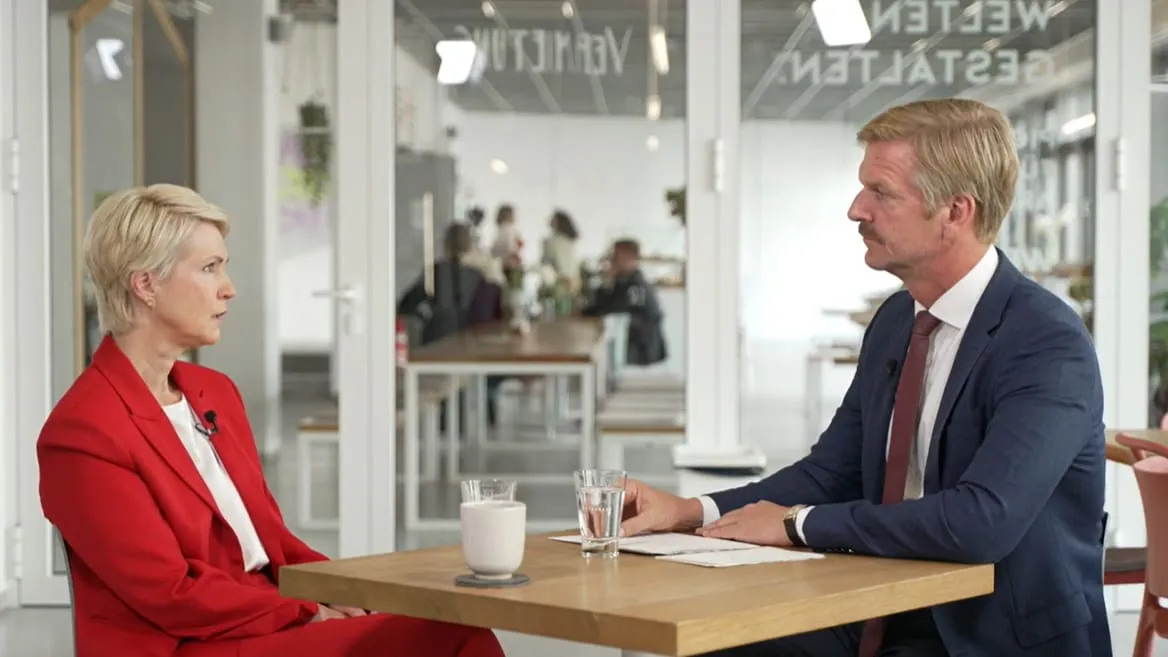
BERLIN – Manuela Schwesig, the Minister President of Mecklenburg-Vorpommern, has openly admitted to a mistake in her past views on Russia. She delivered this statement in an exclusive interview on WELT Talk Spezial with Gordon Repinski, underscoring a fundamental shift in Germany's foreign policy following Moscow's aggression in Ukraine, which is now entering its fourth year since the full-scale invasion. Schwesig's admission reflects the 'Zeitenwende,' or historical turning point, that has reshaped Europe's geopolitical landscape.
The transformation of Schwesig's perspective, a senior politician from the Social Democratic Party (SPD), is a direct response to Russia's invasion of Ukraine. With Russia's war of aggression, there is a Zeitenwende, also for me. And I have drawn the consequences, she affirmed, acknowledging that previous perceptions regarding relations with Russia are no longer relevant amidst the brutal reality of the conflict.
Mecklenburg-Vorpommern, the northern German state led by Schwesig, has a history of close economic ties with Russia, particularly concerning the Nord Stream 2 project. This gas pipeline project symbolized Germany's energy dependence on Russia and has now become a center of geopolitical controversy. Schwesig's candid admission of error demonstrates political courage and adaptation to the new consensus in Berlin.
This acknowledgement is not merely a personal reflection but also a mirror of a profound shift within the German political spectrum. Many politicians, especially those who advocated for 'Ostpolitik' or Eastern policy focused on dialogue and cooperation with Russia, have been compelled to re-evaluate their positions. Today, support for Ukraine and tighter sanctions against Russia form the core pillars of Berlin's foreign policy.
The consequences of the 'Zeitenwende' are evident in various aspects. Germany, historically reluctant in military spending, is now committed to substantial defense investments. This represents a drastic change driven by the perceived security threat from Moscow.
The situation in Ukraine itself remains volatile. Kyiv continues to be hit by drone attacks, and the conflict continues to claim lives, demonstrating that Russia's threat has not subsided despite international pressure. Global tensions continue to rise, with some analysts even warning that Russia could trigger further terror in Europe.
Schwesig's statement is also relevant to the broader discussion about Germany's role in European security. As the largest economy in the European Union, any fundamental shift in Germany's strategic orientation has significant implications for the entire continent.
Political parties in Germany, including the SPD, have faced internal and external pressure to adopt a tougher stance against the Kremlin. Public acknowledgement from figures like Schwesig helps to reinforce the narrative that Germany has learned from past mistakes and is prepared to face current geopolitical challenges with a new perspective.
Political observers note that this statement is crucial for rebuilding public trust, especially in the Baltic states and Poland, which have long warned about Russia's aggressive ambitions. A firmer stance from Berlin is expected to strengthen unity within the European Union and NATO.
In the domestic context, Manuela Schwesig remains an influential political figure. Her ability to admit mistakes and adapt to new realities will be a test of her leadership in these uncertain times. Her step also serves as a reminder for other leaders to continuously re-evaluate amidst an ever-changing global dynamic.
Editorial Insight: Manuela Schwesig's admission marks more than just a change in personal views; it is a validation of Germany's strategic turning point on the global stage. From energy dependence to increased defense budgets, Germany in 2026 appears to have fully embraced a role as a more assertive security player. However, the true challenge lies in how Berlin will balance maintaining essential diplomatic relations with upholding democratic values amidst ongoing aggression from powers like Russia. The courage to admit past errors will be a crucial foundation for the credibility of Germany's future foreign policy.