 Debby Wijaya
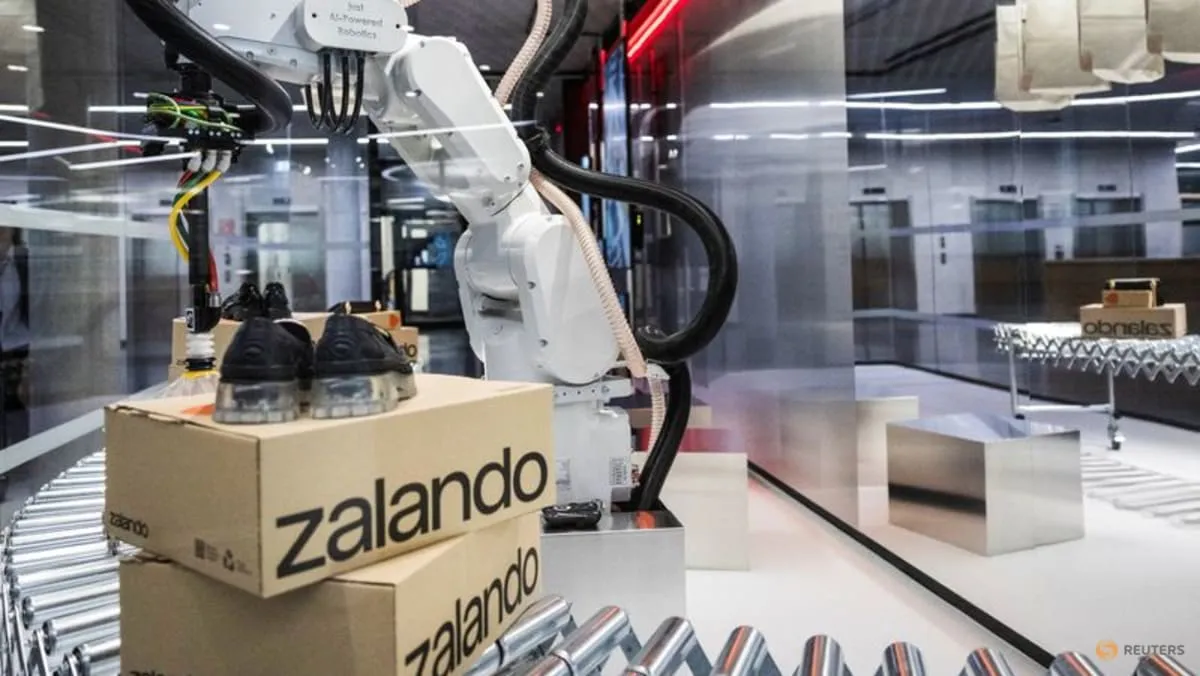
BERLIN – Fashion e-commerce giant Zalando officially launched its latest artificial intelligence (AI)-powered shopping agent in early 2026. This strategic move responds to intensifying business margin pressure amidst an increasingly competitive e-commerce landscape, aiming to transform the consumer experience and boost the company's profitability.
The global retail industry faces significant challenges, from inflation squeezing consumer purchasing power to rising operational and logistics costs. For Zalando, a key player in the European market, this phenomenon has led to a continuous decline in profit margins, forcing management to seek innovative solutions.
This new AI agent is designed to offer a highly personalized shopping experience. Consumers can interact as if speaking with a personal stylist, asking questions about style preferences, sizes, current fashion trends, or searching for specific products based on their needs and mood. The system will process this information to present the most relevant recommendations.
With advanced natural language processing capabilities, this AI agent not only accelerates the product search process but also reduces friction in the shopping journey. For Zalando, this optimization has the potential to increase sales conversion rates, minimize returns due to unsuitability, and build stronger customer loyalty.
This launch positions Zalando at the forefront of retail technology innovation. The year 2026 marks an increasingly massive adoption of AI across various sectors, including e-commerce, where personalization and efficiency are key to survival and growth. Other companies are also beginning to explore similar features, but Zalando aims to be a pioneer with its comprehensive implementation.
A market analyst from a leading consulting firm, Dr. Elena Brandt, stated that Zalando's move is a clever gamble. Pressure on margins has become a crucial issue for many online retailers. Integrating AI is not just about efficiency, but also about creating unique added value for customers, which can ultimately differentiate them from competitors, said Dr. Brandt in a recent interview.
Competition in the European online retail market is indeed fierce, with various platforms vying for consumer attention. From global giants to local online boutiques, all are feeling the effects of fluctuating economic conditions. Investing in technology like AI is one way to gain a competitive edge.
Beyond enhancing the customer experience, the AI agent is also expected to optimize Zalando's internal operations. By analyzing large-scale data on preferences and shopping behavior, the company can make more informed decisions regarding inventory management, marketing strategies, and future collection planning.
Despite optimism, the implementation of AI technology is not without its challenges. Recommendation accuracy, personal data protection, and the costs of developing and maintaining the system are aspects that must be continuously monitored. However, Zalando's management believes that the long-term benefits will far outweigh the initial investment.
Zalando's initiative aligns with the optimism in the technology market projected by global financial institutions. A recent report from Deutsche Bank, for instance, raised its outlook for the US technology market, expecting a sharp rebound in 2026, indicating that investment in digital innovation is key to growth.
The launch of Zalando's AI shopping agent is not merely a response to challenges but also a declaration of their position as an innovation leader in the retail industry. It represents a fundamental adaptation to changing consumer behavior and rapidly evolving market dynamics, where technology forms the backbone of business sustainability.
Editorial Insight: Zalando's move to adopt an AI shopping agent signifies a paradigm shift in retail strategy. It is no longer just about selling products but about building a smart, predictive shopping ecosystem. The success of this initiative will depend on how well the AI can understand the nuances of consumer tastes and, more importantly, how effectively this technology translates into improved bottom-line margins amid the demanding efficiency of the 2026 economy. Innovations of this kind will determine who survives and thrives in the future.