 Angela Stefani
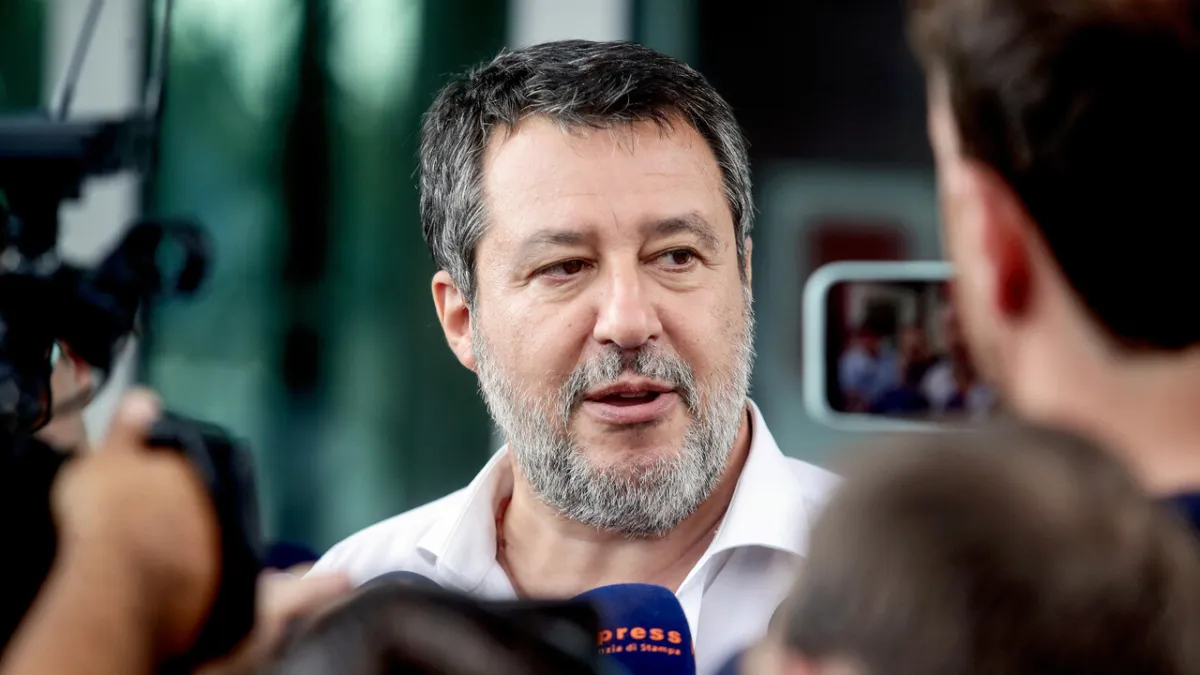
ROME – Matteo Salvini, leader of the Lega party, unequivocally stated that the Lega party is a singular entity, and anyone who disagrees with the party line has no right to represent it. This declaration comes amidst escalating internal tensions, particularly with the emergence of the Patto per il Nord faction, and speculation regarding a new leadership structure.
Salvini's stern statement serves as a direct blow to the 'frondisti' or dissenting groups within the party. He emphasized the necessity of aligned vision and mission to maintain the integrity and political strength of the Lega on the national stage.
Internal friction within the Lega is not a new phenomenon, but it appears to be gaining prominence with the Patto per il Nord movement. This group is reportedly launching attacks and questioning the party's policy direction under Salvini's leadership.
Interestingly, amidst this controversy, a hypothesis has emerged concerning the formation of a 'triumvirate' leadership involving regional governors. This idea could be interpreted as an attempt at reconciliation or a redistribution of power to quell divisions and give more voice to regional leaders.
Salvini's firm policy and the discourse surrounding a triumvirate will undoubtedly shape the future of the Lega party. Whether this will strengthen Salvini's grip on power or pave the way for a more collective leadership structure remains an open question.
The Patto per il Nord, literally 'Pact for the North,' is presumed to have an agenda to refocus the party on regional issues, which are believed to have been somewhat neglected since the Lega shifted towards a broader national political platform under Salvini.
Internal sources, who wished to remain anonymous, indicated that Salvini is determined to resolve differences before the next crucial elections. Unity is key. Without it, we will be fragile, the anonymous source stated.
The internal stability of the Lega party has significant implications for the broader Italian political landscape. As one of the main coalition parties, turmoil within it can affect government policies and inter-party dynamics. The Italian government under Prime Minister Giorgia Meloni, for instance, continues to strive to strengthen the country's position in Europe, including calls for stronger borders as she has previously voiced.
Italian political history is often marked by fragmentation and dynamic alliance formations. Salvini, with his charismatic yet controversial leadership style, now faces the challenge of reunifying his party's ranks to prepare for the 2026 elections.
These developments will be a true test of Salvini's leadership and the Lega party's capacity to adapt to both internal and external demands, potentially altering Italy's political map in the coming years.
Editorial Insight: Salvini's statement reflects both an attempt to consolidate power and a defensive response to internal divisions. The triumvirate hypothesis suggests a potential compromise to maintain cohesion, yet it also risks diluting central authority. This dynamic is crucial to observe given Lega's strategic role in Italian politics in 2026.