 Demian Sahputra
BUCHAREST – Escalations in Eastern Europe flared once again in early 2026 following a massive wave of drone attacks launched by Ukraine targeting the Russian capital, Moscow. This incident was exacerbated by a Russian unmanned aerial vehicle (drone) being shot down by a NATO fighter jet in Romanian airspace, raising global concerns about wider implications for regional security and the ongoing peace efforts by European powers.
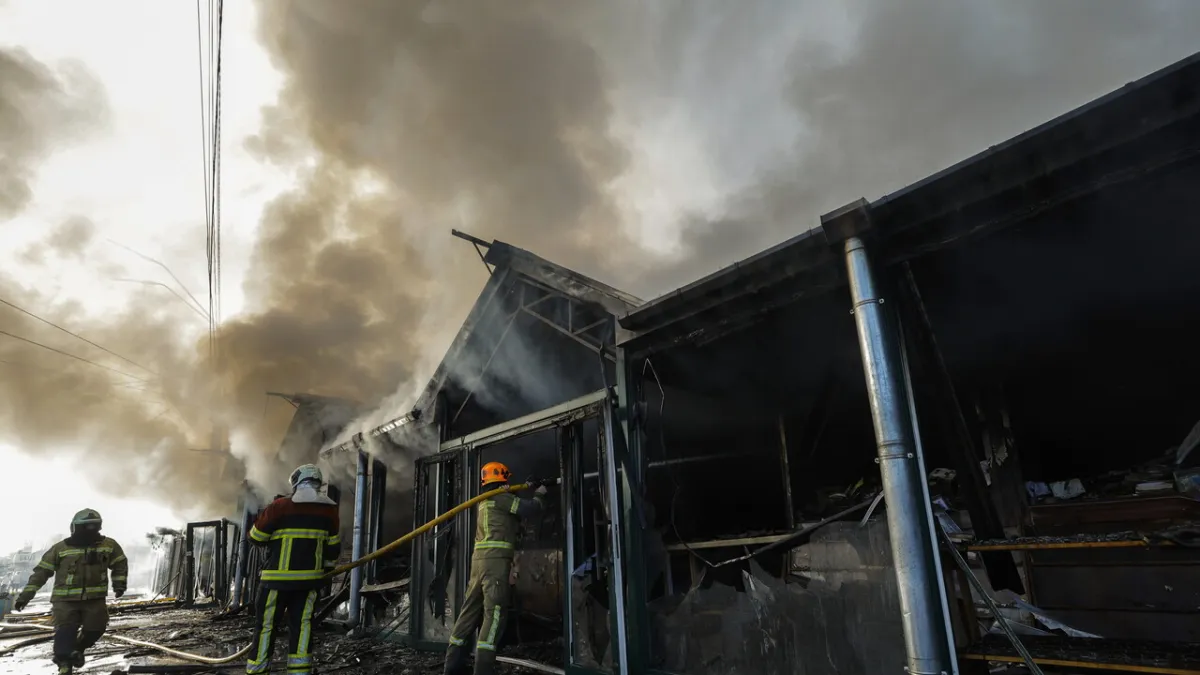
Reports from Moscow indicated a barrage of drones throughout the night, targeting several strategic installations and civilian areas in the city center. While most were reportedly intercepted by Russian air defense systems, several explosions caused significant damage and disruption. Russian authorities immediately accused Ukraine of orchestrating the aggression, labeling it an act of terrorism.
Hours after the Moscow attacks, the Romanian Ministry of Defense confirmed that a NATO fighter jet on a routine patrol mission had shot down a drone identified as Russian. The drone was detected violating Romanian airspace near the Ukrainian border, posing a serious threat to the national security of the alliance member state.
This incident in Romania immediately drew a strong response from the NATO alliance. The NATO Secretary-General, in a statement, emphasized the alliance's commitment to protecting the territorial integrity of its members and strongly condemned the sovereignty violation by the Russian aircraft. They underscored the importance of respecting international law and the sovereign borders of states.
Conversely, Russia firmly denied allegations of airspace violation and claimed the downed drone was likely a reconnaissance unit that had strayed or malfunctioned. Moscow demanded a thorough investigation into the shooting incident, while warning of serious consequences if deliberate provocative actions were proven.
The deteriorating situation places immense pressure on European capitals working to de-escalate tensions. Paris, London, and Berlin are intensively working behind the scenes to bring all relevant parties to the negotiation table, seeking a diplomatic solution to end the prolonged conflict. These efforts align with global calls for peace, including those from Pope Leo XIV, who has repeatedly urged dialogue and reconciliation.
These dual incidents reflect the high risk of unexpected escalation in the Ukrainian conflict. The increasingly tense situation not only threatens regional stability but also has the potential to disrupt global shipping lanes and energy supplies, as well as trigger new waves of refugees, burdening neighboring countries.
Geopolitical analysts suggest that the drone shoot-down by NATO serves as a firm message that the alliance will not tolerate violations of its members' airspace, even if the incident risks provoking a Russian response. This underlines the increasingly thin line between a special military operation and a full-scale conflict on Europe's borders.
This crisis unfolds amidst broader global upheavals, including the situation in the Middle East, as seen in reports regarding Israel's threats against Lebanon, which illustrate the fragility of the international security order. Each conflict possesses its own dynamics, yet collectively they heighten global uncertainty.
Nonetheless, the hope for diplomatic dialogue remains a top priority. The French Foreign Minister stated that all channels of communication must remain open to prevent miscalculations that could worsen the situation. He also emphasized that diplomacy is the only sustainable way forward.
Editorial Insight: The incidents in Moscow and Romania are not merely ordinary military events; they are concrete indicators of the fragility of peace efforts and the potential for escalation in the heart of Europe. NATO's downing of the drone, regardless of its intent, sends a dual signal: the alliance's firm commitment to defense, alongside the tangible risk of direct confrontation with Russia. Without intensive diplomatic coordination and restraint from all parties, this vicious cycle of aggression and retaliation will become increasingly difficult to unravel, dragging the continent into deeper uncertainty in 2026.