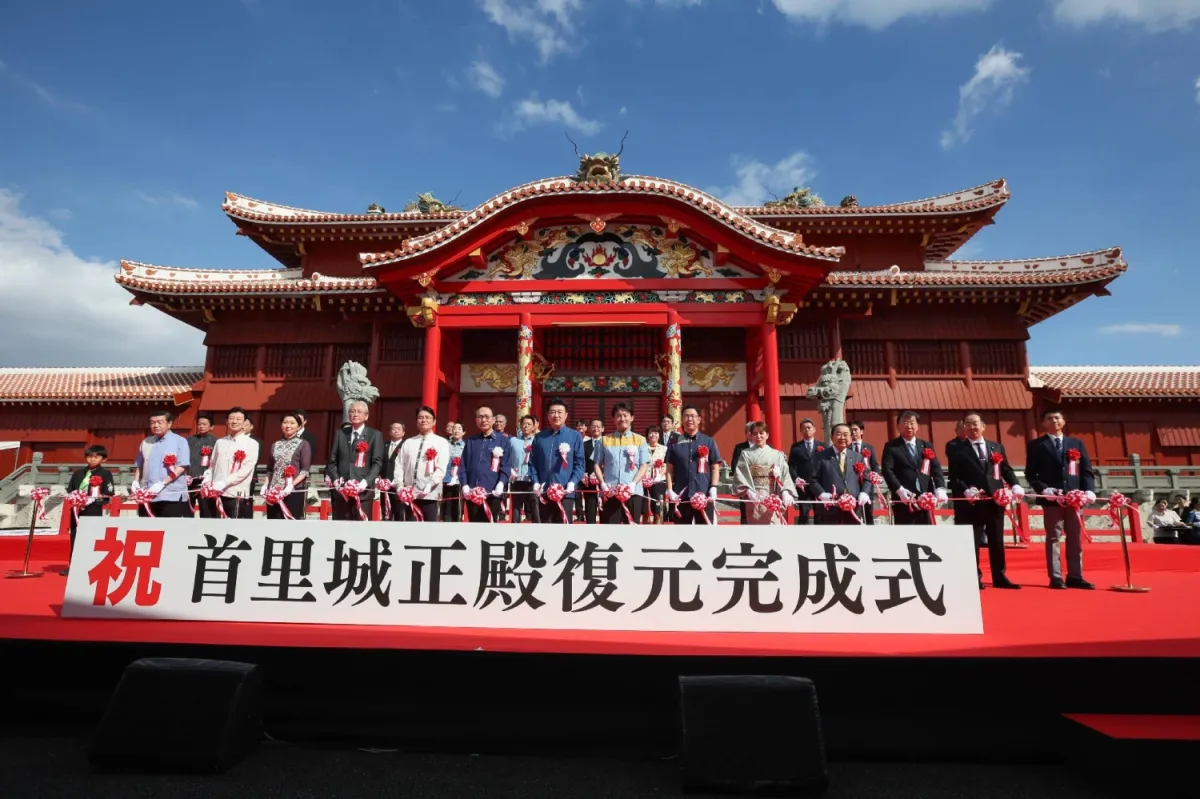
OKINAWA – Seven years after a devastating fire, the main hall of Shuri Castle in Okinawa, a renowned UNESCO World Heritage site, finally reopened to the public in late October 2026. This monumental recovery marks the resurgence of a crucial cultural symbol of the Ryukyu Kingdom, affirming Japan's commitment to preserving its national heritage.
The tragedy that shocked the world occurred in the early hours of October 31, 2019. An uncontrolled blaze consumed the main hall (Seiden), the north hall (Hokuden), the south hall (Nanden), and several other important structures within the Shuri Castle complex. The event not only obliterated valuable artifacts but also left a deep wound on the cultural identity of the Okinawan people and Japan as a whole.
Shuri Castle is more than just a historical building. It served as the political and cultural center of the Ryukyu Kingdom for centuries, an independent entity with extensive trade and diplomatic relations across Asia. Its unique architecture, blending Japanese and Chinese elements, reflects the complex history and rich cultural exchange in the region. UNESCO designated it as a World Heritage Site in 2000, recognizing its outstanding universal value.
Once the debris cooled, the Japanese central government and Okinawa prefectural authorities immediately initiated restoration efforts. This colossal project involved thousands of dedicated workers, architects, and restoration experts. They faced significant challenges, including replicating traditional architectural details, sourcing special timber from across Japan, and employing ancient construction techniques to ensure the authenticity and durability of the structures.
The restoration of the main hall meticulously followed blueprints and historical documentation. Expert artisans utilized traditional methods, such as the use of wooden pegs without modern nails, to reconstruct each part with precision. This step aimed not only to restore the physical form of the building but also to revive nearly lost craftsmanship and heritage skills.
The 2019 fire triggered a wave of global support. Donation funds poured in from various parts of the world, reflecting international empathy for the loss of cultural heritage. The swift response and the scale of these recovery efforts underscore the resilience of the Okinawan community and Japan's determination to restore one of their historical gems.
The local community in Okinawa played an integral role in the restoration process. From fundraising to participation in workshops and educational programs, their involvement ensured that Shuri Castle is not merely a restored building but a living symbol of collective memory and community pride.
The reopening of the main hall is expected to provide a significant boost to Okinawa's tourism sector. Before the fire, Shuri Castle was a premier destination, attracting millions of visitors annually. Now, with its grandeur restored, it is ready to welcome tourists back, offering an experience that is not only captivating but also inspiring in its testament to cultural endurance.
The case of Shuri Castle highlights Japan's priority in cultural heritage preservation. The country has a long history of safeguarding and revitalizing its historic sites, often after natural disasters or conflicts. This philosophy is reflected in numerous ongoing national initiatives.
With the completion of the main hall's restoration phase, attention may now shift to the recovery of other damaged structures or the enhancement of future fire prevention measures. Lessons learned from the 2019 tragedy will serve as crucial guidance to ensure the sustainability and safety of this site for future generations.
The story of Shuri Castle is a vivid reflection that while disaster can destroy, human spirit and determination can rebuild. From the ashes of devastation, an architectural masterpiece stands firm once more, ready to tell its story to the world.
Editorial Insight: The restoration of Shuri Castle in Okinawa is more than just a construction project; it is a powerful declaration of national identity and resilience. In 2026, the return of the main hall not only restores a physical site but also reignites collective pride. It serves as an important reminder to the world of the invaluable nature of cultural heritage and the essence of community resilience in the face of tragedy. This project also has the potential to inspire similar efforts globally in preserving historical footprints.