 Dorry Archiles
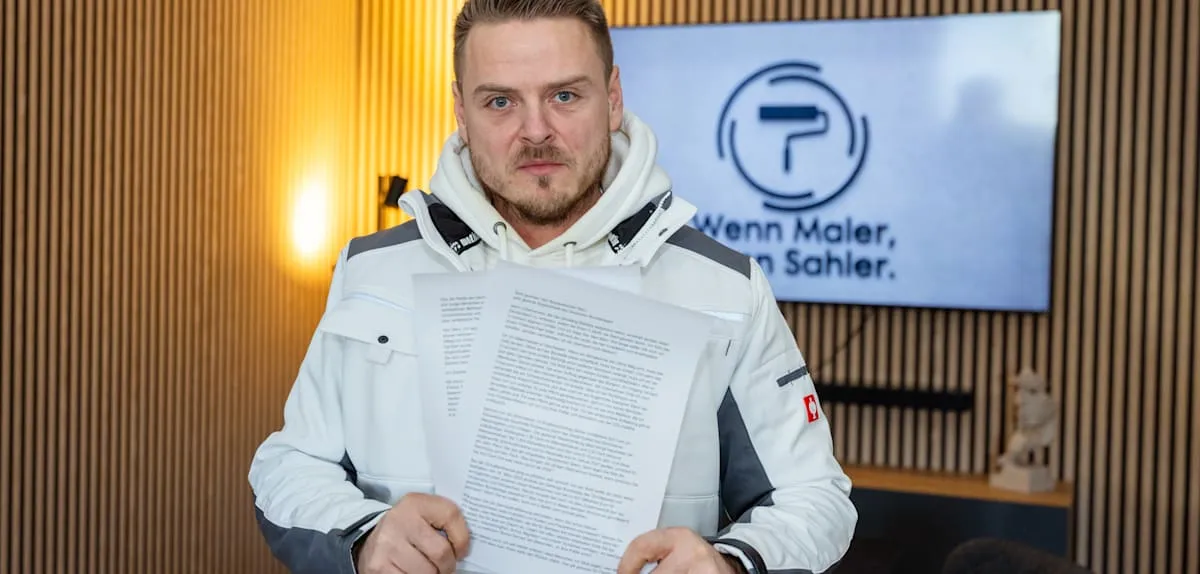
BERLIN – A startling open letter penned by a 36-year-old master painter from North Rhine-Westphalia (NRW) has recently circulated widely among German Members of Parliament. The provocative letter explicitly questions the leadership of Chancellor Merz, leveling serious accusations that his policies are 'abolishing Germany' and threatening the nation's future. This incident has immediately ignited a fierce debate regarding the direction of national policy amidst the multidimensional crises facing the country.
The letter, known as a 'Brandbrief' or strongly worded letter of protest, specifically highlights the impact of government policies on the lives of ordinary citizens and small and medium-sized enterprises. The author, who chose to remain publicly anonymous but whose identity is known to the recipients, expressed deep disappointment over what he perceives as an erosion of Germany's fundamental values and economic well-being.
Through his letter, the painter outlined various grievances, ranging from burdensome taxes and increasingly complex bureaucracy to concerns about social security and Germany's demographic future. He feels that the government under Chancellor Merz has failed to protect the interests of its own citizens, instead prioritizing agendas misaligned with the country's long-term prosperity.
The dissemination of this Brandbrief within the Bundestag, the German parliament, underscores the critical nature of the issues raised. Many parliamentarians are reportedly shocked and feel pressure from their constituents who share similar sentiments. This letter serves as a tangible reflection of growing public anxiety, particularly in industrial states like North Rhine-Westphalia.
Chancellor Merz, often associated with conservative policies and economic reforms in the public eye, has not yet issued an official response to the letter. However, his party, the Christian Democratic Union (CDU), insists that the government continues to strive for economic stability and address existing social challenges. They argue that the criticism is overly simplistic and neglects the complexities of global issues.
Indeed, Germany currently faces a series of significant challenges. From soaring inflation and an unresolved energy crisis to immigration integration issues that fuel social tensions. This situation is exacerbated by political turmoil within the European Union, as seen in demands to end German hegemony, which adds further pressure on national leadership.
The painter's letter powerfully represents the voices of ordinary people who feel unheard. The issues raised, though coming from a single individual, resonate with the feelings of many German citizens concerned about the loss of national identity and the economic prosperity that has long characterized the nation.
Several political analysts have called for the government and Chancellor Merz to take this Brandbrief seriously, not merely as criticism, but as an invitation for more open dialogue with the public. Transparency and accountability are key to restoring dwindling public trust.
Tensions in NRW themselves are not new. Recently, the province also came under public scrutiny due to a minister's flight scandal and chaotic budget debates, indicating deep dissatisfaction with government performance at various levels.
If these negative sentiments persist without effective handling, it is feared they could erode Germany's political stability and trigger shifts in electoral support. The future of Germany, as Europe's economic powerhouse, heavily relies on its leaders' ability to address its citizens' fundamental anxieties.
Editorial Insight: An open letter from an ordinary worker, boldly accusing Chancellor Merz of destroying Germany, is more than just a complaint. It is a social thermometer measuring the temperature of profound discontent. This phenomenon reflects a failure in political communication and significant challenges in formulating policies responsive to the needs of the people. The German government, and particularly Chancellor Merz, must take concrete steps to reconstruct dialogue, avoid polarization, and ensure that every policy genuinely focuses on long-term prosperity for all segments of society, not just a select elite. Otherwise, 'Brandbriefs' of this kind will continue to emerge, threatening the foundations of this powerful nation's political stability.