 Dorry Archiles
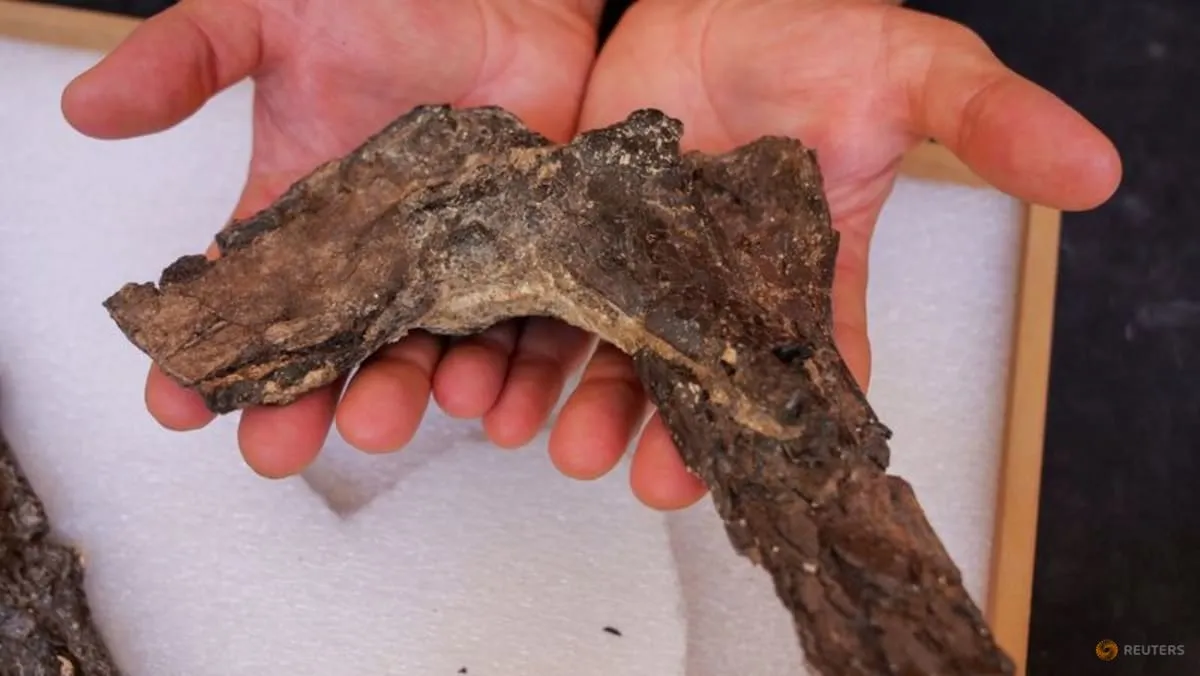
RIO DE JANEIRO – The world of paleontology has been shaken by an extraordinary announcement from a group of Brazilian scientists in 2026. They successfully identified and documented remarkably well-preserved evidence of red blood cells within a dinosaur fossil discovered in northeastern Brazil. This groundbreaking finding opens a new chapter in understanding the biology and physiology of the gigantic ancient creatures that dominated Earth millions of years ago.
This specific discovery originated from an excavation site in the Arari Basin, long known as a treasure trove of paleontological finds. Researchers found bone fragments containing these astonishing microscopic details after a series of analyses using advanced imaging technology. The location frequently yields fossils with exceptional preservation quality, but the discovery of red blood cells far exceeded expectations.
The identification process was challenging. The team employed a combination of transmission electron microscopy (TEM) and Raman spectroscopy techniques, allowing them to visualize cellular structures at nanometer resolution and analyze their chemical composition. The results revealed particles morphologically consistent with red blood cells, complete with traces of hemoglobin.
This is a transformative moment for science, stated Professor Ana Costa, a paleontologist from the University of Sao Paulo, during a virtual press conference organized by the research team. Directly observing the microscopic traces of dinosaur life opens unexpected insights into their circulatory system and, in turn, their metabolism.
For many years, the study of dinosaurs was often limited to analyzing bones and fossilized tracks, providing only a general overview of skeletal structure and behavior. With this evidence of red blood cells, scientists can now begin to piece together a more detailed picture of dinosaurs' physiological aspects, such as oxygen transfer efficiency and potentially even body temperature.
Similar discoveries, although extremely rare, have been reported previously but often remained subject to scientific debate. The quality of preservation found in Brazil this time, coupled with comprehensive analytical methods, provides the strongest evidence to date, bolstering claims of ancient red blood cell existence.
The research team explained that the key to preservation lies in the unique geological conditions of the Arari Basin, where rapid mineralization after the organism's death helped prevent total decomposition of organic matter. The anoxic (oxygen-poor) environment in the sediments also played a vital role in maintaining the microscopic integrity of biological structures.
The implications of this discovery are not limited to understanding dinosaur biology alone. Further study of these red blood cells has the potential to reveal crucial information about evolutionary adaptations, how dinosaurs coped with environmental changes, and even provide new clues regarding mass extinction events. This marks a significant step forward in paleobiology.
Brazil once again asserts its position as one of the world's leading centers for paleontological research. This discovery not only adds to the collection of astonishing finds but also attracts international researchers to further explore the potential of the country's ancient sites. Global collaborations are anticipated to increase.
Scientists hope this discovery will spur further exploration for other soft tissue traces in ancient fossils. They are optimistic that with ongoing technological advancements, the boundaries of knowledge about prehistoric life will continue to be pushed, bringing us closer to understanding a long-lost world.
Editorial Insight: The discovery of dinosaur red blood cells in Brazil is more than just an interesting piece of news; it is a fundamental breakthrough in paleobiology. It paves the way for more accurate reconstructions of dinosaur physiology, challenging old assumptions and potentially shifting research paradigms. Its impact could extend to pharmacology and biotechnology if related genetic material can be analyzed. This finding confirms that Earth's past still holds many secrets waiting to be unveiled by scientific persistence.