 Dodi Irawan
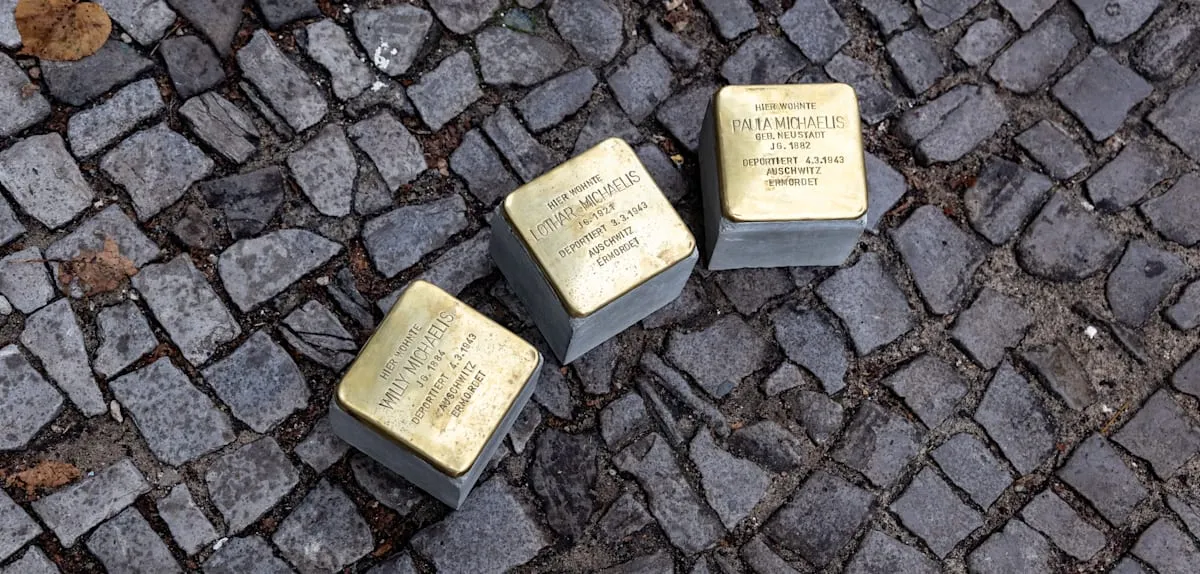
HEIDENAU – The city of Heidenau in Saxony, Germany, in 2026 has become the focal point of a national controversy after a coalition of the Christian Democratic Union (CDU) and the Alternative for Germany (AfD) surprisingly approved a joint motion to halt the installation of new Stolpersteine in public spaces. This decision triggered a wave of concern and criticism from various parties, reigniting the sensitivity surrounding Holocaust history and Germany's culture of memory.
This controversial step was taken after both parties submitted a joint proposal that was successfully passed by the city council. The cessation of these small monuments marks a significant shift in how a German city chooses to commemorate the victims of Nazi crimes, especially amidst rising right-wing political sentiment.
Stolpersteine, or 'stumbling blocks', are an art project initiated by artist Gunter Demnig. These small brass-plated monuments, approximately 10x10 centimeters, embedded in sidewalks, aim to commemorate individual victims of the Holocaust, including Jews, Sinti and Roma, homosexuals, people with disabilities, and opponents of the Nazi regime who lived at that location before being deported or murdered. Each stone is engraved with the victim's name, birth date, deportation date, and place of death.
Since their first installation in the 1990s, over 100,000 Stolpersteine have been placed in more than 1,200 cities across 27 European countries, making it the world's largest decentralized monument. This project personalizes the memory of millions of victims, bringing back individual narratives often lost in statistics.
However, in Heidenau, an AfD city councilor, who proposed the halt, presented an argument that sparked fierce debate. He stated, In Berlin, people spit on Stolpersteine, referring to incidents of vandalism and a lack of respect for the monuments in some places.
This quote highlights concerns about the inappropriate treatment of symbols of memory, which was then used as a reason to stop further installations. However, critics argue that the appropriate response should be protection and education, not the cessation of a deeply meaningful project.
The Central Council of Jews in Germany (Zentralrat der Juden in Deutschland) and various Holocaust memory organizations condemned Heidenau's decision. They believe that this action can be interpreted as a form of memory erasure and a blow to efforts against forgetting and education about Nazi crimes.
The collaboration between the CDU, a mainstream conservative party, and the AfD, known for its anti-immigrant and nationalistic rhetoric, on such a sensitive issue raises serious questions. Such alliances are often seen as a signal of normalization of political positions previously considered marginal or extreme, especially regarding the interpretation of German history.
This decision risks deepening divisions within German society regarding how its dark history should be remembered and taught. It could also set a precedent for other cities to follow suit, potentially undermining efforts to preserve Holocaust memory across the country.
Memory activists and historians urge federal and state governments to intervene, ensuring that monuments commemorating Holocaust victims remain protected and respected. They emphasize that education and public awareness are key to preventing the recurrence of past tragedies.
Editorial Insight:
Heidenau's decision to halt the installation of Stolpersteine, following a joint CDU and AfD proposal, is not merely a local issue. It is a concerning barometer of the direction of memory culture in Germany, especially amidst the rising power of right-wing politics. The argument regarding vandalism, while valid, should prompt increased protection and education, not the cessation of a vital memorial project. This step risks opening space for historical revisionism and the normalization of anti-memory sentiments, especially given that anti-Semitism remains a serious concern in Germany. As highlighted in the article Ozdemir Shakes Berlin: Demands Equal Anti-Semitic Standards for Left Party, the need for strict anti-Semitic standards is crucial. Furthermore, the safety of the Jewish community continues to be a concern, as reported in Dusseldorf Stunned: Jewish Man Brutally Attacked, Community on Alert!. This action by Heidenau, in 2026, could be a crucial episode in Germany's struggle to confront and learn from its past.