 Dodi Irawan
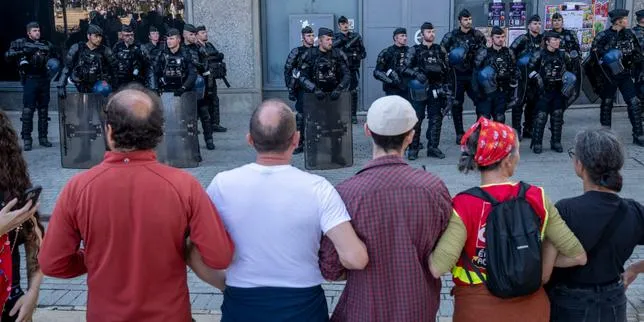
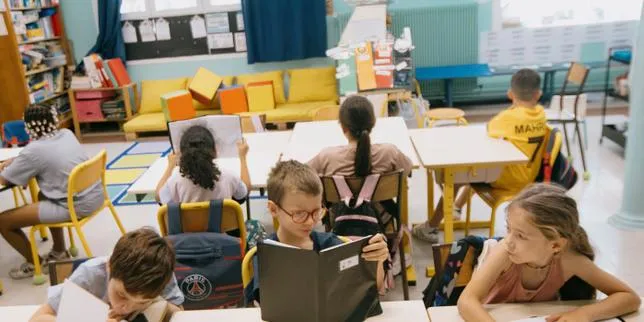
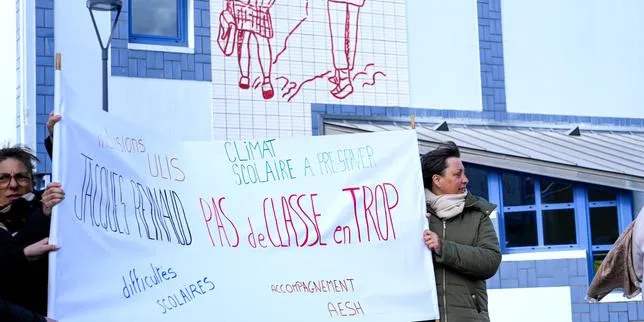
Paris – An unexpected wave of solidarity is sweeping across France in early 2026, as thousands of parents and teachers form protective lines in front of blocked schools and within every student demonstration procession. This action is a direct response to the escalating student mobilization demanding education reforms, with the primary goal of providing moral support and preventing potential violence or conflict escalation that often accompanies protests.
This mass concentration involving various community elements highlights deep concerns about student safety amidst the surging wave of protests. Since the beginning of this month, demonstrations against government education policies under President Emmanuel Macron's leadership have intensified, especially after several incidents of violence were reported in clashes between demonstrators and authorities.
Parent organizations and teacher unions have expressed their disappointment with how the government is handling student demands. A representative from the National Parents' Association (Federation des Conseils de Parents dEleves/FCPE) in Paris, Madame Sylvie Dubois, asserted, What are we supposed to do? Let our children be clubbed? This rhetorical question reflects the collective anxiety that drives them to act.
This solidarity movement is not limited to passive support. Parents and teachers are actively strategizing to be present in vulnerable locations. They form human chains at school gates, particularly in areas like Saint-Denis and the outskirts of Paris, which are epicenters of the unrest.
Their main objective is to de-escalate tensions and ensure protests proceed peacefully, without repressive intervention from authorities or provocation from anarchist groups. Their presence is expected to serve as a 'buffer zone' that allows students to voice their aspirations without fear.
The background to this turmoil is an accumulation of education reform policies deemed burdensome and unresponsive to student needs. These policies, which have been under scrutiny for several years, are considered to be causing chaos in the education system and for the future of young French generations.
Students are demanding a review of the curriculum, increased education funding, and guaranteed fairer access to higher education. They feel that current reforms only produce a generation prepared for obedience, as indicated by some expert analyses.
Reactions from the police to previous student demonstrations also fueled public anger. Some reports mentioned the use of excessive force, which subsequently triggered police violence that shut down hundreds of schools. This adds urgency for parents and teachers to directly intervene.
Jean-Luc Moreau, a history teacher from a lycee in Lyon, stated, We don't just teach them in class; we also have a moral responsibility to protect them outside of class. It is the future of France at stake. His remarks reflect the strong commitment of educators.
This cross-generational solidarity indicates a deepening rift between the government and civil society on education issues. The French government is expected to seek constructive dialogue solutions rather than repressive approaches.
Political observers in France believe that this act of solidarity could be a turning point in the ongoing wave of protests. The presence of respected adults in demonstrations has the potential to shift the narrative from mere 'student riots' to a 'broad societal movement'.
Indeed, some commentators compare this situation to major social movements in the past, where broad civil society participation was key to significant change. The potential for conflict escalation becomes lower with informal mediation on the ground.
However, challenges remain. How will the government respond to this solidarity movement? Will it open up broader avenues for dialogue, or will it further strengthen an authoritarian stance? These questions still hang in the balance amid the turmoil in France.
Parents and teachers have sent a clear message: they will not leave their children alone to face pressure and potential violence. They are committed to continuing to organize and ensure student voices are heard safely.
Editorial Insight: This solidarity action by parents and teachers in France is not merely a form of emotional support but a clever strategy to pressure the government into seriously addressing student demands. Their physical presence minimizes the risk of clashes while providing strong moral legitimacy to the movement. If the government fails to respond constructively, this solidarity could evolve into a larger civil movement, potentially destabilizing the political and social landscape in France.