 Demian Sahputra
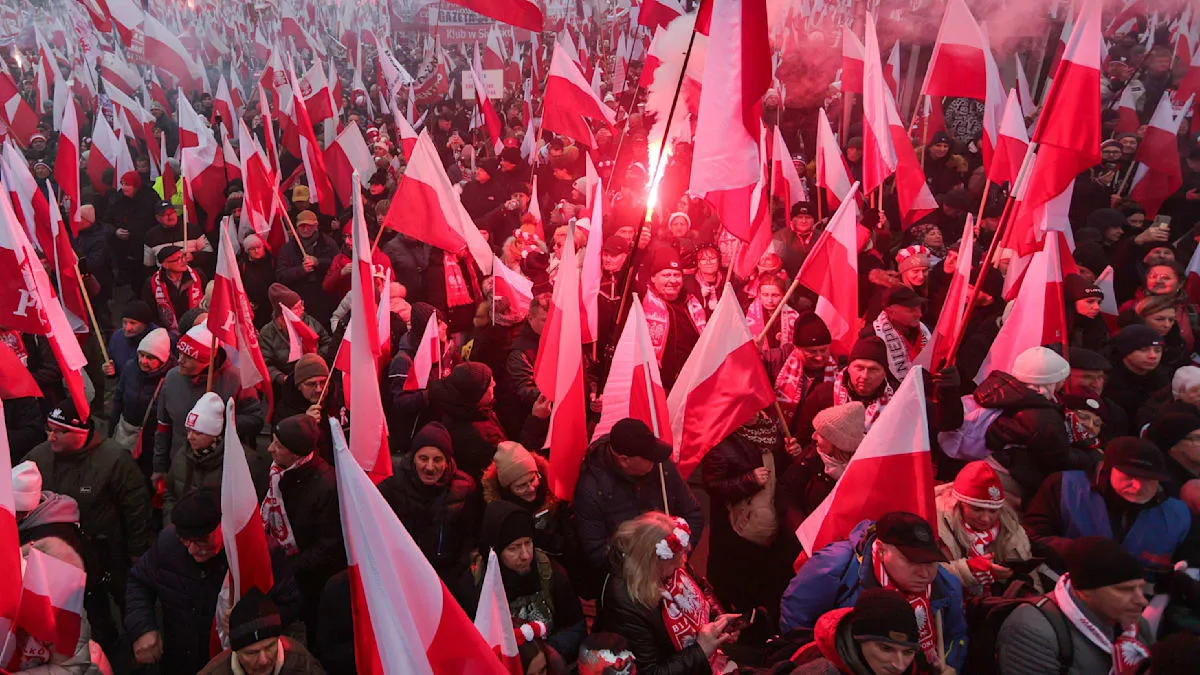
WARSAW – Tens of thousands of Polish citizens flocked to the capital for the 2026 Independence March, a patriotic celebration unfortunately tainted by the overt presence of far-right extremist symbols and antisemitic books. This incident raises profound concerns about the rising narrative of intolerance within national commemorations, sparking intense debate over national identity and values at the heart of Europe.
The Independence March, traditionally held annually on November 11th to commemorate Poland's regaining independence in 1918, has long been a symbol of national pride. However, in recent years, the event has increasingly been marked by the participation of ultranationalist and radical right-wing groups who exploit the platform to propagate hateful ideologies.
At this year's event, flags bearing insignia resembling historical fascist symbols and banners with provocative messages were clearly visible among the massive crowd. Furthermore, some participants were observed peddling and displaying books openly containing antisemitic narratives, fueling public outrage and international condemnation.
The emergence of antisemitic literature is particularly alarming. Such books, which often distort history and spread harmful prejudices against Jewish people, pose a serious threat to the values of tolerance and pluralism held by democratic societies. Their presence at a national celebration is a severe blow to efforts for reconciliation and historical education.
Although the march organizers frequently claim no affiliation with radical groups, the recurrence of similar incidents each year indicates a gap in oversight or a lack of decisive action to prevent the misuse of the event. Critics demand the government take more concrete steps to ensure national festivities do not become platforms for promoting hatred.
The Polish government, currently led by its Prime Minister, faces a dilemma in responding to this phenomenon. On one hand, freedom of assembly is a fundamental right, but on the other, the promotion of extremist ideologies and racial hatred cannot be allowed without consequences. Balancing these two rights presents a significant challenge to Poland's democracy.
Civil society organizations and human rights groups immediately released strong statements, calling for a thorough investigation into the incident. They assert that allowing the spread of extremist ideologies can erode the foundations of society and open the door to broader social conflicts.
Historically, Poland has had a bitter experience with foreign occupation and ideological conflicts. Therefore, the re-emergence of such extremist sentiments on their independence day is a painful irony. It highlights the ongoing challenge of preserving accurate historical memory and combating factual distortions.
Poland's international image is also jeopardized by incidents of this kind. Amidst efforts to strengthen diplomatic and economic ties with European and global partners, this event has the potential to damage the country's reputation as a democratic and progressive member of the European Union.
International political observers are closely monitoring these developments. They view the incident in Warsaw as an indicator of a global trend of rising right-wing populism and ethnic nationalism in various countries, including across Europe.
It is crucial for law enforcement authorities to identify individuals or groups responsible for disseminating these hateful symbols and literature. Firm legal action is necessary to affirm that such acts have no place in a modern, civilized Polish society.
This incident once again underscores the urgency of anti-extremism education and the promotion of democratic values from an early age. Engaging young generations in open dialogue about history, human rights, and the dangers of intolerance is crucial to prevent the recurrence of similar events in the future.
Editorial Insight: The events at the 2026 Warsaw Independence March are not merely isolated incidents but a reflection of Poland's complex struggle with its national identity. The conflict between genuine patriotism and attempts by extremist groups to hijack it demonstrates that the fight against hatred is an ongoing task. The response from both the government and civil society will be critical in determining Poland's future direction in upholding democratic principles and tolerance.