 Dorry Archiles
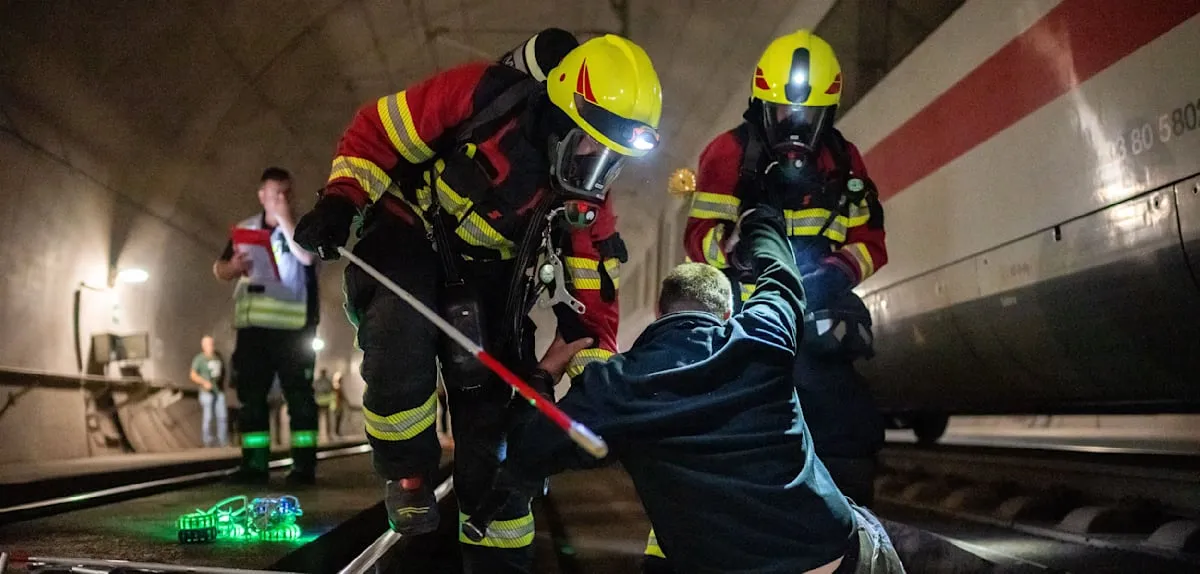
THURINGIA – A large-scale exercise simulating an ICE high-speed train fire inside a tunnel in the Thuringia region, Germany, recently concluded with shocking and concerning results. The drill, designed to test the readiness of emergency services in handling a serious disaster scenario, instead exposed critical flaws in the rescue response system. Significant delays in the arrival of personnel and the handling of the emergency situation triggered deep concern among observers.
The simulation, conducted in 2026, involved 30 passengers acting as victims in a burning train car. Its primary objective was to evaluate the coordination and effectiveness of combined rescue teams from various agencies, including fire departments, police, and paramedics. However, the outcome was far from what was anticipated.
According to reports from independent observers present during the exercise, emergency teams arrived at the scene with a fatally crucial delay. This delay was not merely a matter of minutes but extended to a duration that, in a real scenario, could mean the difference between life and death for the victims. One observer even stated, “If this were a real situation, everyone would have been dead long ago.”
Expressions of dismay and disbelief were evident on the faces of the reviewers. They highlighted that train fire incidents in tunnels are highly complex, especially regarding access, smoke evacuation, and navigation in confined spaces. The initial delay only exacerbated the potential for fatalities in actual conditions.
A spokesperson for the local government of Thuringia acknowledged the significant challenges revealed during the simulation. “We consider the results of this exercise a serious red alert,” she stated during a virtual press conference held shortly after the simulation concluded. “It shows that there is substantial work to be done in improving our response protocols and inter-agency coordination.”
The precise causes of the delay are still under thorough investigation. However, initial suspicions include communication issues between units, a lack of adequate equipment for rapid tunnel access, and geographical obstacles that were not optimally accounted for. Long, dark tunnel infrastructure demands highly precise evacuation and rescue strategies.
This incident immediately sparked public debate regarding public transportation safety standards in Germany, particularly for high-speed railway lines that traverse numerous tunnels. Passenger safety, which should be the highest priority, is now under sharp scrutiny.
Deutsche Bahn, Germany’s national railway operator, has expressed its commitment to cooperating with emergency authorities to review all standard operating procedures. They pledge to identify gaps and implement necessary improvements to ensure the safety of future train travel.
Transportation safety experts suggest the need for further investment in early fire detection technology and automated evacuation systems in tunnels. Furthermore, more intensive and realistic regular training for all emergency personnel is considered absolutely essential to prevent a recurrence of fatal failures like those observed in this simulation.
This simulation failure serves as an important reminder for developed nations like Germany about the continuous evaluation of their emergency systems. It is not just about possessing resources, but also about the ability to deploy and coordinate those resources effectively under pressure.
Editorial Insight: The failure of the ICE train fire rescue simulation in Thuringia indicates that public safety systems, even in technologically advanced countries like Germany, are not immune to potential weaknesses. This incident underscores the urgency of continuous evaluation and investment in critical infrastructure and emergency response capabilities. Lessons from this simulation must serve as a catalyst for comprehensive reforms, not only in Germany but also as a global warning to all nations relying on high-risk mass transportation to ensure that failures in drills become valuable lessons to prevent real tragedies.