 Angel Doris
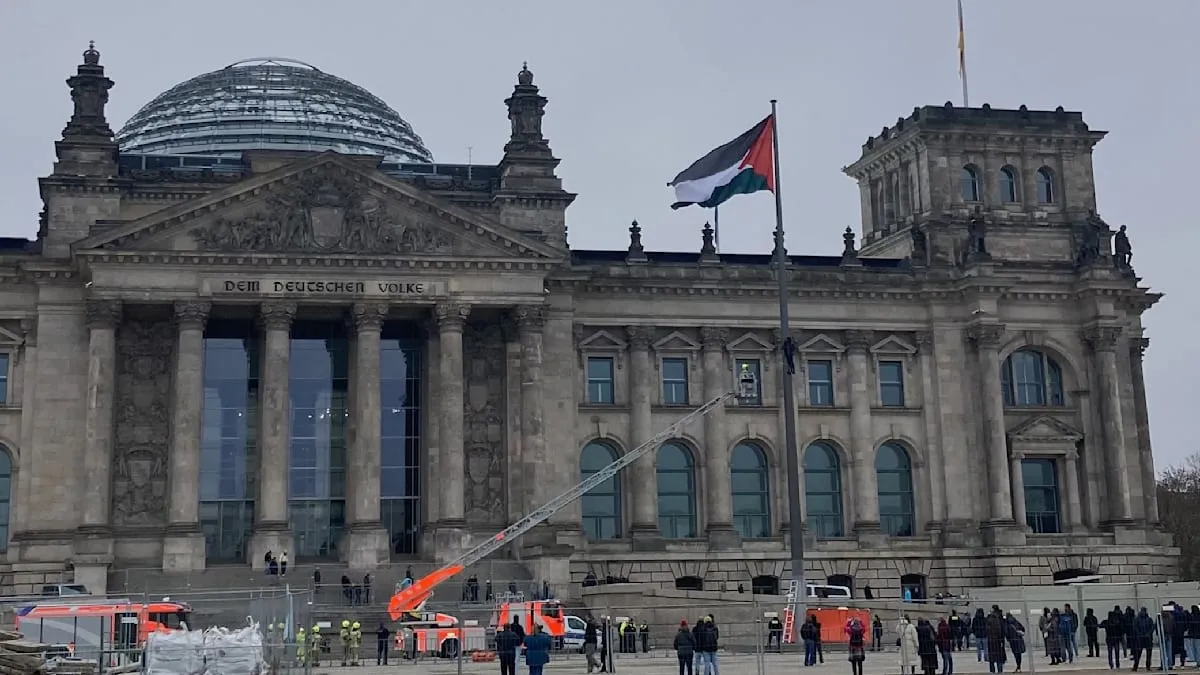
BERLIN – A shocking provocative incident unfolded in the heart of German democracy in early 2026, when an unidentified man daringly climbed a nearly 30-meter-high flagpole in front of the Reichstag Building. Swiftly, he removed the German national flag and replaced it with a Palestinian flag, triggering an uproar and prompt response from security forces. This symbolic act is now under serious investigation by German State Security, which has launched a thorough inquiry into the motive and perpetrator of the incident.
The dramatic incident took place in broad daylight, drawing the attention of numerous citizens and tourists around the historic building. Eyewitnesses reported that the man, dressed in ordinary clothes, managed to reach the top of the flagpole with surprising speed before replacing the national symbol. The success of his action raised significant questions regarding security protocols at one of Germany's most important landmarks.
Security officers near the scene immediately responded, but the man was already descending when they arrived. After successfully climbing down, he was promptly apprehended by local police. The identity of the perpetrator and his background remain subjects of intensive investigation, but his motive is strongly suspected to be related to support for the Palestinian issue amid complex global geopolitics.
Diplomatic and political wires buzzed instantly. The German government, through its spokesperson, strongly condemned the incident as an act of vandalism against a national symbol and a serious breach of public order. We take every attempt to disrespect our sovereign symbols very seriously. State security will prosecute the perpetrator firmly according to the law, read the official statement.
The Reichstag Building, with its iconic glass dome, is not only Germany's legislative center but also a historical monument steeped in meaning. It symbolizes Germany's struggle towards democracy and unity. The act of replacing the flag at this location is not merely a legal violation but also a deliberate political statement targeting national identity.
The investigation led by State Security, or Staatsschutz, focuses on potential charges including damage to public property, desecration of national symbols, and disturbing public order. The context of this incident is also expected to be explored more broadly, including the possibility of involvement by organized groups or deeper personal motives.
Similar incidents, though varying in scale and form, have occurred previously in Berlin and other European cities, often reflecting tensions over Middle Eastern issues. In 2026, sensitivity to the Israel-Palestine conflict remains high, and acts such as this have the potential to spark wider public debate regarding freedom of expression versus respect for national symbols.
Authorities are also reviewing surveillance footage to identify potential accomplices or a larger operational pattern. This incident reminds the public of the challenges of maintaining security at vital locations without compromising public access to historic sites. For more information on related incidents, the public can refer to a previous article: Provocative Palestinian Flag Action at German Reichstag: Three Perpetrators Arrested.
Pro-Palestinian groups in Germany, although none have officially claimed responsibility, have shown varied support on social media for the act, calling it a form of solidarity. Meanwhile, several politicians from across the spectrum have called for increased security and stricter law enforcement to maintain the integrity of national symbols.
Although this act was carried out by a single individual according to initial reports, its political and social resonance is quite significant. This event is expected to become part of the national dialogue on how Germany balances its commitment to human rights and civil liberties with the protection of its national sovereignty symbols.
Editorial Insight:
This audacious act at the Reichstag Building is more than mere vandalism; it is a potent political gesture on the international stage. While the perpetrator's specific motivations are still under investigation, the incident highlights how global issues can provocatively resonate in the heart of a European capital. The firm response from State Security demonstrates Germany's commitment to protecting its national symbols, but it also reopens the debate on the boundaries of symbolic protest in public spaces laden with historical and political significance.