 Chris Robert
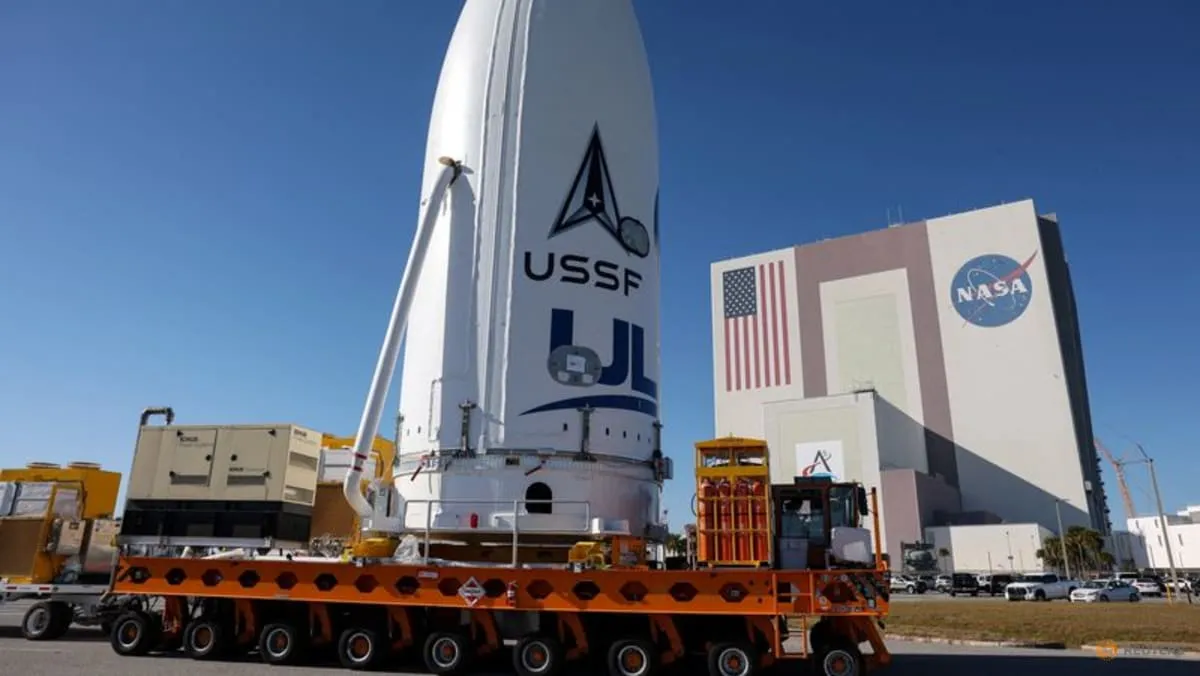
CAPE CANAVERAL – A catastrophic incident has shaken the global space industry as a launch rocket operated by United Launch Alliance (ULA), a joint venture between Boeing and Lockheed Martin, suffered a mid-flight malfunction. As a result, the entire payload of Amazon's multi-billion dollar Project Kuiper satellites was obliterated, raising serious questions about the reliability of launch technology and the future of Amazon's ambitions in low-Earth orbit.
The tragic event occurred minutes after liftoff from the launch facility in Cape Canaveral, Florida, on Monday. Telemetry data indicated an unexpected anomaly that rapidly worsened, forcing the rocket system to automatically terminate the mission and leading to its complete destruction in the atmosphere.
A ULA spokesperson, in an official statement, confirmed the failure. 'We can confirm that an anomaly occurred during a critical phase of flight, resulting in the loss of the mission. Our team has immediately initiated a thorough investigation process to determine the cause of this incident,' they stated. The statement emphasized ULA's commitment to safety and reliability in future operations.
The destroyed satellites were part of Amazon's Project Kuiper constellation, an ambitious initiative to provide high-speed broadband internet access to underserved regions worldwide. The loss is estimated to be hundreds of millions to billions of dollars, covering both satellite production costs and the investment in the launch itself.
Amazon has invested heavily in Project Kuiper, aiming to compete with other satellite internet providers such as SpaceX's Starlink. This incident undoubtedly represents a significant setback for the e-commerce giant's launch schedule and business strategy in the space sector.
Industry analysts suggest that this failure could significantly delay Project Kuiper's implementation. 'Every launch failure is a costly setback, not just financially but also in terms of timeline and investor confidence,' said Dr. Sarah Chen, an aerospace expert from the University of Texas.
United Launch Alliance, which has a long track record of launching critical missions for the U.S. government, now faces intense scrutiny. This is one of the most serious incidents involving ULA in recent years, highlighting the inherent challenges in developing and operating highly complex launch systems.
The investigation will involve expert teams from ULA, Amazon, and aviation regulators. The primary focus is to identify the root cause of the anomaly, which could range from hardware or software issues to operational factors. The outcome of this investigation is crucial for preventing similar occurrences in the future.
Nevertheless, Amazon has reaffirmed its commitment to continuing Project Kuiper. The company asserts that it has contingency plans and will work closely with ULA and other launch service providers to ensure the completion of their satellite constellation. However, major questions now hang over the program's pace and efficiency.
This launch failure also impacts public perception of space technology safety, especially amid increasing competition and commercial ambitions to conquer Earth's orbit. The industry is expected to learn from this incident for safer and more reliable innovation.
Editorial Insight: The ULA rocket failure that destroyed Amazon Kuiper satellites is not merely a financial loss but a brutal reminder of the inherent risks in space exploration and commercialization. This event forces companies like Amazon and launch providers to fundamentally re-evaluate their processes, testing, and safety protocols. Reliability will be the key differentiator in the fierce competition in low-Earth orbit, where even the slightest failure can be fatal for multi-billion dollar investments and global technological ambitions.