 Gabriella
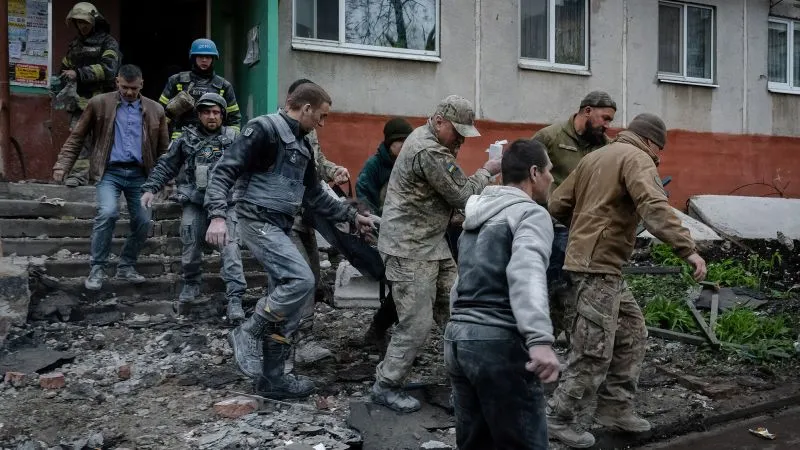
MOSCOW – Western intelligence officials have made startling claims regarding a significant regression in Russia's military capabilities, highlighting the use of World War II-era tanks in combat operations amidst conflict pressures. This report emerges concurrently with the denial of an appeal against detention for Wall Street Journal reporter Evan Gershkovich in Moscow, and President Vladimir Putin's visit to a military headquarters in Kherson, underscoring the complex dynamics within Russia's power circles.
This situation, according to Western sources, suggests that Russia's stock of modern combat equipment may have drastically depleted due to the prolonged intensity of the conflict. The deployment of outdated weaponry, decades past its prime, serves as a palpable indicator of the logistical and resource pressures confronting the Kremlin.
The decision to reactivate such antiquated tanks is viewed as a desperate measure. Western defense analysts contend that these tanks are not only vulnerable to modern weapon systems but also reflect Russia's failure to maintain its military technological superiority. The implications could be fatal for troop morale and battlefield strategic effectiveness.
Simultaneously, the international community continues to monitor Evan Gershkovich's detention case. The Wall Street Journal reporter appeared in a Russian court, where his appeal against detention was denied. Transparent and fair legal proceedings for foreign journalists are a demand from many nations, including the United States.
Gershkovich's denied appeal raises serious concerns about press freedom and the treatment of foreign nationals detained in Russia. This case further exacerbates already strained diplomatic relations between Moscow and Western countries.
Conversely, President Vladimir Putin conducted a direct visit to a Russian military headquarters in Kherson. This visit is interpreted as an effort to boost troop morale and demonstrate leadership support amidst a series of strategic challenges.
However, Putin's presence on the front lines, coupled with reports of military equipment degradation, creates a contradictory narrative. This raises questions about the extent to which such symbolic visits impact battlefield realities and the actual conditions of the soldiers.
Several military strategy experts believe that reliance on World War II-era equipment, such as T-54 or T-55 tanks, will significantly impact Russia's offensive and defensive capabilities. Such equipment is far inferior to the anti-tank technology utilized by the opposing forces.
This condition not only highlights inventory issues but also potential constraints in the supply chain and production of new weapons. International sanctions imposed on Russia are strongly suspected of exacerbating these difficulties, limiting access to critical components and advanced technology.
Nevertheless, Russia continues to show resilience in the face of pressure. State media there frequently emphasize national unity and their military's adaptability, even though reports from Western sources present a different picture.
The deployment of antiquated combat equipment also indicates that Russia might be bracing for a resource-intensive, long-term conflict, thereby compelling them to deploy all available assets, even those considered obsolete.
Editorial Insight: Reports concerning Russia's deployment of World War II-era tanks reflect a profound paradox. On one hand, Moscow endeavors to project an image of strength and resilience, as demonstrated by President Putin's visit. Yet, on the other hand, the necessity to rely on outdated technology reveals the vulnerabilities of Russia's military system due to sustained pressure. The Gershkovich case further underscores complex geopolitical tensions and the debate surrounding freedom of information amidst conflict. Moving forward, the strain on Russia's logistics and military production capabilities will likely remain a crucial factor in global dynamics.