 Stefani Rindus
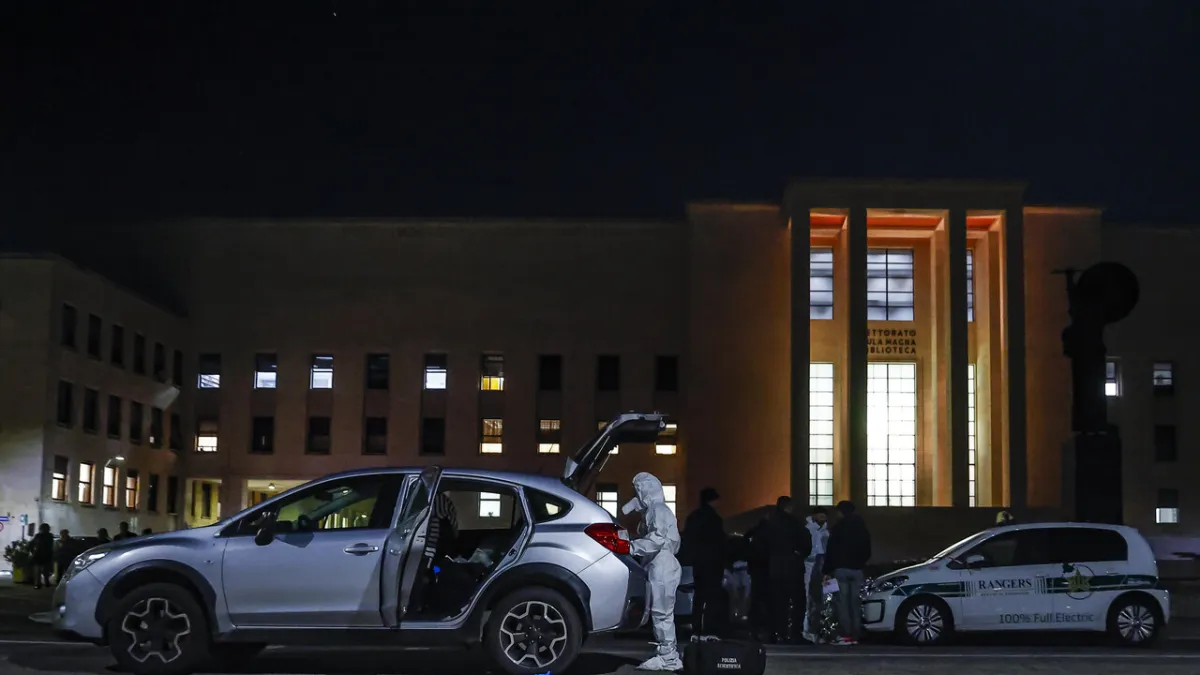
ROME – Profound sorrow has enveloped the academic community of Sapienza University, one of the oldest and largest educational institutions in Rome, Italy. A 58-year-old man was found deceased inside a makeshift tent he had erected on the university grounds. The victim was later identified as a homeless student who had been on a prolonged hunger strike, a desperate protest against his dire living conditions. This tragic event, occurring in early 2026, immediately sparked intense debate about homelessness and student welfare support in Europe.
Local police sources confirmed the man's body was discovered by campus security staff in the morning. Initial examinations indicated that the cause of death was likely related to health complications arising from months of hunger strike. 'He was a homeless student on a hunger strike,' a narrative widely circulating among students and activists, describing the deceased's suffering.
This tragedy highlights a serious, often overlooked problem in major cities: homelessness among individuals striving for an education. Despite Rome being one of the world's most developed cities, social disparities remain a palpable challenge. The deceased, whose name has not been officially released, was known as a tenacious individual pursuing knowledge despite extreme limitations.
His hunger strike, according to several sources, was a desperate protest against the lack of systemic support for students without housing. He was believed to have repeatedly sought assistance from the university and social institutions, but without significant results.
The rectorate of Sapienza University expressed deep concern over the incident. In an official statement, they pledged to conduct a thorough investigation to understand the chronology and seek solutions to prevent similar occurrences in the future. However, this promise was met with skepticism by most students and humanitarian organizations, who demanded concrete actions rather than mere statements.
Student organizations and social activists promptly staged peaceful demonstrations in front of the rectorate, demanding more humane policies for homeless students. They called for the establishment of crisis centers and the provision of temporary accommodation for those in need. This case is not merely the death of an individual; it reflects a systemic failure to uphold the dignity of its citizens.
Sociology and public policy experts noted that this incident is symptomatic of a broader homelessness problem in Italy and other European countries. Many individuals, including the educated, struggle to secure stable employment or decent housing amidst the global economic turmoil still felt in 2026.
The event at Sapienza is expected to be a turning point for governments and educational institutions to re-evaluate student welfare programs. Public pressure is mounting for authorities to no longer ignore the presence of 'homeless students' struggling under extreme limitations.
Italian Senator Giovanni Rossi, on one occasion, extended his condolences and urged parliament to immediately discuss a draft bill related to social protection for the homeless. 'This is a stain on our civilized society,' he asserted firmly, reflecting public outrage.
The tragic death of this student leaves a deep wound and profound questions about humanitarian values within the modern education system. The university, which ought to be an ivory tower of knowledge and an intellectual sanctuary, is now confronted with the bitter reality that one of its inhabitants succumbed to despair on its very grounds.
Editorial Insight:
The tragedy at Sapienza University is not just sad news; it is a harsh wake-up call for the entire educational and governmental ecosystem. It reveals that beneath the glittering academic reputation, there are still marginalized individuals whose voices remain unheard until they reach rock bottom. The response of the university and government will be a test of their integrity. Without systematic solutions and genuine empathy, similar incidents are likely to recur, tarnishing the image of higher education and the humanitarian values that should be upheld. This event must drive significant changes in social welfare policies and support for vulnerable students.