 Dodi Irawan
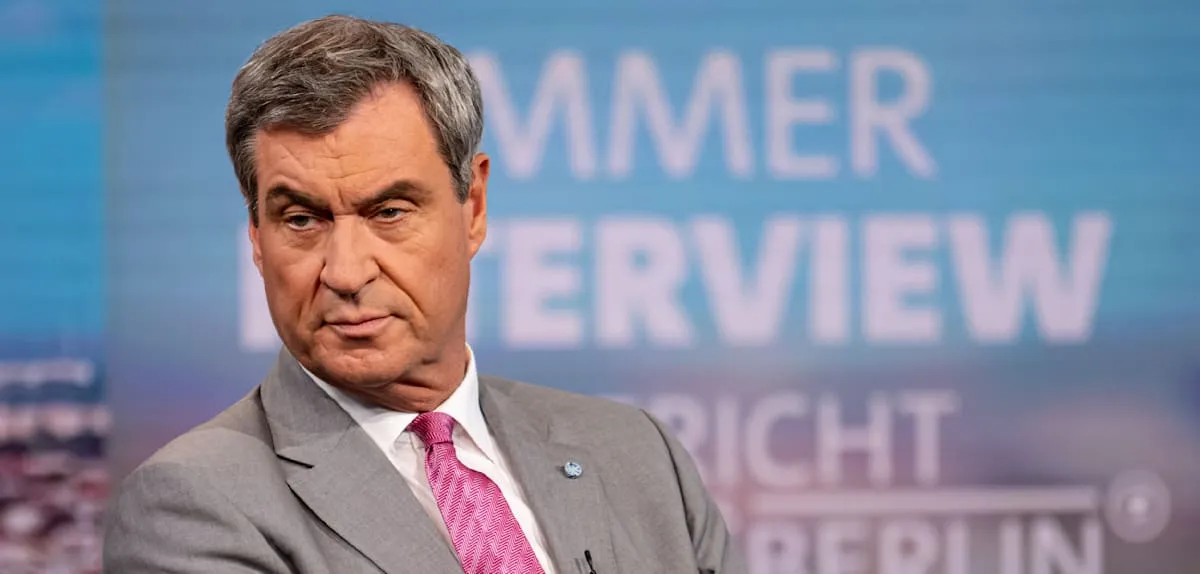
Munich, Germany — Markus Söder, Minister-President of Bavaria, has unequivocally acknowledged that the rise of the Alternative for Germany (AfD) party is not something that “can simply be conjured away” from the German political landscape. In an exclusive interview on the ARD Sommerinterview program aired mid-2026, the leader of the Christian Social Union (CSU) firmly rejected imitating the AfD’s populist rhetoric as a strategy to counter electoral challenges. Söder’s statement reflects the complex dynamics of German politics grappling with a wave of far-right populism.
The interview revealed Söder’s realistic view of the AfD’s position, which in recent years has established itself as a significant political force at both federal and regional levels. Söder’s analysis highlighted the failure of a total marginalization strategy against the AfD, which often inadvertently strengthens the party’s narrative of being a victim of the media. He emphasized the importance of a more substantive approach rather than merely ignoring or imitating.
Söder elaborated that attempts to mimic the AfD’s policies or communication style would be counterproductive for democratic parties. “We will not imitate the AfD. That is not a solution,” Söder stated, underscoring the conservative identity and principles held by the CSU. For him, imitating the AfD would only weaken the credibility of centrist parties and indirectly legitimize the AfD’s agenda.
The AfD phenomenon itself is rooted in crucial issues such as immigration policy, energy, and national identity, which often fuel public sentiment. The party has successfully exploited public dissatisfaction with government policies perceived as unresponsive or overly liberal. This context is exacerbated by various crises, including energy crises and global economic challenges that are still felt in 2026.
Concurrently, discussions surrounding a potential chancellor swap (Kanzlertausch), meaning a change in federal leadership, also drew attention. Söder explicitly rejected this notion. “I see no point in speculating about a chancellor swap at this time,” he remarked. This approach indicates Söder’s focus on internal political stability rather than engaging in maneuvers that could create uncertainty.
Söder’s statements represent an important signal for the German political landscape. By acknowledging the AfD’s existence and appeal without succumbing to the temptation of adopting their tactics, Söder attempts to chart a different course for his party and the broader coalition. This is an effort to maintain a centrist and moderate conservative position.
Political analysts consider Söder’s acknowledgment a pragmatic move. Dr. Lena Schmidt, a political scientist from Heidelberg University, commented, “Söder understands that demonization or total disregard for the AfD is no longer effective. The challenge is to offer concrete and convincing policy alternatives, not just an emotional response.”
One aspect frequently exploited by the AfD is the issue of migration. Related articles such as “Ceuta Migrant Crisis: Spain Threatens Drastic Steps, Europe Under Pressure!” illustrate how this issue is an urgent concern across Europe, subsequently utilized by far-right parties to garner support. The escalation of the migrant crisis at Europe’s borders often fuels the AfD’s rhetoric.
The challenge for the CSU and other mainstream parties is how to articulate credible solutions to the problems perceived by AfD voters without compromising democratic values. This includes reforms in energy and environmental policies, as indicated in “Bold Lawsuit: German Heating Act Threatened by Constitutional Court”, which highlights public dissatisfaction with the government’s policy direction.
The coalition government in Berlin faces immense pressure to demonstrate its capacity to tackle inflation, energy crises, and social issues. Failures in these areas will only further strengthen the position of radical opposition parties. Therefore, Söder’s approach, which rejects imitation but acknowledges the reality of the AfD, is an attempt to foster a more substantive policy debate.
In a broader context, Söder’s statements underscore a paradigm shift in European politics, where centrist parties must confront the reality that the populist wave is not a fleeting phenomenon that can be ignored. This demands strategic adaptation and the ability to communicate effectively with segments of the electorate who feel unrepresented.
In conclusion, Söder offers a challenging perspective: that the best response to far-right populism is not imitation, but by strengthening democratic principles, offering tangible solutions, and honestly acknowledging public concerns, even if the AfD “cannot simply be conjured away.”