 Edward DP Situmorang
Ceuta — The Spanish government is not permitted to immediately return Moroccan migrants who successfully reach its territory, particularly the enclave of Ceuta, even if they arrive by swimming across the sea. This decision, which underscores the complexities of international law and humanitarian principles, emerged amid a highly precarious situation on the northern African border in early 2026, triggering a Spanish military deployment to address a surge in migrant arrivals.
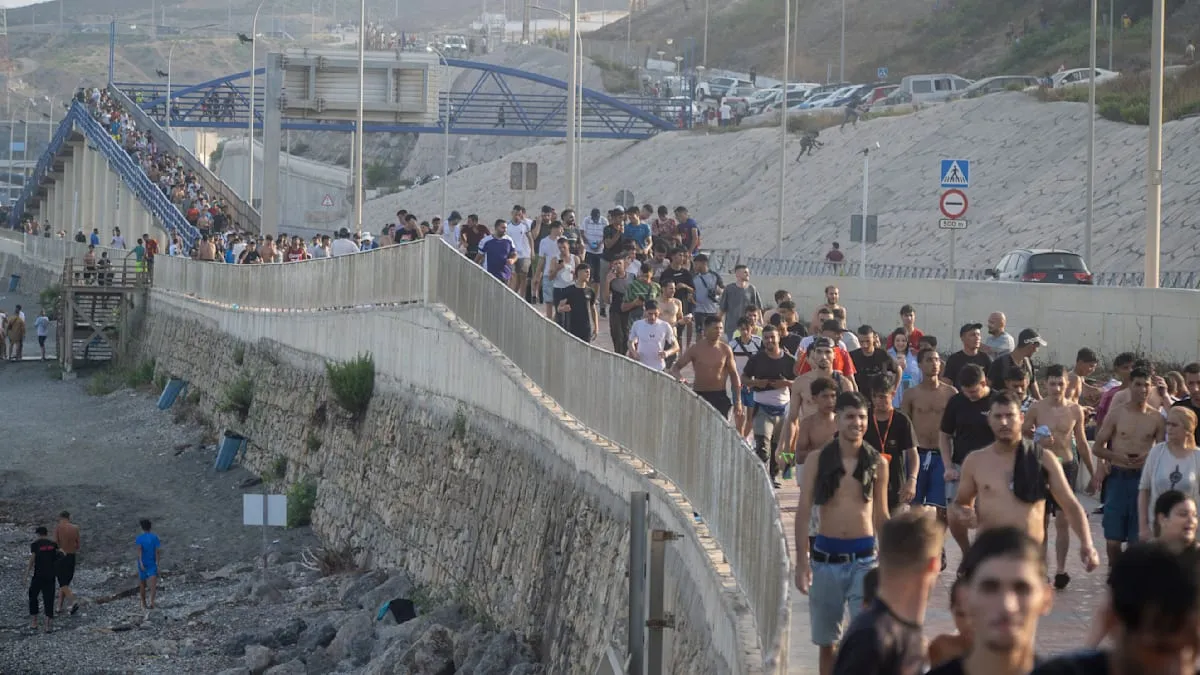
Tension at the Ceuta border has significantly escalated following the entry of tens of thousands of individuals from Morocco within a short period. This massive wave of migration has created immense pressure on the enclave's infrastructure and resources, transforming it into a focal point of global attention.
The Spanish Police Union reported that "22,000 to 25,000 migrants have arrived in Ceuta". This astonishing figure was conveyed by correspondent Miguel Gutierrez Posada, highlighting the unprecedented scale of the crisis. These conditions directly impact regional stability and fuel intense debates on migration management.
In response to this emergency situation, the Spanish government officially announced the deployment of military personnel. Armed forces are tasked with strengthening border security and assisting civil authorities in managing the uncontrolled influx of migrants. More details on this military response can be found in our previous report, Krisis Ceuta: Spanyol Kerahkan Militer Hadapi Gelombang Migran Besar.
The most crucial aspect of this issue is the prohibition of immediate migrant returns. Despite calls for a swift response, international law and the principle of non-refoulement affirm that every individual has the right to seek asylum and cannot be forcibly expelled without due process. This makes managing the crisis in Ceuta even more complex for Madrid.
Ceuta and Melilla, two Spanish enclaves in North Africa, have long been primary entry points for migrants from Africa attempting to reach Europe. Their strategic location frequently makes these territories silent witnesses to the desperate efforts of thousands seeking a better life, often at the risk of their own lives.
This incident has also strained relations between Spain and Morocco. Although the two countries often collaborate on migration issues, this large wave has once again caused diplomatic friction and raised questions about shared responsibility in managing human movement across borders.
The international community, including the European Union, is closely monitoring developments in Ceuta. Various human rights organizations express deep concern about the migrants' conditions and urge Spain to fully comply with its international obligations. This situation tests Europe's capacity to uphold humanitarian values.
Managing tens of thousands of migrants, many of whom are vulnerable children and families, poses enormous logistical and humanitarian challenges for Spanish authorities. Providing food, temporary shelter, and medical services becomes a top priority amidst limited resources.
This prohibition of immediate forced expulsion reflects Spain's commitment to human rights, even when facing domestic pressure and an ongoing crisis. Madrid is now faced with the arduous task of balancing the enforcement of sovereignty with humanitarian obligations, while seeking long-term solutions to this complex migration issue.