 Angel Doris
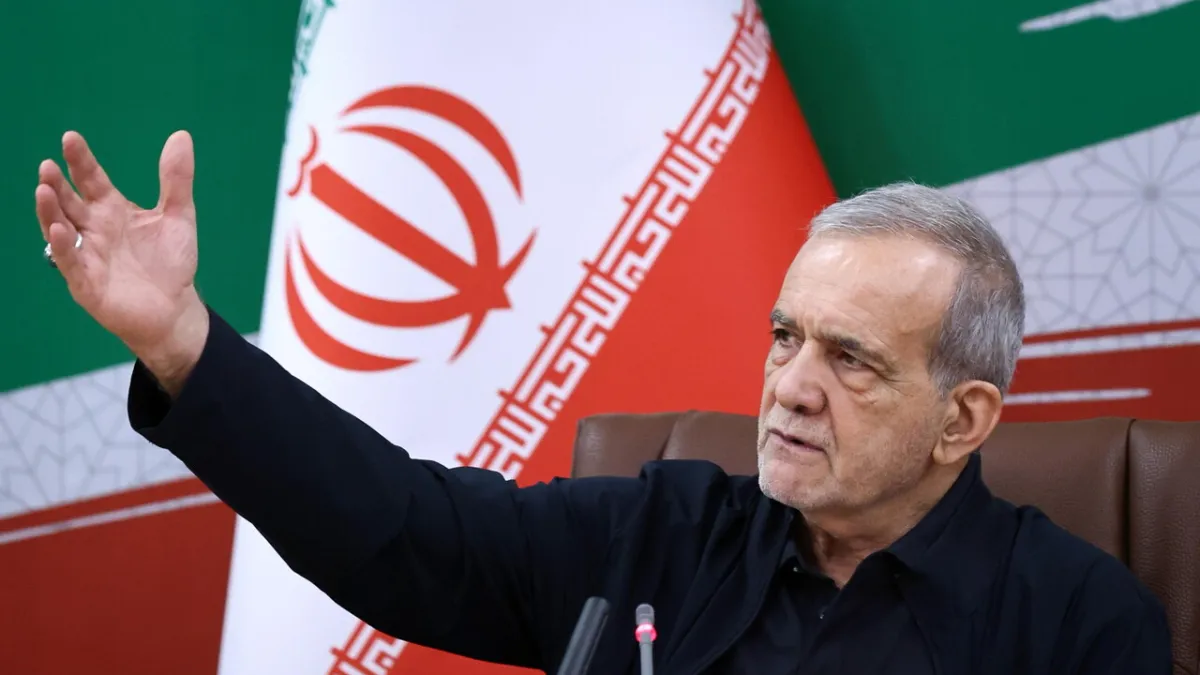
TEHRAN – Iran's capital, Tehran, has been engulfed in a wave of political speculation following the revelation of a mysterious meeting between Mojtaba Khamenei, the son of Supreme Leader Ayatollah Ali Khamenei, and Masoud Pezeshkian, a prominent reformist figure. The agenda of this undisclosed meeting remains unclear, fueling widespread debate on the future direction of Iranian politics amidst escalating regional tensions, including the standoff in the Strait of Hormuz and Houthi attacks in the Red Sea targeting Saudi positions. Information regarding this encounter, promised to be released as a public video soon, has created an atmosphere of uncertainty.
Anonymous sources in Tehran indicated that the meeting between Mojtaba Khamenei, widely considered an influential behind-the-scenes figure, and Pezeshkian, known for his progressive views, took place privately. The discussions held within remain a puzzle, prompting various interpretations from political analysts and regional observers alike.
Masoud Pezeshkian, a former health minister and seasoned legislator, has long symbolized hope for Iran's reformist faction. His presence in politics is often associated with calls for transparency and governance reforms. Consequently, his meeting with Mojtaba Khamenei, who represents the conservative line and is closely aligned with the highest echelons of power, is seen as a significant development.
Mojtaba Khamenei himself is a figure who rarely appears in public, yet his influence is believed to be substantial within the Iranian political hierarchy. Speculation regarding his potential role as his father's successor, the Supreme Leader, frequently arises. A meeting of this nature, if confirmed, could indicate exploratory efforts or even power consolidation ahead of a potential leadership transition in the future.
This news emerges as the Persian Gulf region is marked by diplomatic and military tensions. The protracted standoff in the Strait of Hormuz, a vital global oil shipping lane, continues to draw international attention. This crisis exacerbates the economic and security situation across the Middle East, demanding comprehensive solutions from stakeholders.
Concurrently, Houthi rebels in Yemen are reportedly launching renewed attacks against critical targets in Saudi Arabia located in the Red Sea region. These assaults underscore the escalating conflict in Yemen, which has significant destabilizing effects on maritime security and regional geopolitics. This situation adds urgency to Iran's internal stability.
Analysts argue that Iran's internal political dynamics cannot be separated from external upheavals. Crucial decisions and meetings in Tehran often have direct implications for Iran's stance on the regional and international stage, particularly when facing pressure from Western powers and regional rivals. The regional dynamic was also exposed to new complexities with the collapse of the Gaza consensus, revealing profound geopolitical fragmentation.
Anticipation for the promised "public video" is growing. The public and observers hope the footage will provide further clarity on the context and substance of the meeting between Mojtaba Khamenei and Pezeshkian. The release of this video could significantly alter the evolving political narrative.
With 2026 as the backdrop, Iran's political dynamics are crucial. The next presidential elections or a potential succession of the Supreme Leader will be heavily influenced by current political maneuvers. This secret meeting could signal the beginning of broader shifts in Iran's political landscape.
Editorial Insight: The private meeting between Mojtaba Khamenei and Masoud Pezeshkian, if officially confirmed, strongly indicates significant internal political movements in Iran. This may not merely be a routine negotiation, but rather an exploratory effort for compromise or the formation of a strategic alliance between conservative and reformist factions. Such an alliance would be crucial in addressing domestic challenges and regional turmoil, such as the Hormuz standoff and Houthi attacks. Internal consolidation is key for Iran to maintain stability and its bargaining position in an uncertain 2026.