 Dodi Irawan
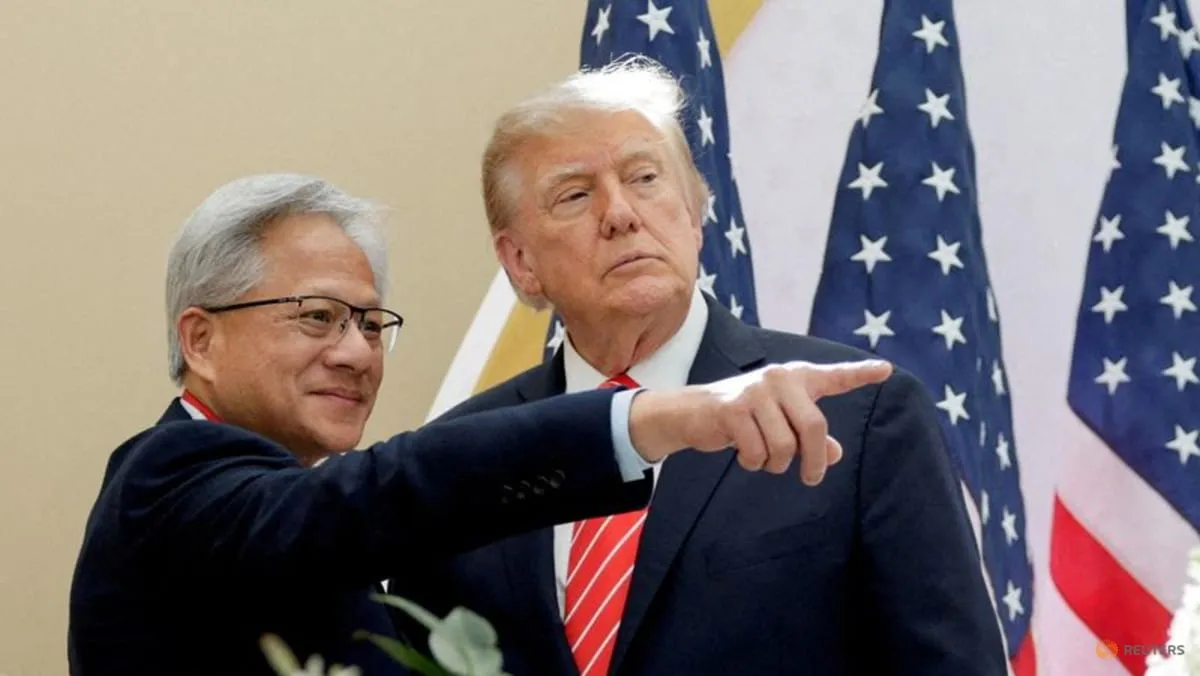
WASHINGTON – U.S. President Donald Trump has once again redefined the boundaries of presidential power, even during a 'lame-duck' phase, through his audacious push to reinstate Jensen Huang as CEO of semiconductor giant Nvidia. This move not only surprised Wall Street but also affirmed Trump's ability to wield significant influence, despite Republicans no longer holding full control of Congress in 2026.
The event unfolded in the heart of Washington, where the corridors of Congress often serve as an arena for political battles. However, Trump's intervention this time extended far into the corporate sector, particularly strategic tech companies like Nvidia, which dominates the artificial intelligence chip market.
Jensen Huang, a charismatic and visionary figure, is the founder and key architect behind Nvidia's rise to a global leader in semiconductor innovation. Trump's insistence on bringing Huang back to the company's helm, after rumors of a resignation or leadership change had circulated, sparked various speculations about the motives and impacts.
Political and economic observers interpret this move as a demonstration of Trump's power transcending formal office boundaries. His ability to influence strategic decisions in the private sector, even when his party has lost legislative majority, underscores the dynamic and sometimes unpredictable American political landscape.
Nvidia itself is the backbone of the artificial intelligence revolution, with its chip products being vital components for almost every AI advancement. Therefore, who leads this company has broad implications for the global tech economy and national security. In this regard, the public still remembers how Trump claimed national economic victory over Jensen Huang's return to Nvidia on a previous occasion.
Speculation about why Huang might step down or be replaced was never fully clear. However, President Trump's strong intervention to retain Huang, or even reinstate him, demonstrates the critical importance of Nvidia's leadership role for broader interests, both political and economic.
The 'lame-duck' situation traditionally refers to a transitional period when a president is still in office but their successor has been elected, or their party loses a majority in Congress. Typically, a president's influence tends to wane. Yet, Trump has consistently defied these norms, continuing to use his platform and influence to shape policies and outcomes, both domestically and internationally.
Trump's push for Huang can be interpreted as an effort to ensure leadership that he believes will best serve America's economic agenda or even his own political agenda. It could also be a strategic move to maintain control over a crucial technology sector.
On the other hand, reactions from Congress have been mixed. While the Republican Party no longer holds full control, many members remain loyal to President Trump. Democrats, meanwhile, may view this intervention with suspicion, fearing undue political interference in the free market.
This phenomenon is not new in U.S. political dynamics, where figures like Trump often use their platform to influence narratives and public opinion, even with controversial meme uploads. This highlights the increasingly blurred lines between politics, technology, and digital culture.
This case spotlights the broader debate about the government's role in regulating or influencing the corporate sector, especially large tech companies that now have a global impact. The boundary between political power and business autonomy is becoming increasingly indistinct.
The final decision regarding Nvidia's leadership and how the company will navigate these political pressures remains to be seen. However, one thing is certain: Donald Trump has once again successfully captured attention and asserted his presence as a force to be reckoned with, even during a period that should ostensibly be fading.
Jensen Huang's return to Nvidia has shaken the market, not only due to its business impact but also because of the accompanying political nuances. The world awaits to see how this episode will shape the future relationship between Silicon Valley and Washington.
Editorial Insight: This event demonstrates that the modern political era has given birth to a new hybrid between state power and corporate influence. President Trump's overt intervention in Nvidia's leadership, a company fundamental to AI advancement, signals a paradigm shift. This is no longer merely lobbying or macroeconomic policy, but micro-interventions targeting key individuals and positions in the private sector. The implications could set a precedent for future administrations to more actively shape the corporate landscape, especially in strategic industries, potentially sparking serious debate about free-market capitalism and government interference.