 Chris Robert
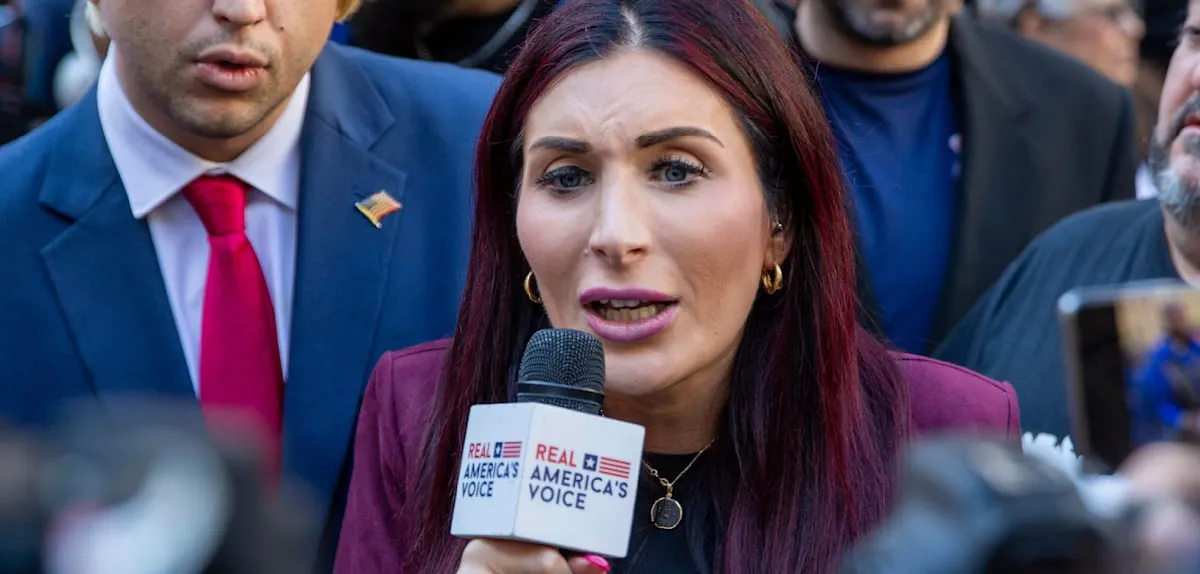
An influential pro-Trump activist from the United States, previously known for her pro-Russia stance, has made a dramatic turn following her recent visit to Ukraine. She publicly expressed deep remorse, admitting that she had "believed a lie" and had "downplayed the struggle of Ukrainians over the past five years." This fundamental shift in perspective occurred after she directly witnessed the realities on the ground in the war-torn nation, drastically altering her long-held views.
The activist, whose name has gained significant traction within conservative media circles, explicitly apologized for her previous narrative which often minimized the scale and impact of the ongoing conflict in Eastern Europe. Her candid confession marks a notable moment for a figure closely associated with a political movement frequently criticized for its skeptical approach towards aid for Ukraine.
Her previous rhetoric aligned with certain narratives propagated by Moscow, which sought to portray the conflict as less severe or even justified. During her extensive public commentary, spanning the past half-decade, she consistently articulated views that were overtly sympathetic to the Russian position, often echoing sentiments from the previous US administration's foreign policy approach.
The change of heart unfolded during her recent humanitarian mission or fact-finding tour to various regions within Ukraine, which reportedly included areas directly affected by hostilities. Sources close to her suggest that direct engagement with Ukrainian citizens and witnessing the devastation firsthand profoundly impacted her.
"We believed a lie," stated the activist in a statement that has widely circulated on social media and global news platforms. This phrase forms the core of her deep regret, simultaneously highlighting the complexities of information and disinformation surrounding geopolitical conflicts.
Her apology specifically referred to her stance of having "downplayed the struggle of Ukrainians over the past five years." This period encompasses significant conflict escalation that began in 2022, up to the current geopolitical dynamics in 2026, which still see intensive recovery and reconstruction efforts in many regions.
Similar phenomena, where individuals with extremist views experience a shift in perspective after confronting reality directly, are not new. However, the case of an influencer with a significant supporter base linked to former US President Donald Trump carries far greater political resonance. This could spark further debate among her followers.
These comments come at a time when international support for Ukraine continues to be a crucial issue on the global stage. In 2026, with various crises still looming, accurate narratives regarding the conflict become even more vital to maintain solidarity and humanitarian aid.
Reactions to the activist's admission have been mixed. While many praised her courage to acknowledge mistakes and change her views, others lamented that direct experience was needed to realize truths that had long been communicated by journalists and analysts.
On the other hand, critics and political opponents see this as confirmation of the disinformation accusations they have long leveled against certain groups supporting pro-Russia narratives. They call for further introspection from other public figures who may hold similar views.
This event also highlights the crucial role of independent journalism and factual reporting amidst the deluge of information. When political narratives are often shaped by partisan views, an individual's direct experience can be a powerful catalyst for change.
The admission has the potential to influence public discourse regarding the Ukrainian conflict, especially in the United States, where public opinion is often polarized. It could open space for more constructive dialogue and reduce skepticism towards reports from the field.
Although the specific name of the influencer has not been widely released to maintain privacy while she processes her new experiences, its impact on the discourse is already palpable. Her confession serves as a reminder of the undeniable power of truth, especially when confronted directly with reality.
Former President Trump himself, known for his skeptical views on US intervention in foreign conflicts, has not yet issued an official response regarding the activist's change of stance. However, this event will undoubtedly attract widespread attention within Washington political circles ahead of the next midterm elections.
Geopolitical observers note that this incident, though involving an individual, reflects a broader shift in global perception towards the conflict in Ukraine. More public figures are being prompted to re-examine their sources of information and verify truths on the ground.
It also reaffirms the importance of public diplomacy and cultural exchange, even amidst conflict. Visits like this, which allow individuals to interact directly with victims and eyewitnesses, are often more effective than any propaganda.
This story serves as a valuable lesson on the dangers of information polarization and the importance of global empathy. Ignoring the suffering of others for political reasons often leads to regret when the truth is finally revealed.
The international community hopes this change of view can inspire more individuals and groups to approach geopolitical issues with an open mind and a willingness to consider diverse perspectives, especially from those most affected.
Going forward, it will be interesting to see how this activist's changed stance will affect her follower base and whether she will use her platform to advocate for stronger support for Ukraine, a move that would certainly spark new waves in political debate.
Investigative journalism continues to play a crucial role in uncovering the truth behind competing narratives. This story is a powerful reminder of why fact-checking and field reporting remain the backbone of credible press, especially in an increasingly complex era of disinformation.