 Robert Andrison
SEOUL – Joint military exercises between the United States and South Korea, typically a routine demonstration of force on the Korean Peninsula, have undergone a drastic reduction following President Donald Trump's announcement of significant cuts. This surprising decision, revealed before the maneuvers commenced, was framed by Trump as a move to save costs and ease tensions, avoiding sending a 'hostile signal' to Pyongyang, North Korea's capital.
A statement from the White House affirmed that President Trump adheres to his 'America First' principle in all foreign policy, including military budget allocations. This reduction, he stated, would save millions of American taxpayer dollars, an argument he has frequently voiced from his campaign trail to his current term in the White House.
Historically, these joint military exercises have been among the largest in the world, serving as a pillar of South Korea's defense against threats from North Korea. The maneuvers are designed to test the combat readiness and interoperability of both nations' forces in the face of potential aggression.
The decision to scale down the exercises could raise questions among Washington's allies regarding regional defense commitments. Conversely, it might be perceived as an unexpected gesture of goodwill by Pyongyang, which has consistently condemned such drills as provocation and preparation for invasion.
This is not the first time President Trump has taken unconventional steps regarding relations with North Korea. Throughout his leadership, he has shown a propensity for direct and bold diplomacy, even if it deviates from traditional approaches. One recalls the historic summits he previously held with the North Korean leader.
Pyongyang could interpret this reduction in exercises as an initial step towards the de-escalation they have long demanded. North Korea has always considered these drills a serious threat to their sovereignty and often retaliates with missile tests or increasingly harsh rhetoric.
Global foreign policy analysts, including experts from Seoul National University and Georgetown University, are closely scrutinizing the long-term implications of this decision for regional stability. Some fear that this step could set a precedent that weakens defense alliances, while others view it as a bold strategy to open new avenues for negotiation.
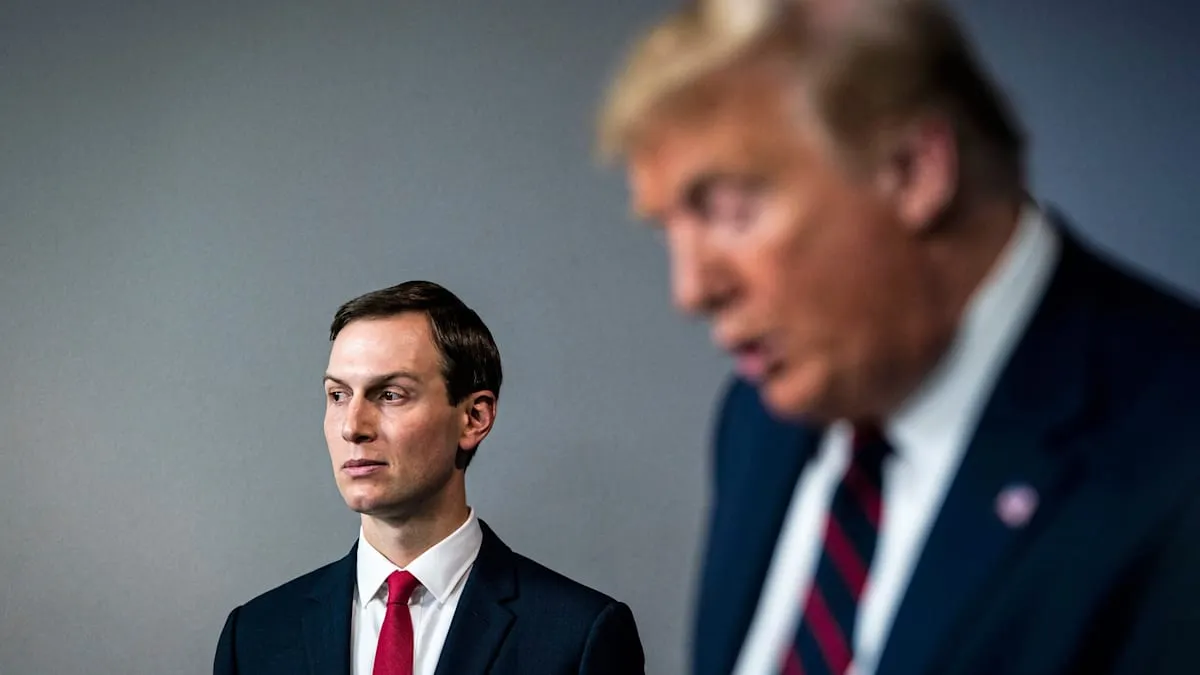
This move aligns with President Trump's foreign policy pattern, which often prioritizes direct negotiations and reducing the financial burden of US military commitments abroad. This approach is also evident in various other issues, such as his administration's efforts to address global challenges. For instance, the Trump administration also conducted important meetings involving his son-in-law to discuss sensitive issues in the Middle East, demonstrating a preference for non-traditional diplomacy. Trump's Son-in-Law Meets Hamas Leaders: Strong Gaza Ceasefire Demands Emerge
The Korean Peninsula has long been a geopolitical flashpoint. Every movement, whether an increase or decrease in military activity, invariably carries significant political resonance. This decision, therefore, will be closely watched by all concerned parties.
With this signal sent by Washington, the ball is now in Pyongyang's court. Will this open the door to more constructive dialogue, or will it merely be seen as an opportunity to advance their own agenda? Time will tell how North Korea responds to this unusual diplomatic overture.
Editorial Insight:
President Trump's decision to scale back joint military exercises with South Korea is yet another manifestation of his unique approach to global diplomacy. It is a high-stakes calculation, potentially saving budget while opening doors for new negotiations, but also risking erosion of ally trust. The future of the Korean Peninsula now heavily depends on Pyongyang's interpretation and response to this signal.