 Debby Wijaya
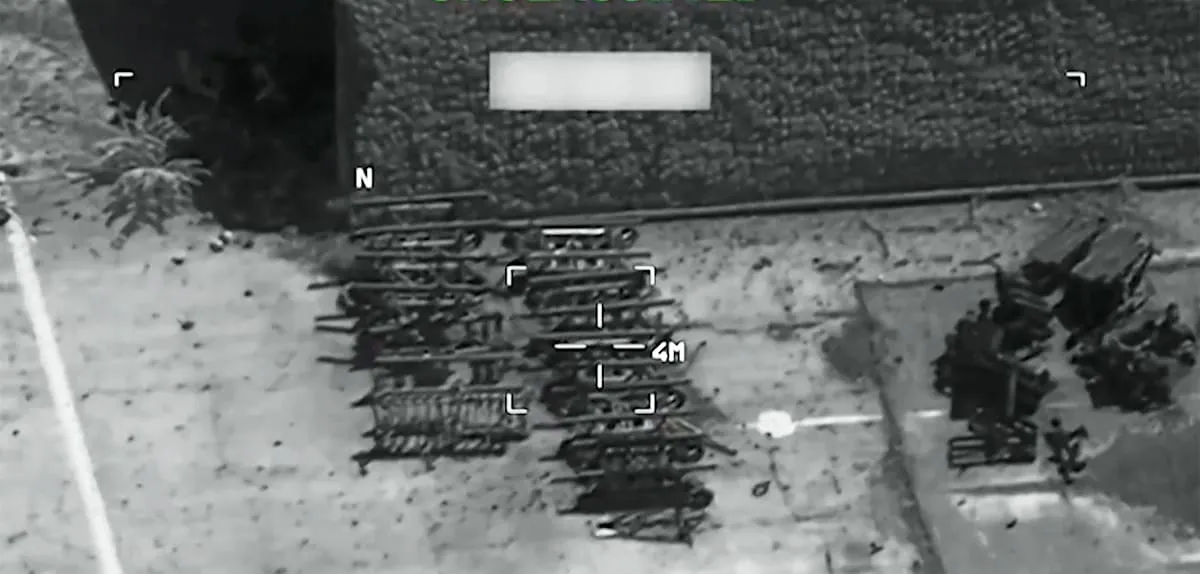
TEHRAN — The United States military launched its twelfth consecutive wave of attacks against targets in Iran-linked territories, while firmly denying "false reports" propagated by Tehran regarding the status and activities in the Strait of Hormuz. This incident occurred as tensions in the Gulf region escalated dramatically in late June 2026, sparking global concern over a broader conflict escalation.
The overnight airstrikes marked a significant escalation in Washington's series of military responses. These operations targeted infrastructure that US officials claim is used to support pro-Iranian militias in the region, in retaliation for aggression against American interests and its allies.
In addition to launching military operations, the Pentagon also released a "fact-check" to counter Iran's claims. Tehran had previously stated that its forces successfully repelled or captured American warships in the Strait of Hormuz, a crucial global oil shipping lane. Washington dismissed these claims as misinformation aimed at provocation and testing regional readiness.
A spokesperson for the US Central Command (CENTCOM) asserted that no such incidents occurred. "All United States military assets are operating safely and professionally in accordance with international law in international waters," an unnamed CENTCOM official stated in an official press release.
Tehran's statement emerged amidst a period of heightened tension, with increased Iranian military maneuvers in Gulf waters. Military analysts suggest that such claims are often used for domestic propaganda purposes and to assert Iran's strength before the international public.
The Strait of Hormuz holds undeniable geopolitical significance. More than a fifth of the world's oil supply passes through this narrow choke point daily, making it a conflict flashpoint with the potential to destabilize global energy markets. Any disruption in this strait would have widespread economic and security implications.
The international community observes these developments with deep concern. The United Nations and several major nations have called on all parties to exercise restraint and resolve differences through diplomatic channels, to maintain the fragile regional stability.
Relations between Washington and Tehran have long been fraught with tension, often escalating due to Iran's nuclear program, the activities of pro-Iranian militias, and the competition for influence in the Middle East. These consecutive attacks represent a new chapter in the complex dynamics of this conflict.
Foreign policy observers predict that aggressive responses from both sides will only worsen the situation. Constructive dialogue and de-escalation steps are necessary to prevent the region from sliding into a full-scale armed conflict with potentially global consequences.
This military tension is not new. Previously, reports indicated that Tehran had "trembled" with the activation of air defense systems in response to similar attacks, demonstrating Iran's readiness to face escalation. Read more in Tehran Trembles: Iran's Air Defense Active Amid New American Attacks.
The situation in the Gulf is currently at a boiling point, demanding strategic wisdom from world leaders. Without concrete steps towards de-escalation, the risk of a major conflict at the heart of global energy supply will continue to loom, with untold implications.