 Angel Doris
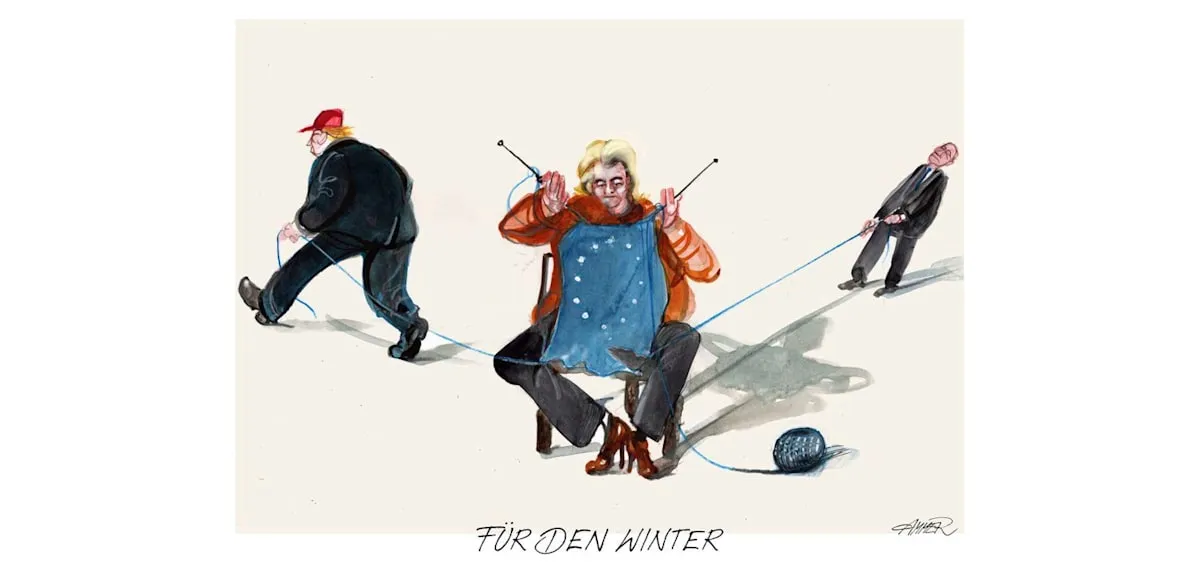
BERLIN — Wolfgang Ammer, a prominent caricaturist for the WELT newspaper, has once again stirred the global political landscape throughout 2026. With his artistic touch, Ammer meticulously captures the intricate dynamics of power involving central figures like Donald Trump and Vladimir Putin, making them a focal point in the world of satirical journalism.
Ammer's works are not mere drawings; they are intelligent responses to global upheavals. Each stroke of his pen delivers profound criticism, intellectual provocation, and a reflection on political narratives that often blur. Caricature serves as a vital medium for dissecting the layers of world leaders' rhetoric, presenting a simplified yet sharp reality.
In 2026, Donald Trump's influence, though no longer holding the presidential office, remains a magnet for global attention. Speculation regarding his potential return to the American political arena continues to loom. Ammer, with his expertise, successfully captures the essence of Trump's persona, depicting his iconic blonde hair and confident facial expressions, seemingly underscoring his unyielding ambitions.
Not to be outdone, Vladimir Putin, the President of Russia, is also a favorite subject for Ammer. In recent caricatures, Putin is often portrayed with an aura of absolute, strategic, and sometimes mysterious power. His presence on the geopolitical stage this year, particularly regarding conflicts in Eastern Europe and his relations with other global powers, provides Ammer with ample material to craft meaningful works.
Caricaturists' role in modern journalism is increasingly crucial. They are not just illustrators but essential pillars of free expression, daring to challenge official narratives and vocalize alternative viewpoints. Through humor and powerful visuals, they bridge the gap between complex policies and public understanding.
Wolfgang Ammer himself is known for his distinctive style: combining realistic details with deliberate distortions to highlight specific traits or events. His work consistently sparks discussion and debate, proving that a single image can speak a thousand words and carry an impact no less potent than the longest news text.
Geopolitics in 2026, marked by diplomatic tensions, military maneuvers, and economic competition among major powers, serves as Ammer's perfect canvas. From energy crises to cybersecurity issues, every global event finds its unique interpretation in his pen strokes.
Public reactions to political caricatures are always diverse. Some appreciate their courage and visual intelligence, while many find them controversial or even offensive. However, this is the essence of satire: to provoke thought, not merely to please the eye.
The existence of political satire, especially caricature, is an indicator of democratic health. When leaders and policies can be visually ridiculed without fear, it signifies a space for open criticism and debate. Ammer, through his work in WELT, consistently keeps this democratic flame alive.
By blending art and politics, Ammer not only documents history but also shapes public perception of it. Every caricature he publishes is a reflection of the zeitgeist, a sharp commentary that will be remembered long after its publication.
Through caricature, Ammer provides WELT readers with a critical lens to understand complex political figures. He invites audiences to look beyond headlines, delving into the characters and motivations behind every global decision. This is journalism that is bold, relevant, and timeless.
Ultimately, Ammer's work is a reminder that humor and art possess transformative power. Amidst the flurry of news and polarization of views, an intelligent caricature can offer a fresh perspective, elicit laughter, and most importantly, prompt us to think deeper about the world we inhabit.