 Demian Sahputra
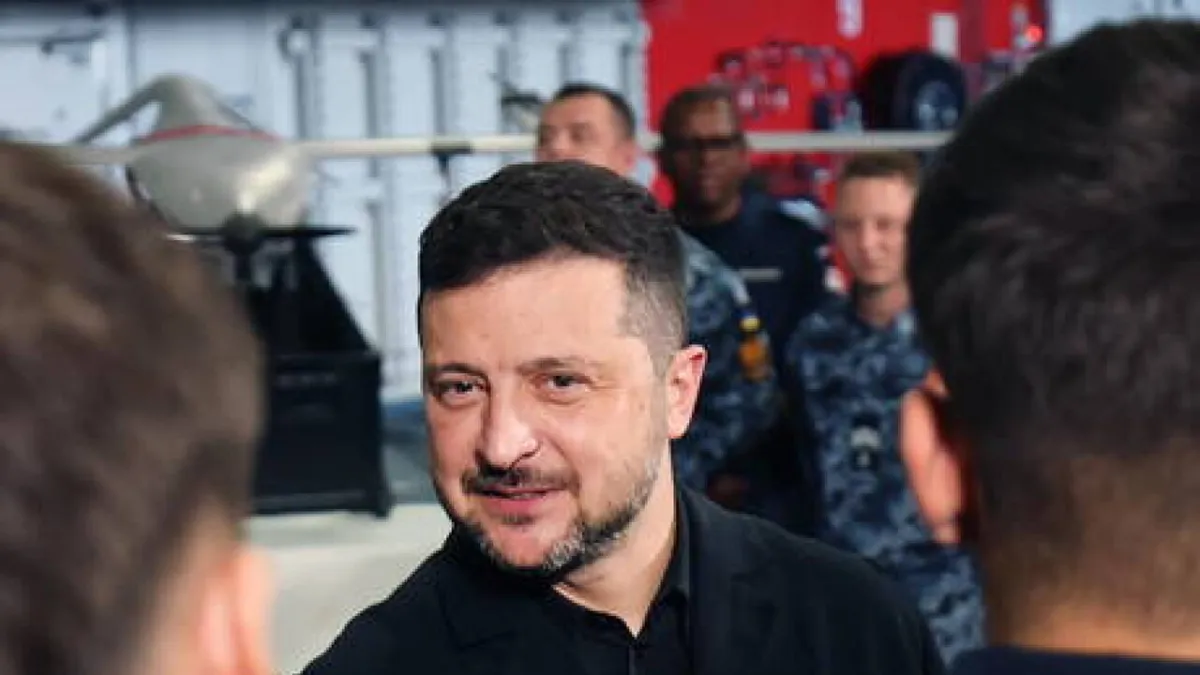
WASHINGTON — Ukrainian President Volodymyr Zelenskyy delivered a crucial address before the United States Senate, signaling a new phase in the raging conflict. In his statement, Zelenskyy firmly declared that the dynamics of the war in Ukraine are no longer solely under the control of Russian President Vladimir Putin, a claim that shook the global geopolitical landscape in 2026. This diplomatic visit coincided with surprising news from Moscow, which issued an arrest warrant for Pavel Durov, the founder and CEO of the instant messaging platform Telegram, on terrorism charges.
Zelenskyy, with a sharp gaze and authoritative voice, emphasized the importance of continued support from the United States and its allies. He outlined Ukraine's strategies that have successfully shifted Russia's dominance on several fronts, highlighting the bravery of Ukrainian forces and the effectiveness of Western military aid. According to him, although Russia still possesses the capacity to inflict damage, strategic initiative is now largely held by Kyiv.
The speech was met with serious attention from senators, who recognized the urgency of the situation. Zelenskyy not only pleaded for financial aid and weapons but also moral and political support to further isolate Moscow on the international stage. He reiterated that Ukraine's success is a reflection of global democracy's resilience in the face of authoritarian aggression.
Amidst the optimism exuded by Zelenskyy, President Joe Biden's return from the Global Climate talks in Dubai underscored Washington's seriousness about this issue. Although domestic priorities and global economic challenges dominated the agenda, bipartisan commitment to Ukraine remained a crucial foundation for European stability.
Concurrently, Moscow responded with an aggressive move against one of the world's largest communication platforms. The announcement of Pavel Durov's arrest warrant by Russian authorities indicates an escalation of the Kremlin's efforts to control narrative and information, particularly in the context of the Ukrainian conflict. Durov, known as a controversial figure and proponent of online privacy, is accused of involvement in activities supporting terrorism, a claim many Western observers deem politically motivated.
Telegram, with millions of users worldwide, including in Russia and Ukraine, has become a vital channel for information, both official and independent, throughout the conflict. The platform is often used by both sides to disseminate propaganda, news, and military instructions, making it a strategic target for governments seeking to restrict information flow.
The terrorism charges against Durov, issued by the Investigative Committee of the Russian Federation, raise serious concerns about freedom of expression and online data security. Analysts suggest this is a clear attempt by Russia to cripple one of the most difficult communication tools for them to censor, while also sending a warning message to technology developers who refuse to submit to state control.
International reactions to the arrest warrant have varied. Most Western countries condemned Moscow's actions as a form of suppression of press and internet freedom. However, responses from countries with close ties to Russia tended to be silent or supportive of Moscow's claims, illustrating a deep polarization in global relations.
Cybersecurity experts and human rights activists worry that this Russian move could set a dangerous precedent, triggering similar waves of repression against other digital platforms in the future. The threat against Durov also sparks profound discussions about the protection of software developers and internet architects operating in geopolitical gray areas.
These two events, Zelenskyy's bold speech in Washington and Moscow's aggressive move against Durov, fundamentally shape the narrative of global conflict in 2026. Zelenskyy's speech affirms that war is not a one-sided game, while the pursuit of Durov highlights a new battlefield centered on information and narrative control in the digital era. The world watches as traditional geopolitics interacts with technological dynamics, shaping an increasingly uncertain future.