 Chandra Wijayanto

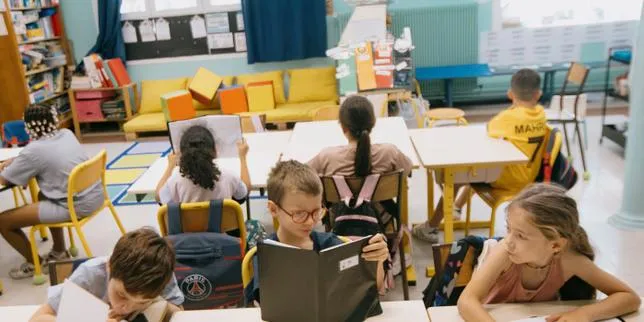
PARIS – The escalating wave of uninhibited racism across French society is triggering profound concern among educators. Alexandre Ponsart, an experienced school teacher, through his opinion piece in Le Monde newspaper, calls for educational institutions to no longer limit their role to merely transferring academic knowledge. He asserts that schools must shape how children understand and navigate life, particularly in confronting identity-based hate speech that threatens to damage young minds.
Ponsart, who has dedicated years to the field of education, candidly expresses his apprehension. He hopes the public can grasp the deep psychological impact on a child when they hear their identity or origin deemed a problem. This statement is not just an observation, but an urgent plea for a redefinition of the fundamental mission of schools.
The phenomenon of uninhibited racism he highlights refers to the increasing open expression of prejudice and discrimination now prevalent across various societal strata, including school environments. This indicates a societal shift requiring a collective response, beginning at the foundation of education.
According to Ponsart, schools bear a dual responsibility. Beyond being centers for curriculum learning, schools also function as social laboratories where humanitarian values are instilled. Character education, empathy, and respect for diversity, he argues, are irreplaceable pillars in combating the seeds of intolerance.
Hearing mockery or stigmatization related to one's origin can leave deep, lingering emotional wounds in children. School environments, which ought to be safe and inclusive spaces, can instead transform into arenas of trauma if racist practices are allowed to flourish unchecked.
This situation is inseparable from the social and political dynamics occurring in France and Europe more broadly in 2026. Issues of migration, national identity, and political polarization often fuel discriminatory narratives that then permeate even the smallest societal structures, including among the younger generation.
Ponsart emphasizes that teachers play a crucial role as agents of change. They not only teach subjects but also guide students to develop critical reasoning, question biases, and build more inclusive perspectives towards the world around them.
This challenge arises amidst fierce debates about the direction of education in France. The National Evaluation of 2026 showed a decline in performance in several key subject areas, adding complexity to efforts to reform the education system to be more adaptive and responsive to social issues.
Therefore, a holistic approach to education is imperative. The curriculum must be balanced with open dialogue about differences, the history of colonialism, and the contributions of various ethnicities and cultures in shaping French identity. This is an effective way to dismantle prejudice early on.
If schools fail to fulfill this role, the risk of creating a fragmented generation, full of prejudice, and lacking the capacity for harmonious coexistence will increase significantly. This is not merely a moral issue but a serious threat to future social cohesion.
Alexandre Ponsart's call is a sharp reminder that education is a long-term investment in humanity. More than just exam scores, what children learn about tolerance and respect is their primary preparation for navigating an increasingly complex world.
Editorial Insight: Ponsart's ideas hold universal relevance, especially amid increasing global identity polarization in 2026. The role of schools as the frontline in shaping character and critical reasoning in the youth cannot be underestimated. Governments and educational stakeholders must prioritize this agenda, not just as a curriculum formality, to prevent a more severe erosion of humanitarian values in the future.